Coral spawning in the Great Barrier Reef

hero media
A cruise in the dead of night offers up the perfect opportunity to witness the wonder of nature in all its kinky glory.

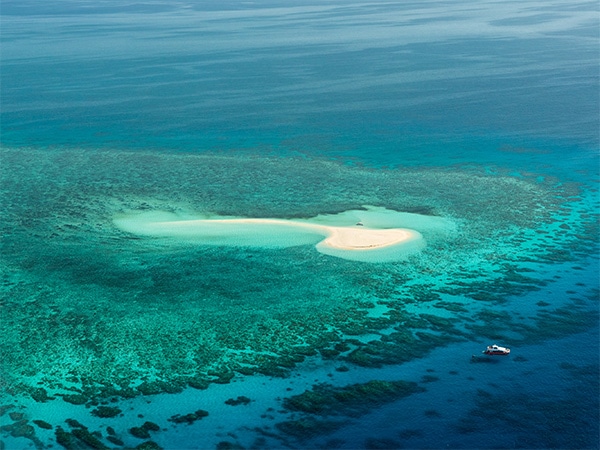
We board the Tusa Dive T6, a 24-metre dive vessel, at the city marina, the other voyeurs and me. Soon we’re at sea and heading for Saxon Reef, on the Outer Barrier Reef 55 kilometres north-east of Cairns. It’s five nights after the November full moon, which shines across dark millpond waters at the reef mooring. The sea is a summery 27 degrees Celsius – perfect conditions for our oceanic orgy.


The Great Barrier Reef’s annual mass coral spawning has been called the biggest sexual event on the planet – and even the world’s biggest orgasm on the world’s biggest organism. Over two or three nights at various times between October and December, the waters of individual reefs across the 2300-kilometre Great Barrier Reef suddenly burst with new life – countless egg and sperm bundles released simultaneously by billions of coral polyps in a spectacular explosion of synchronous breeding.

Close up shot of coral ready to release on the Great Barrier Reef
Close up shot of engorged arcropora ready to release. (Image: Gareth Phillips/Reef Teach)

Looking like a blizzard of tiny snowdrops, they bubble to the surface over a few nocturnal hours and form a pungent, pinkish slick. Splitting apart, the egg and sperm bundles fertilise en masse. The result: billions of pinprick-sized coral larvae, which a few days later settle back down on the reef to begin their life’s work of reef-building. Remarkably, this vast, vital aspect of coral life was unknown until 1981, when Australian scientists observed it on the Great Barrier Reef off Townsville.


Forty years later, with mass coral bleaching due to climate change and escalating existential threat, spawning seems a mighty and cheering demonstration of Reef resilience. It’s also emerging as a potential means of safeguarding the future: scientists now use the yearly boom to scoop up millions of healthy newborn corals for resettlement in bleach-depleted areas.
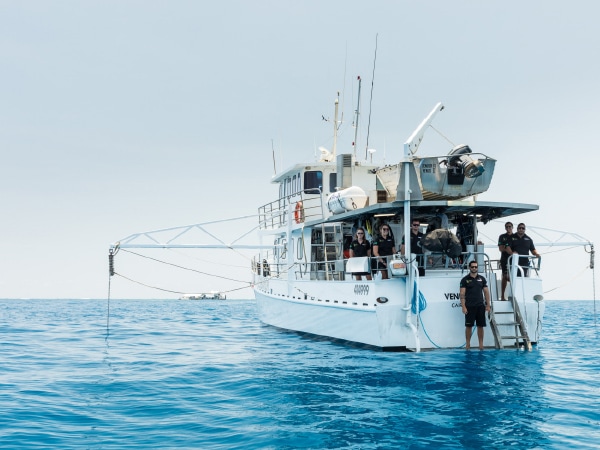
A control vessel monitors the waters during the coral spawning off the coast of Cairns.

A greater goal – to help coral fight deadly bleaching – also harnesses spawn power. Almost all corals keep algae in their tissue to supply vital nutrients. In overheated conditions they lose it and begin to starve – and bleach. During last year’s spawning, the Larval Restoration project mixed large volumes of coral larvae on a Cairns reef with more heat-tolerant algae, enhancing their ability to resist bleaching. Also, supplying algae so early in the life cycle (before it is naturally acquired) speeds growth, boosts health and improves survival chances.


Time to check out chapter one of that life cycle. Donning scuba gear – though plenty onboard choose to snorkel shallower parts instead – we descend into 10 metres of seawater, shadows and coral, lit only by the bright moon and our dive leader’s soft but wide-ranging torchlight. Visibility is excellent; there’s no chance of being lost in the night.
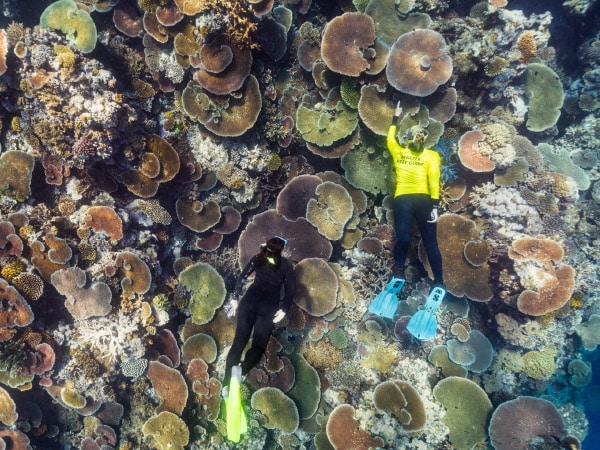
Duck diving on Moore Reef during its November 2019 coral spawning.

A spectacularly flame-patterned eel, thicker than an arm, slithers from its hole in a reef outcrop. A two-metre-long grey reef shark suddenly looms from the blackness and shoots along the sandy channel beside us, dwarfing two whitetip reef sharks alongside it. None pay us any attention; they’re on secret shark business. A trio of giant trevally are more interested, lurking just inside our beam, as if hoping we’ll light the way to prey.


For all these enchantments, the first dive ends with no spawning. We’re a tad early, it seems, but Mother Nature doesn’t publish timetables. Back on the boat, our surface interval passes with a welcome cooked dinner. And then, during the second (10pm) dive, it happens. A broad patch of coral, carpeted by white blobs, is brewing something marvellous. Suddenly we’re inside a snowdome. Rising above the coral are myriad snowy dots, shimmering as they flutter and fly before our eyes. Some seem to shine with an inner light. Against the inky backdrop of the night sea, they could almost be stars or meteors.

Flynn Reef erupts Flynn Reef erupts in an explosion of pink as corals begin their annual spawning on the Great Barrier Reef
Flynn Reef erupts in an explosion of pink as corals release tiny balls containing sperm and eggs into the water. (Image: Gareth Phillips/Reef Teach)

You might think, ‘eeeww, swimming in sperm, no thanks’ – but it’s not like that at all. To hover weightless in the sea while meeting the first flakes of an underwater, upside-down snowstorm at night is a moment of pure wonder and magic. It feels like seeing Santa actually land his sleigh on the roof.

Underwater view of coral spawning on the Great Barrier Reef
The extraordinary event gives the impression of being inside a snowdome. (Image: Gareth Phillips/Reef Teach)

But there’s also a grounding reality amid the sense of unreality, and that feels special too. It’s an intimate encounter with life’s grandeur, with that fundamental, never-say-die impulse to propagate that keeps the primordial cycle going. This is literal immersion in the miracle of life itself, this private moment between me and coral, silent but for my bubbling breath.


We’re not back in Cairns until almost 1am. The cabin lights are out and we’re dozing in the dark, the other voyeurs and me. Midnight has passed and it’s been such a magical night I wonder that the boat hasn’t turned back into a pumpkin. Cinderella went to the ball, and I’ve seen coral spawning.
Getting there
The Cairns marina is located within walking distance of most centrally located hotels.


Playing there
Spawning on Cairns’ reefs is usually within a week of the November full moon. Book here


Staying there
The design-focused Bailey in central Cairns is a great option.

Need tips, more detail or itinerary ideas tailored to you? Ask AT.

AI Prompt

Want to see more stories from Australian Traveller in your Google search results?

  1. Click here to set Australian Traveller as a preferred source.
  2. Tick the box next to "Australian Traveller". That's it.
hero media

An insider’s guide to Noosa’s best-kept winter secrets

    Lucy Cousins Lucy Cousins
    As the cooler weather rolls in, head to this popular Sunshine Coast destination to enjoy stunning natural beauty, culinary wonders and mild temperatures.

    As southern Australia’s weather starts to cool – the frost visiting every morning and the evening chill descending at dusk – you might reach for your thickest cable knit sweater and warmest blanket. But why not reach for your suitcase and sunglasses and book a ticket to Noosa in winter instead?

    Sure, it’s a favourite destination for sun-seeking summer travellers. But as locals will readily tell you, winter is the best time to uncover hidden gems across the region – not only is the weather mild and enjoyable, but the beaches and hinterland are picture-perfect, too. You might even spot a whale or two if you visit from June to September.

    Discover how to spend your winter surrounded by Noosa’s stunning natural beauty.

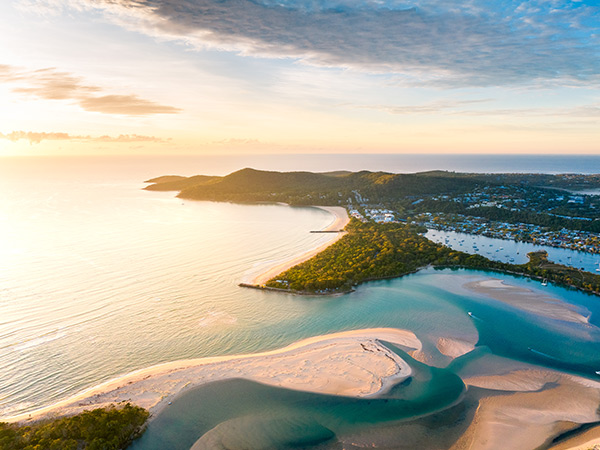
    Noosa Rivermouth And Main Beach
    Make the most of mild temperatures of Noosa in winter.

    Where to eat in Noosa

    Known for its dynamic cuisine, Noosa is an overflowing foodie destination. Whatever your tastebuds fancy, the region has it covered.

    There are the classic eateries, like lively beachfront Bistro C (try the caramelised pork belly), popular Season Restaurant on Hastings Street (order the spanner crab pasta) and stylish Locale (our pick is the slow roasted White Pyrenees lamb shoulder).

    There are also chic new restaurants offering tasty dishes, like the Mediterranean fare at Pelis, Cantonese-inspired dim sums at Sabrosa, organic sourdough pizza from El Capitano, traditional recipes and tequila at Dona Cocina Mexicana and modern Italian-Australian creations from Lucio’s Marina.

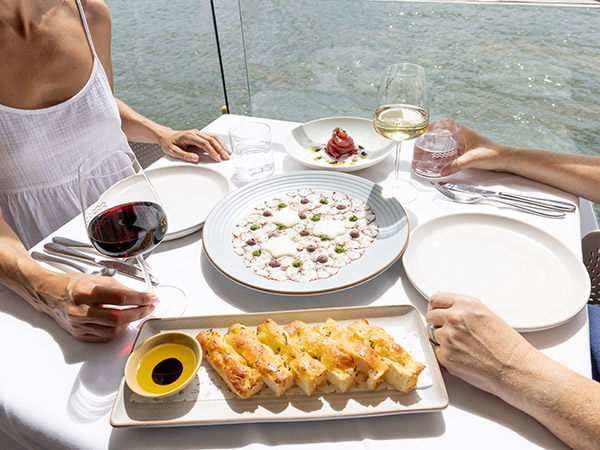
    diners at Lucio's Marina in noosa in winter
    Taste modern Italian-Australian at Lucio’s Marina. (Image: Nickolas May)

    Where to stay in Noosa

    Once you’re full, you’ll need to find a place to lay your head, and Noosa has no shortage of accommodation options. From five-star resorts with palm-fringed lagoon pools to self-catered apartments and family-friendly budget options, stays in the heart of the action on Hastings Street to sleeping steps from the beach or in more spacious and relaxed accommodation along the river, Noosa offers something for everyone.

    There’s the laid-back luxury of Netanya Noosa overlooking Noosa Main Beach, which offers studios, two- and three-bedroom apartments, or the family-oriented Ivory Palms Resort in Noosaville, with its three pools, jumping pillow and playground. Guests also love the versatile RACV Noosa Resort and its numerous pools, waterslides and tennis courts.

    For a wildlife experience, hop on a ferry and travel to the eco-friendly Senses Noosa North Shore. Surrounded by 16 hectares of native bushland, the beautiful architect-designed property blends indoor and outdoor living and offers three stunning pools and a spa. Guests can even spot kangaroos and rainbow lorikeets from shaded verandahs.

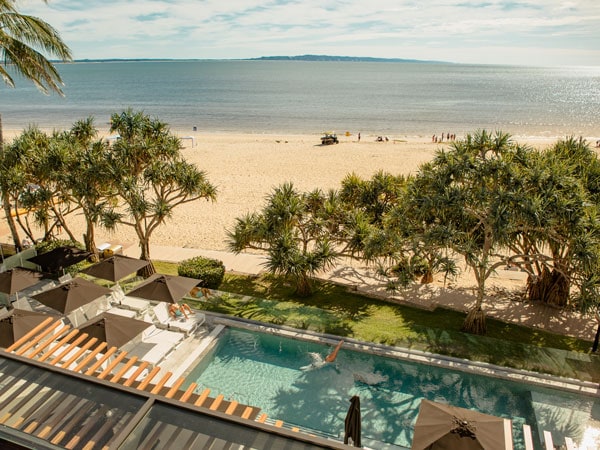
    a beachfront swimming pool at Netanya Noosa
    Gaze over Noosa Main Beach at Netanya Noosa. (Image: Lumea Photo)

    Things to do on land

    There’s no denying it, the main beach – with its creamy-coloured sand, consistent breaks and epic coastline views – is Noosa’s shining star attraction. Bordering this is the wildly popular Noosa National Park, where you can explore over 15 kilometres of walking tracks, including options like the Coastal Walk, Tanglewood Walk and Palm Grove Walk.

    A short stroll away is busy Hastings Street, which is full of life during the day and long into the night. Enjoy a little shopping, a late brunch, dinner out and a cocktail as the sun goes down.

    Climb onto a fully electric tuk tuk with Noosa e-TukTuk to get an insider’s tour of the region. For a more in-depth exploration, book a bespoke tour with Joel’s Journeys and head to the lush green hinterland, or discover the rugged landscapes of Great Sandy National Park with Sunny Jeeps to spend the day with the wind in your hair and sand underfoot.

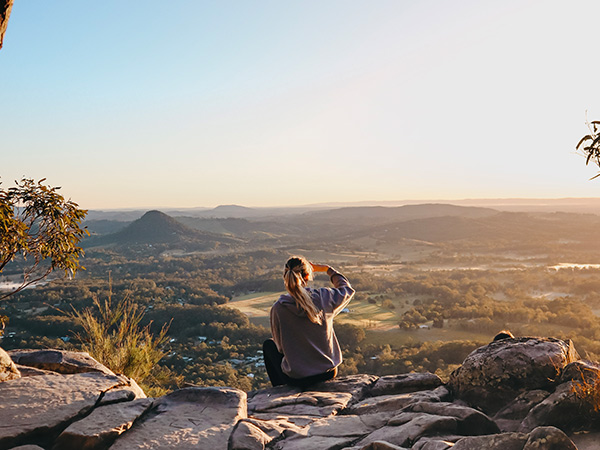
    woman enjoying the view after hiking through Noosa National Park, noosa in winter
    Take in views of the beautiful Noosa Hinterland. (Image: Demy Gavin)

    Things to do in the water

    Noosa isn’t just about the beach, the national parks and shopping; one of the most popular ways to embrace winter is to explore on water.

    You could brave the waves on a surfboard, explore the languid Noosa River on a stand-up paddleboard or even head to the Noosa Everglades for a day adventuring on a boat, canoe or kayak.

    Enjoy the winter sunsets aboard the newly launched HV Stillwater, a luxury, hybrid-powered catamaran that glides silently along Noosa’s waterways. You can also book a table on the only floating restaurant on the river – Noosa Cruiser – and dig into freshly cooked cuisine.

    For a little more adventure, head out with Kingfisher Safari Co and cruise around the Noosa River Inlet and Lake Cootharaba. Or search for whales and dolphins (from June to September) on a small charter boat tour with WhaleSongs Noosa; with an onboard researcher to explain what you’re seeing, as well as a hydrophone, you’ll be able to listen to the haunting songs of some of the world’s biggest animals while enjoying a winter’s day in the sun.

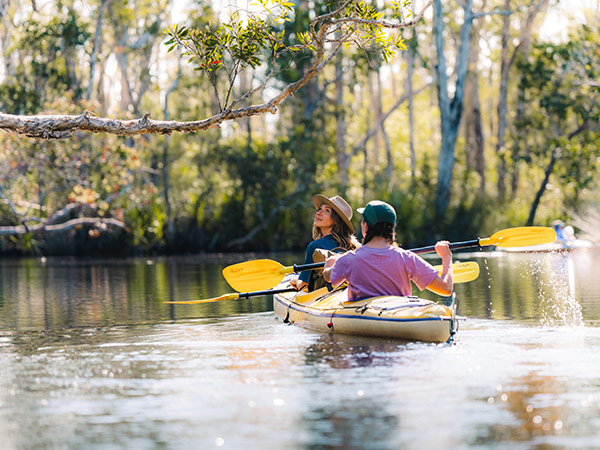
    women kayaking through Noosa everglades noosa in winter
    Explore the gorgeous Noosa Everglades. (Image: Emily Redfern)

    Book your winter getaway in Noosa at visitnoosa.com.au.

    Coral Spawning In The Great Barrier Reef