Embark on the iconic Bondi to Coogee walk to immerse yourself in the beauty and wonder of Sydney’s east coast.
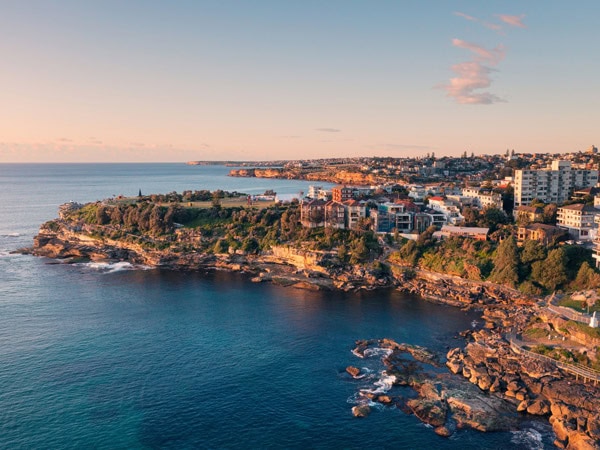
The Bondi to Coogee coastal walk is one of Sydney’s most popular walking tracks. While Sydney is no stranger to magical, coastal walks, the Bondi to Coogee track is particularly renowned for its unparalleled beauty and incredible panoramic ocean views. This scenic six-kilometre walk showcases Sydney’s iconic coastline, providing opportunities to swim at stunning beaches, admire rugged cliffs and explore hidden coves. There are multiple ‘pinch yourself’ moments along the way; it’s hard to believe this coastal oasis is located in the heart of Sydney.
Sydney certainly has an abundance of spotless beaches shimmering along the coast, and the Bondi to Coogee coastal walk is an excellent way to dive right in and discover them. The track is set at Grade 2 and is suitable for most fitness levels. Expect the walk to take around two to three hours to complete, although it’s best to allow for more time if you’re keen to properly explore the different stops and eateries along the way. Read on to find out why this coastal walk needs to be on your bucket list.
Bondi Beach to Tamarama Beach
Distance: 1.2 kilometres
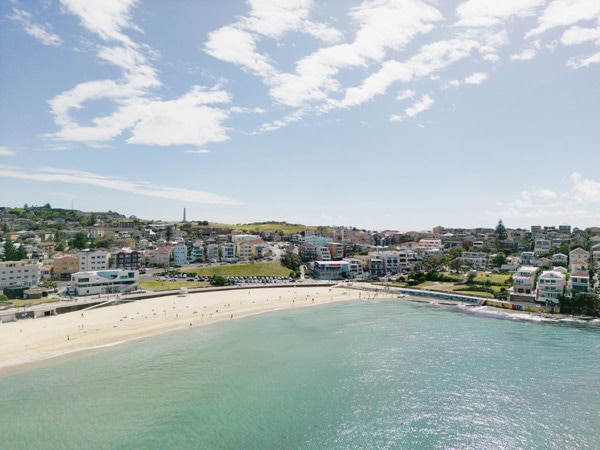
Bondi Beach, known as being one of the best beaches in Australia, has often been considered one of the Sydney locations everyone has to see at least once. The highly Instagrammable Bondi Icebergs is easily recognisable to locals and international tourists alike and has been welcoming visitors into the area for over 100 years. Open to the public all year round, you may choose to swim here before commencing your walk.
Another recognisable element to Bondi Beach is the Bondi lifeguards, made popular by the reality TV show Bondi Rescue, so keep your eyes peeled to see if they are filming an episode while you are there. Interested in having something to eat, or a cup of coffee, from one of Bondi’s many amazing cafes before heading off? Locals like to visit Rocker, Porch and Parlour, and Makaveli.
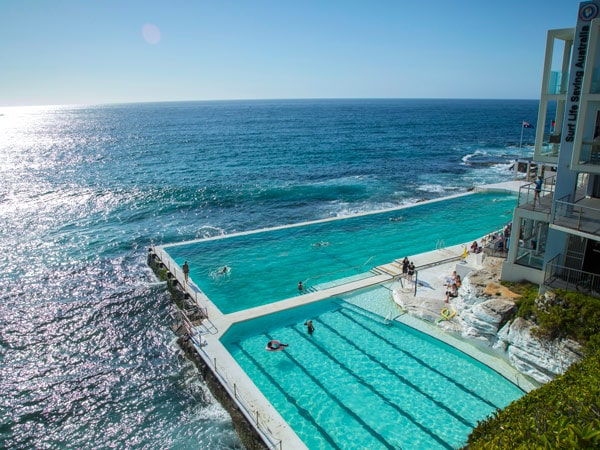
The coastal track begins at the southern end of Bondi Beach, from Bondi Icebergs, with some steep stairs that lead to sweeping views across Bondi. Make sure you are going the right way, as the opposite direction takes you on the Bondi to Manly walk. Shortly into your walk, you will come across an Aboriginal rock engraving of a whale, in rock a metre off the path. Unfortunately, while it is known to be an example of pre-European contact art, there is limited information about it today.
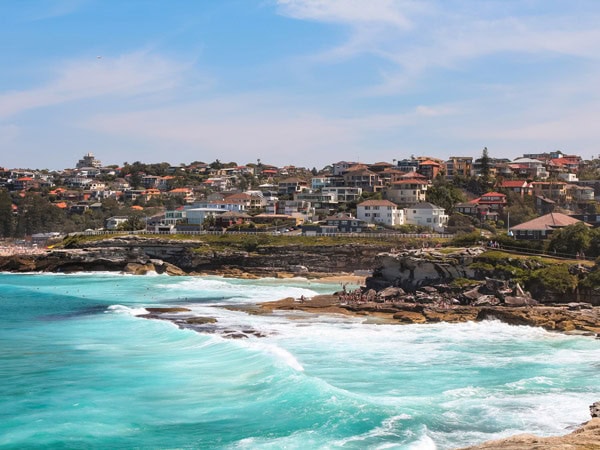
Tucked between Bondi and Tamarama is the transient and elusive Mackenzies Bay. The beach is a marvel and there is no way of knowing whether you will actually see it as you walk past or not; it vanishes and reappears according to shifting seasons and tides, with no rhyme or reason. Sometimes it will stay concealed for years and then reappear unexpectedly as a golden, hidden swimming spot. If you see Mackenzies Bay on your journey it is best to take a photo, as it simply may not be there next time.
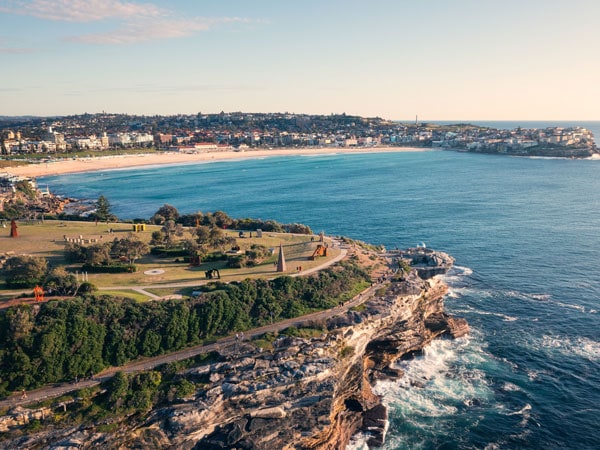
Further along, the headland lookout at Marks Park is an excellent vantage point to spot humpback whales making the annual migration along the coast. In October 2021, an artwork titled Rise was installed here. It serves as a respectful memorial to the lives lost in the area from the 1970s to 1990s, as a result of homophobic and transphobic hate crimes. From here, make your way towards Tamarama Beach, or as it is more affectionately known, ‘Glamorama’.
Tamarama Beach to Bronte Beach
Distance: 700 metres
As you make your way down to Tamarama Beach, you’ll pass by an art-deco surf lifesaving clubhouse. The surf life saving movement has had a profound impact on Australia’s identity, and while the Tamarama Surf Life Saving Club doesn’t have its own TV show like Bondi, it has nonetheless held a special place in the community since 1906.
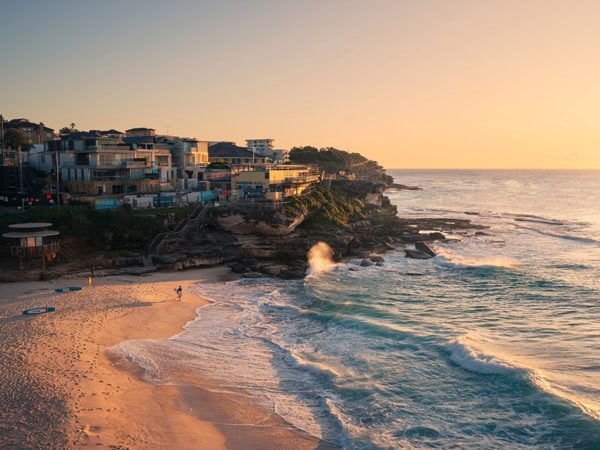
The club is particularly important as Tamarama surf can be hazardous, and the combination of swimming between the flags and the watchful eyes of the lifeguards, keep the public safe. You’ll find Tamarama Kiosk on the sand’s edge for a drink and snacks, and there are amenities available too. While it is possible to walk around the beach, it’s worth coming down on the beach itself during Sculpture by the Sea, when the whole area becomes an outdoor exhibition gallery.
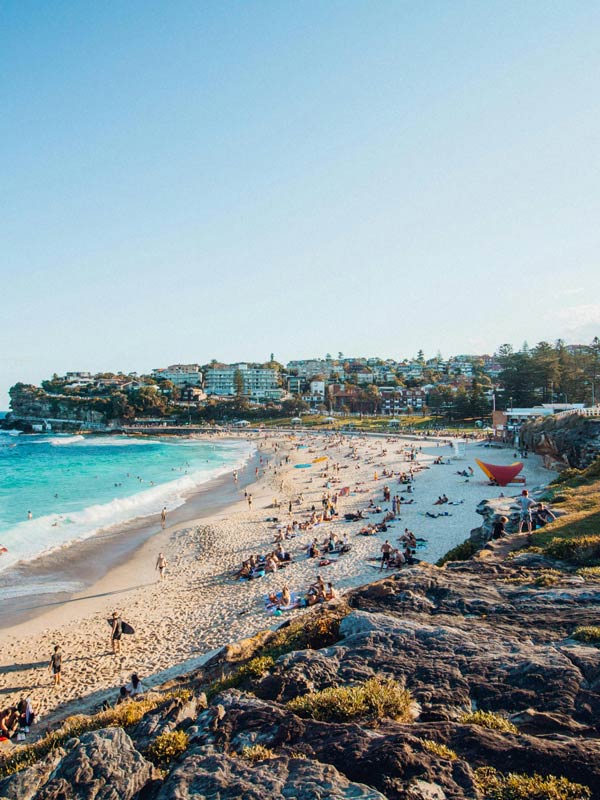
It is an easy walk on to Bronte Beach, and the track is accessible to wheelchairs and prams. A fact that surprises people is that Bronte is named after the British Royal Navy officer Horatio Nelson, who led the British to victory in the Napoleonic wars after his success at the Battle of Trafalgar. Better known as Lord Nelson, he was also the first Duke of Bronte – a title bestowed on him by the king of Sicily in 1799, as a way of thanking him for his role in saving the kingdom of Sicily from Napoleon’s revolutionary French forces. Renowned for its rock pools and lush park, there is a strong sense that while Bondi attracts the international tourist crowd, Bronte is more where the Sydney locals choose to swim.
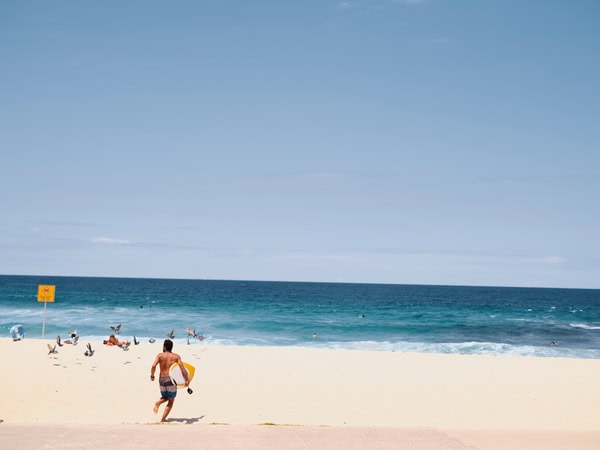
A refreshing dip into the vibrant blue waters of Bronte Baths is well worth it. Cut into the sandstone cliffs in the 1880s and surrounded by a white picket fence, the 38-metre pool with several marked swimming lanes is always popular. Alternatively, consider diving into the Bogey Hole rock pool, entering in from the beach.
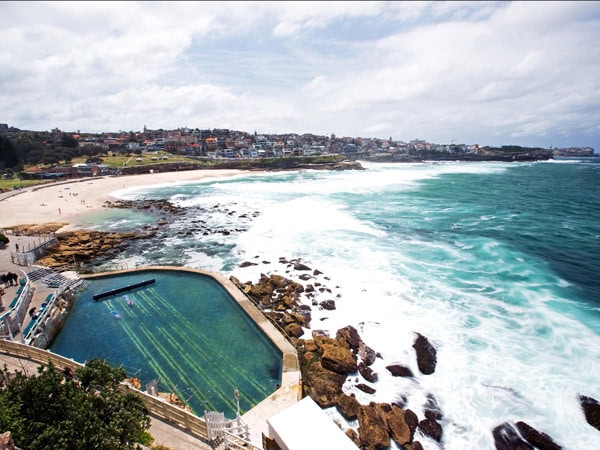
This swimming spot requires more strategy, as the best time to swim is the midway point between high and low tides, where the rocks are submerged by the water, but it is not too shallow. This is a gentler option for young children, or young-at-heart, who prefer more of a peaceful swim in calmer waters.
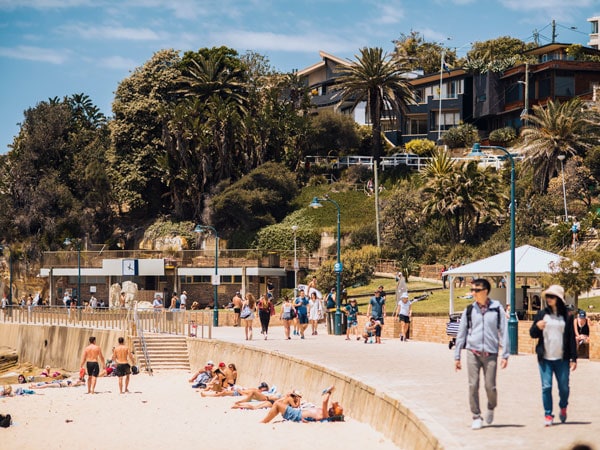
At Bronte Park, you’ll find sheltered picnic tables, free electric barbecues, and a large playground with slides, swings, and climbing jungles in the shade. If you find yourself walking this track on a weekend, public holiday or during the summer holidays, keep your eye out for the Bronte model train. A crowd favourite for kids and their parents, the model train makes its way around a circular track, against the beach backdrop.
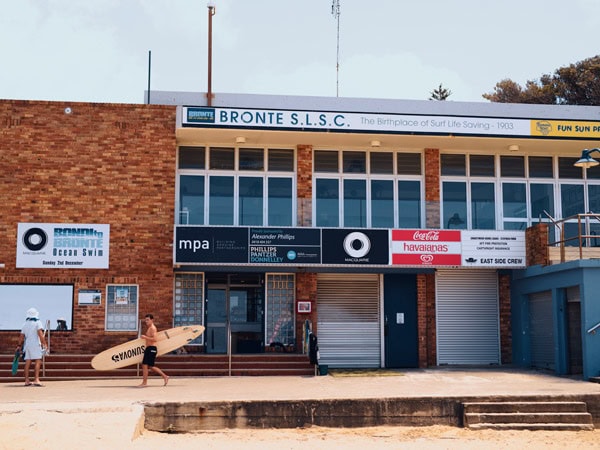
Grab a coffee at one of the many beachside cafes on Bronte Road, like Locale or Favoloso espresso bar, and make use of the shower and toilet facilities before moving on to the next stop.
Need tips, more detail or itinerary ideas tailored to you? Ask AT.
AI Prompt
Bronte Beach to Clovelly Beach
Distance: 2.2 kilometres
To farewell Bronte Beach, climb the steps to the parking area across from Bronte Road cafes, follow the steps and head towards Calga Reserve. Note that the path up to Bronte rock pool doesn’t directly connect to the main track, so you’ll need to turn back on yourself. From Calga Reserve, you’ll be able to see stunning views out over the ocean.
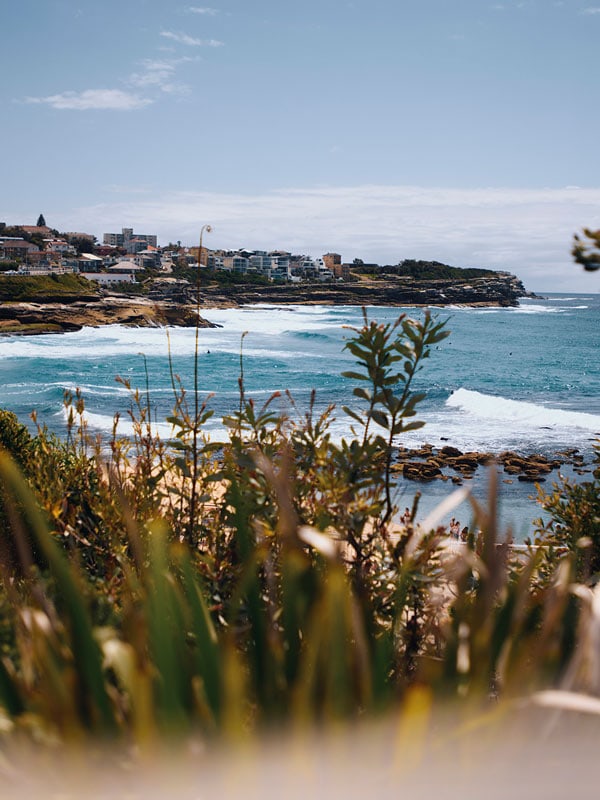
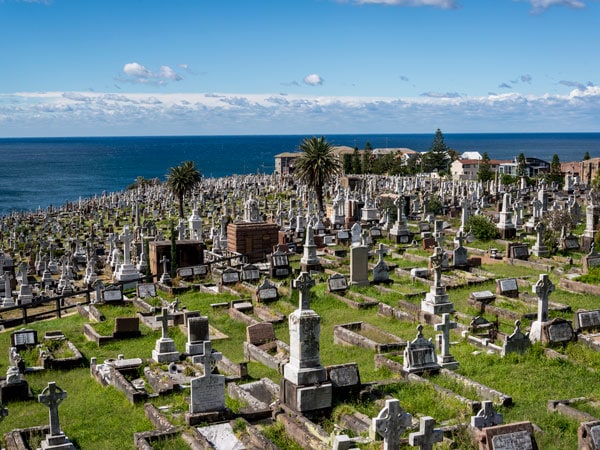
A 500-metre boardwalk along the coastal cliff edge of Calga Reserve has rest stops and photo opportunities, showcasing incredible views over sheer cliffs, extending across the state heritage-listed Waverley Cemetery. Often considered to be one of the most beautiful cemeteries in the world, Waverley Cemetery has been operating since 1877, and more than 100,000 people have been buried or interred there. If you take a moment to detour and wander through this peaceful place you will find the graves of some well-known Australians, including the first prime minister, Edmund Barton, writer Henry Lawson and Dymocks bookseller co-founder William Dymock.
The first clue that you’ve arrived at Clovelly is the Clovelly Bowling Club. With arguably one of the best views of any bowling club in Sydney, you may be tempted to play a game of barefoot bowls. Keep walking and you will soon descend into narrow and picturesque Clovelly Beach.
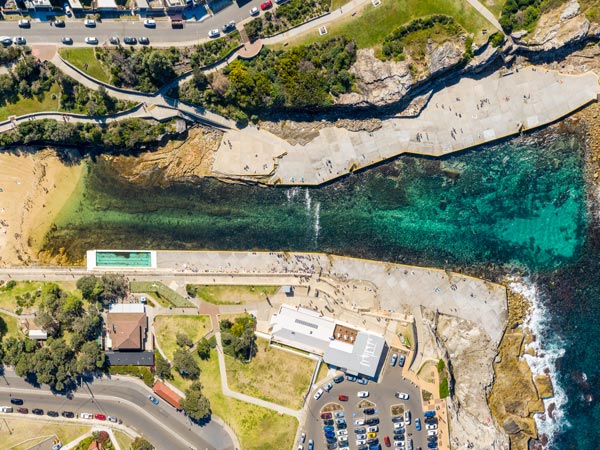
What makes Clovelly stand out from other beaches along this trail are the long concrete platforms on either side of the beach, where you’ll find people sprawled out sunbaking. The water is usually flat here, making it an ideal spot to float in gentle water. Alternatively, there is a 25-metre saltwater pool, known as the Geoff James pool, that is closer to the shore. If you need to take a rest from walking and want a bite to eat, drop in at the Seasalt cafe, close by the water’s edge.
Clovelly Beach to Gordons Bay
Distance: 800 metres
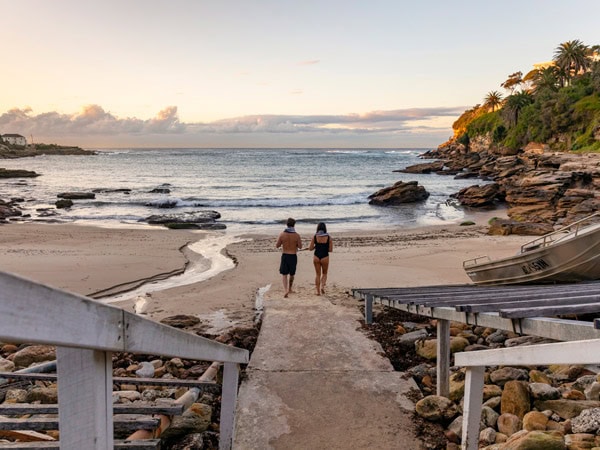
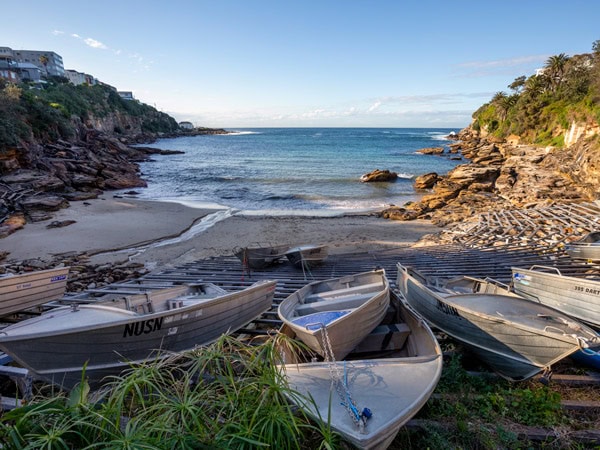
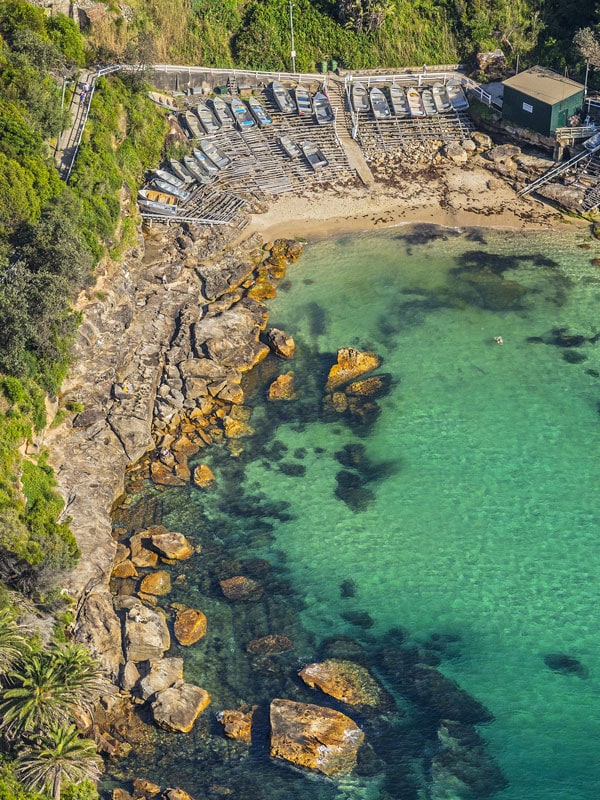
Quaint Gordons Bay, named after 19th-century government surveyor Lewis Gordon who obtained crown land in the area, is just around the corner and is only accessible by the Bondi to Coogee coastal track. One of the first things that you will notice is the racks of small boats from the local fishing club lining the banks, giving the impression you’ve wandered into a small European fishing town. Sand is limited, so most people opt to sunbathe on the rocky outcrops, or the tranquil waters encourage swimming, snorkelling and diving.
Gordons Bay features a popular dive spot protected by an offshore reef, known as the Gordons Bay Underwater Nature Trail – and it’s the only underwater nature trail in Sydney. What’s an underwater trail? As the name suggests, it’s a bush walk – but entirely underwater.
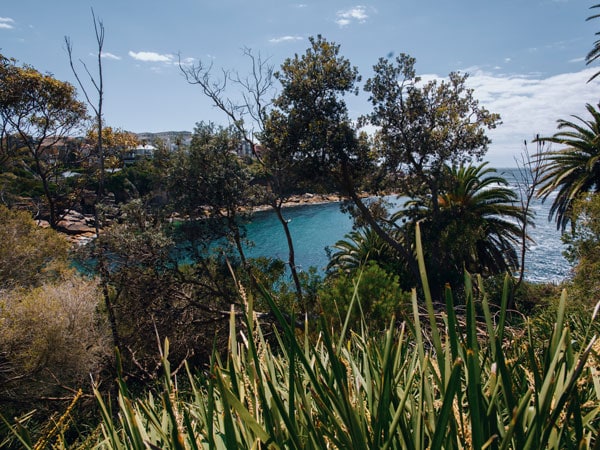
This self-guided trail is some 600 metres long, with a maximum depth of 14 metres, and is maintained by the Gordons Bay Scuba Diving Club. It is made up of concrete-filled drums that are connected by a chain and is typically completed in 40 minutes. For more information, check out the informative steel plaques along the way.
While it is undoubtedly too hard to do the Bondi to Coogee walk with scuba gear in tow, make sure you pack your snorkels, as snorkellers can still see the bottom on a clear day, and you may even be able to spot an eastern blue groper.
Gordons Bay to Coogee Beach
Distance: one kilometre
The track is straightforward walking along from Gordon’s Bay, passing Koojah Cliff look-out for excellent views overlooking vibrant Coogee Beach. While Coogee certainly has an energetic atmosphere, it doesn’t have the same frenetic energy as Bondi.
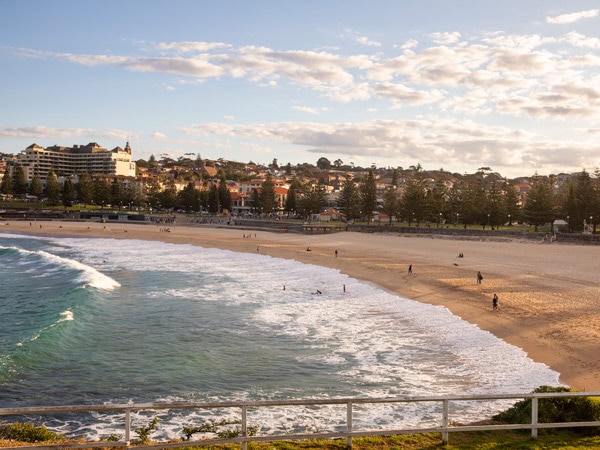
Laidback, family-friendly and relaxed, Coogee has it all: picnic areas, a large and shady children’s playground at Grant Reserve, cafes, shops and recreation opportunities. If you make your way to the northern end of the beach, you’ll find beach volleyball courts set up ready for a game, looked after by the Coogee Beach Volleyball Association.
Go for a final swim in Coogee Beach, or head to one of the four ocean pools: McIver Women’s Baths, historic Wylies Baths, Giles Baths, and the Ross Jones Memorial Pool.
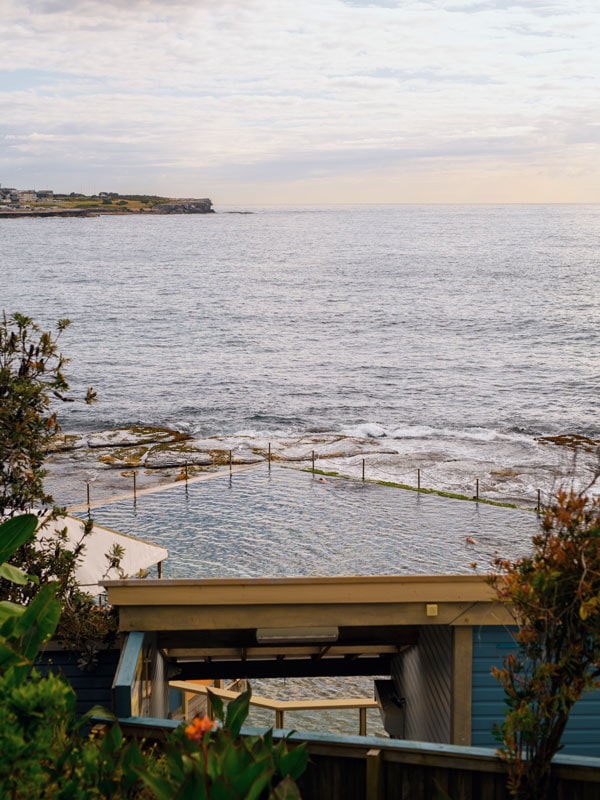
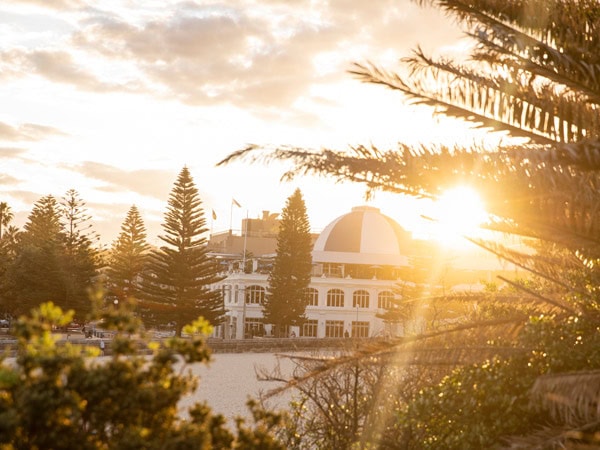
After your long walk along the Bondi to Coogee track, you’ve earned a well-deserved rest. Head to Balcony bar, one of the best rooftop bars in Australia, atop the Coogee Bay Hotel, for a relaxing drink, or stop by the Coogee Pavilion, the iconic heritage beach-front building.
Weekly travel news, experiences
insider tips, offers, and more.
Frequently asked questions
How long does it take?
The trip usually takes between two to three hours, although timing will be extended depending on the number of stops made. The track is classified as moderate, with some sections requiring more effort to be exerted, and this may also impact timing. Weekdays are generally less crowded than weekends, which may also impact overall walking time. Unfortunately, only some sections of the Bondi to Coogee walk are accessible, so refer to individual sections to work out distances and timing.
How to get there and back?
Although called the Bondi to Coogee coastal walk, many people prefer to do this track in reverse. By starting at Coogee, you’re able to better appreciate the expansive beauty of Bondi Beach at the end of your journey and have more options for eating and drinking. Consider using public transportation, as there are regular buses through the Eastern Suburbs from the city. Buses for Bondi depart from Central Station and buses for Coogee leave from Museum Station.
Parking tips
Parking can be challenging, especially on weekends, as there is limited off-street parking available, so arriving early to secure a spot is a must. There is limited four-hour parking time available at Coogee and Clovelly on roads with coastal frontage, but these fill fast. Bondi Beach has paid parking options, and there are also street parking options along the route but be mindful of timings.
Sculpture by the Sea
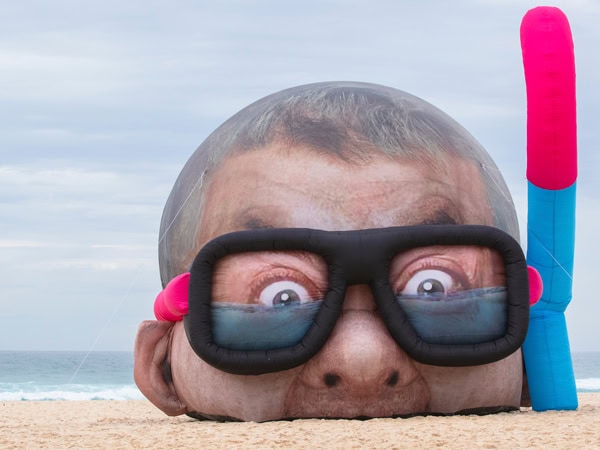
Set against the backdrop of the ocean, Sculpture by the Sea is one of the iconic annual Sydney events not to be missed. Australia’s largest outdoor immersive sculpture exhibition is held in the fourth quarter of the year (in 2024 it will take place from October 18 to November 4).
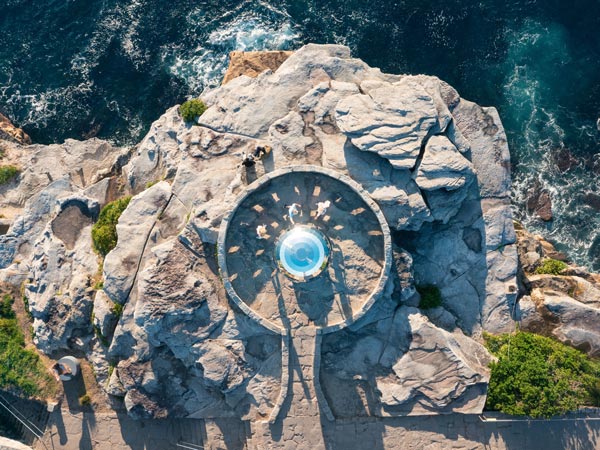
Artists from around the world are invited to create unique sculptures to be showcased along the Bondi to Tamarama section of the coastal track. The exhibition aims to bring art into public spaces and is an epicentre of creativity and international acclaim.
For more iconic Sydney coastal walks, check out the Spit to Manly coastal walk.
Want to see more stories from Australian Traveller in your Google search results?
- Click here to set Australian Traveller as a preferred source.
- Tick the box next to "Australian Traveller". That's it.

Jessica Noelle
View profile and articles