Top 10 Little-known Natural Wonders in Australia

hero media
It appears that ancient Aboriginal people didn’t feel it necessary to build giant structures.

Neolithic Britons erected Stonehenge, while over in Ancient Egypt… well, you get the picture. But in Australia there was no need to go large.


Perhaps the stifling heat wasn’t conducive to dragging 10-tonne boulders around? Or was it the fact that nature had already littered the land with geological structures that no man-made effort could ever hope to replicate in scale or wonder?


Without doubt it has to be the latter; from vast salt basins to peculiar rock formations, here are 10 impressive Australian natural wonders that may have slipped under your radar – part of our 100 Incredible Experiences (right here in your backyard) special issue.

1. Remarkable Reefs – Rowley Shoals, WA

Three tear drops of coral reef sit almost equidistant from each other on the face of the Indian Ocean, 260 kilometres from Broome. With them being almost the same size at around 80 square kilometres apiece, Rowley Shoals is surely one of the most unusual reef formations.


Why you have to go: Fancy yourself an explorer of wild places? It doesn’t get much more remote than this, and it has some of the best diving on the planet.

2. Idyllic isthmus – The Neck, Bruny Island, Tasmania

Ascend a series of stairs among the dunes on southern Tasmania’s Bruny Island and you’ll find a viewing deck that affords a truly remarkable view of the famous Neck.


This is a long slither of land connecting south and north Bruny, an isthmus of sand that forms two beautiful beaches. From the lookout you get a 360º view of the island and you’ll find a memorial to the indigenous Nuenonne people who lived here before European settlement.
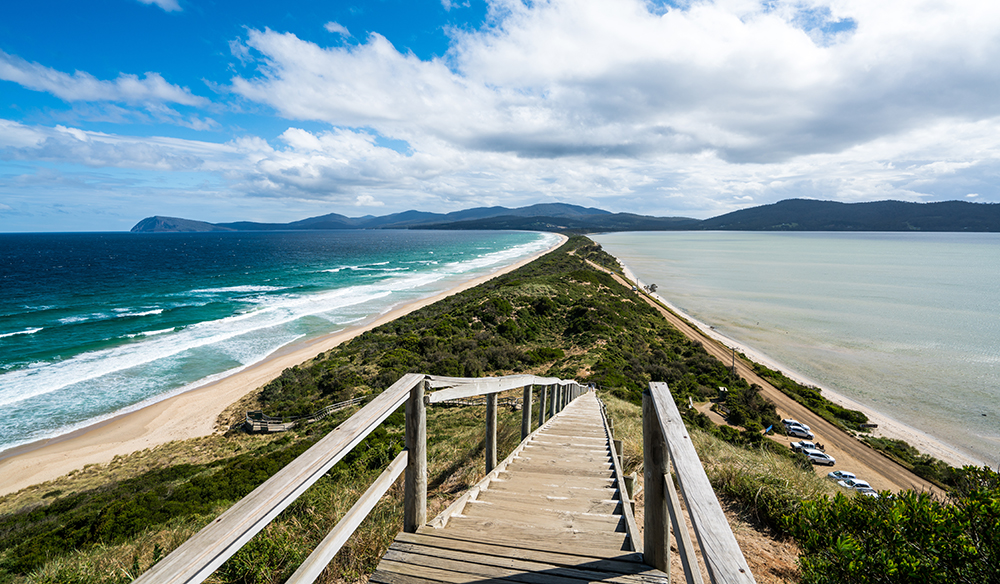
The Neck in Bruny Island

Why you have to go: Aside from the striking form of The Neck itself, there’s some great bird life to be found here, including little penguins, which can be seen moving up the beach in groups come dusk.

3. March of the crabs – Christmas Island

Surely one of the great wildlife migrations on the planet, rivalling that of the wildebeest or monarch butterfly, Christmas Island red crabs move en masse each year in the wet season of October/November from the island’s forests to the ocean.


It’s thought there are more than 40 million red crabs on the island, and when they decide to migrate to mate, a trip that takes them a week or so, roads and beaches become a carpet of moving red.


Why you have to go: Witness Australia’s most spectacular wildlife migration in this far-flung Territory of ours, plus keep an eye out for the monster of all crabs, the land-based coconut crab.

Need tips, more detail or itinerary ideas tailored to you? Ask AT.

AI Prompt

4. A secret paradise – Lawn Hill Gorge, Queensland

Boodjamulla National Park has a lush secret: a beautiful oasis at its heart. Lawn Hill Gorge is a pristine, emerald green creek surrounded by orange sandstone cliffs and tropical bush beyond.
It even has its own waterfall, Indarri Falls, a glorious wild swimming spot to cool off in.


people also come to this remote corner of north-west Queensland to cruise its waters in canoes, available for hire. The Waanyi people have lived in the area for at least 17,000 years and traces of their ancient rock art can be found in the park.


Why you have to go: Boodjamulla is a magical place that encompasses the best of the Australian outback with brilliant campsites to boot.

Lawn Hill Gorge in Boodjamulla National Park, QLD.
Lawn Hill Gorge in Queensland’s
Boodjamulla National Park

5. Nature’s Stonehenge – Murphy’s Haystacks, SA

Australia’s red rock is as iconic as its hopping fauna and it’s often shaped into weird and wonderful formations by wind and water.Murphy’s Haystacks is a stunning example of just how dramatic Australia’s geology can get.


Found off an innocuous minor road on South Australia’s Eyre Peninsula, this is our country’s Stonehenge, the giant outcrops of wave-like, sculpted, ochre granite seemingly placed there by some ancient civilisation. Weathering over the millennia has exposed the stone and left it sentinel atop a hill overlooking the surrounding back country as far as the eye can see.


Why you have to go: It’s an epic stroll among these ancient buttresses, and off the beaten track, you’ll likely have them all to yourself.

6. Go with the flow – Undara Lava Tubes, Queensland

It’s not often that the planet’s violent past is so awesomely realised; in the Undara Volcanic National Park, uncharacteristically well-formed tunnels look like they’ve been sculpted by some giant worm.


The passages are the result of a volcanic eruption some 190,000 years ago that sent lava down a dry riverbed.


The top of the lava flow cooled and formed a crust allowing the molten rock to flow down the tube and drain away, creating the tunnels.


Why you have to go: Where the roof has collapsed it has provided the perfect conditions for dry rainforest and exotic wildlife.

7. City break – The Lost City, NT

So romantically named you feel like packing a bull whip in your luggage, It’s easy to see how the Lost City got its moniker. giant pillars of sandstone jut out of the bush like the remains of some lost civilisation.
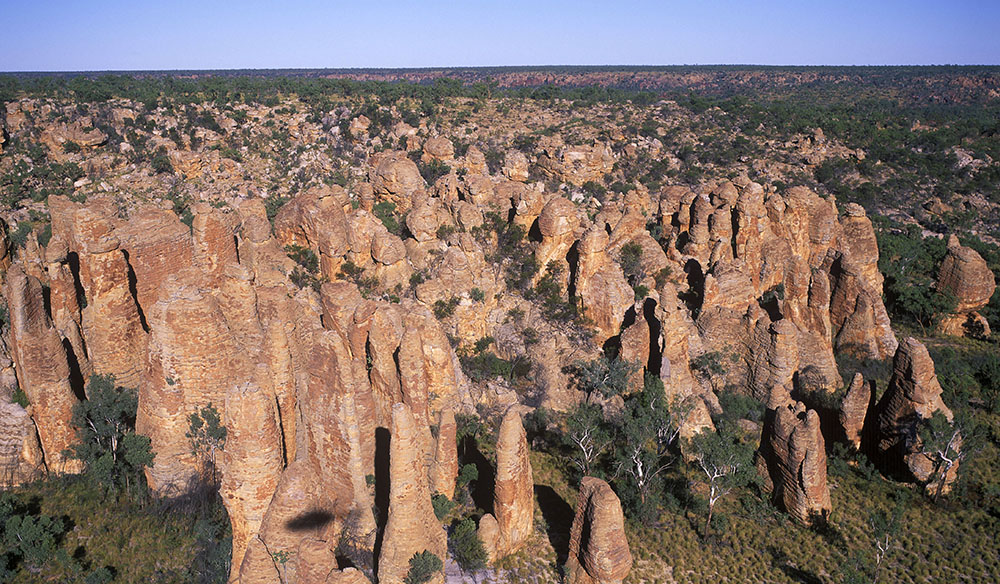
The lost city at Cape Crawford near the McArthur river

Found in Litchfield National Park, an hour’s drive from Darwin, the lost city is found at the end of a testing 4WD track. But if it was easy to get to you wouldn’t have that sense of wonder when you finally walk its maze of narrow passages, sculpted by hundreds of millions of years of wind and rain, would you?


Why you have to go: Feel like you’re in a lost world as you pick a path through the building-sized structures and natural streets of this spectacular formation.

Weekly travel news, experiences
insider tips, offers, and more.

8. Ebb and flow – Horizontal Falls, WA

When Sir David Attenborough describes something as “one of the greatest natural wonders of the world", you have to sit up and take notice.
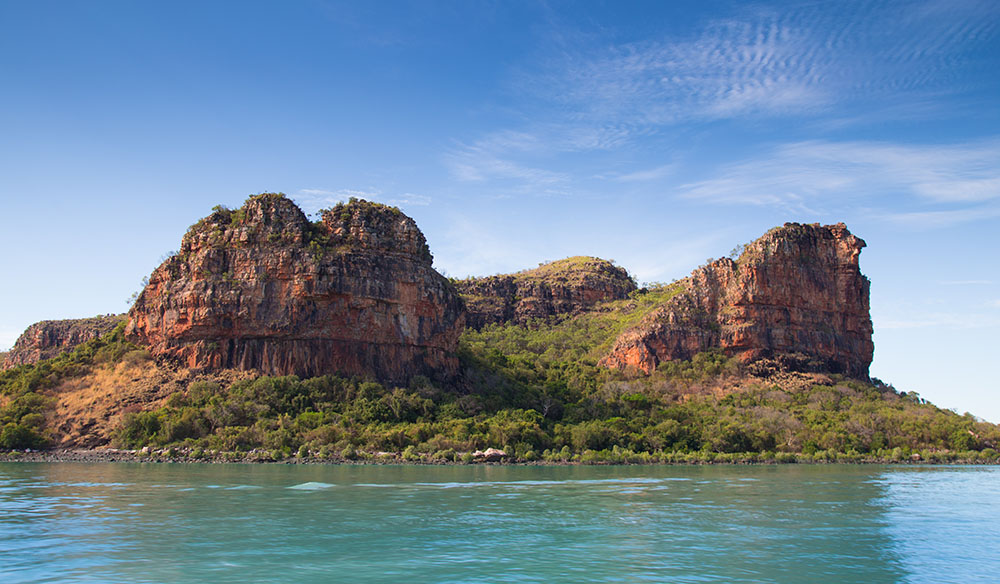
The Hunter River is a river in the Kimberley region of Western Australia

And he wasn’t talking about Uluru or that big reef of ours. No, he was enthusing about the Horizontal Falls. Located on the Buccaneer Archipelago, two near-perfectly aligned gorges let the tide rush in and out, creating a surge of water. The most seaward gap is just 20 metres across creating a literal horizontal waterfall.
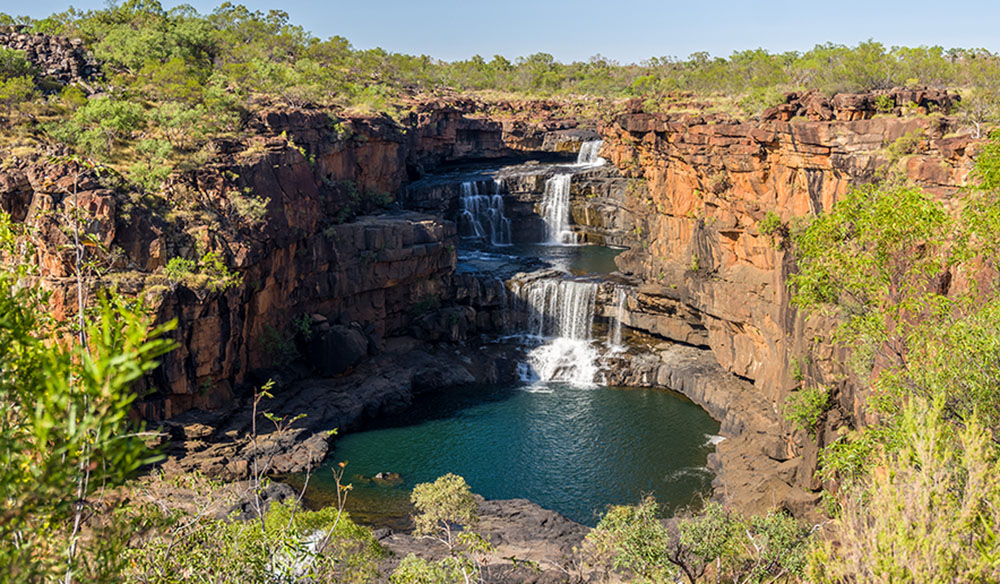
 

Western Australia

Why you have to go: Catch a speed boat up through the torrents to see the power of the Kimberley tides for yourself.

9. Walking on air – Lake Gairdner, SA

California’s Death Valley contains a world-famous salt flat, the impressive Badwater Basin. Its crystallised, saline surface is an impressive 12 kilometres in length and eight kilometres wide.Pah! Lake Gairdner in central South Australia, is also a salt lake, but 160 kilometres in length and 48 kilometres across.
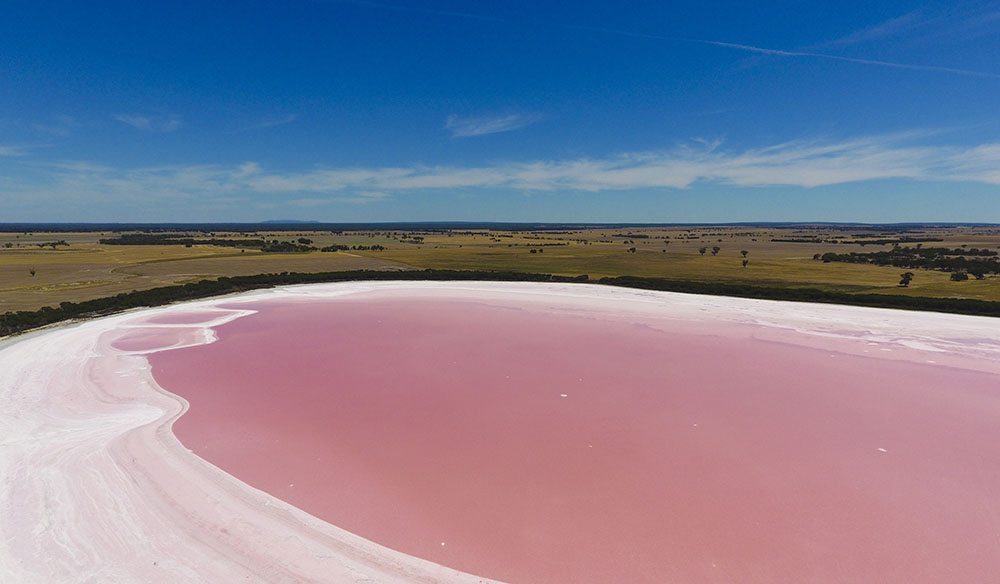
The pink lake phenomenon in south Australia

You can walk out on the brilliant white, hard surface of the salt and look at the horizon where the lake bleeds seamlessly into the sky.


Why you have to go: On par with any of Australia’s giants, you have to have your breath taken away with this little-known, yet big, beautiful natural wonder.

10. Sheer spectacle – Sawn Rocks, NSW

Like a cathedral’s organ rising up from the forest, this 40-metre-high cliff is surely one of the most bizarre geological formations in the country. Found in Mount Kaputar National Park, 38 kilometres north of Narrabri, the hexagonal columns of towering rock were formed when basalt lava from the now extinct Nandewar Volcano cooled before becoming exposed.


It’s a lovely 1.5-kilometre loop walk through the bush to arrive at the site and just beyond it you’ll find swimming holes and collapsed horizontal sections of the hexagonal rock to inspect.


Why you have to see it: Like a hanging Giant’s Causeway, Sawn Rocks has to be seen to be believed.

Want to see more stories from Australian Traveller in your Google search results?

  1. Click here to set Australian Traveller as a preferred source.
  2. Tick the box next to "Australian Traveller". That's it.
hero media

The ultimate spring and summer guide to Melbourne

There’s nothing quite like Melbourne in the warmer months. Come spring, the city emerges from its cold-weather cocoon and brims with marquee events, vibrant seasonal menus, brilliant blooms and a fresh energy.

The centre of the city is where most of the magic happens. It’s a labyrinth of art-lined alleys and meandering laneways, filled with restaurants, cafes, rooftop bars, galleries, live music joints, theatres, boutiques, high-end hotels like The Westin Melbourne and much, much more. In spring and summer, especially, locals and travellers alike come to enjoy the balmy weather and celebratory spirit.

If you’re planning to be one of them, here are the best places for eating, drinking, exploring and staying.

Where to stay

The Westin Melbourne

couple inside their room at the westin melbourne
View the city from above in your suite.

Situated in the heart of the city on bustling Collins Street, The Westin Melbourne is a supremely convenient base. With the hotel as a base, explore the entire CBD – including Federation Square and Melbourne’s shopping, dining, theatre and sporting precincts – on foot.

Despite its central location, the hotel is something of an oasis. It has a serene ambience and elegantly understated design that provides respite at the end of a busy day. Think timeless interiors with warm timbers and neutral tones, and spacious rooms with signature Heavenly® beds and sumptuous linens. You’ll also indulge in impeccable service and amenities like fitness and wellness centres and an indoor pool. Selected rooms have sweeping city views.

Where to eat and drink

1. Allegro

Allegro is refined yet welcoming, pairing seasonal Australian produce and international flavours, finished with finesse. The à la carte, set and pre-theatre menus change seasonally. In spring and summer, expect a lively and creative line-up of dishes. You can also partake in a playful and limited-edition High Cheese offering that’s well worth trying if you’re a lover of blues and bries.

The restaurant happens to be located right inside The Westin Melbourne. It’s an ideal spot if you’re staying at the hotel and need somewhere to dine or drink before hitting the town.

2. Lobby Lounge

the westin melbourne lobby lounge
Step into the Lobby Lounge.

Whether you’re after a quick bite before exploring the city, a leisurely lunch or dinner, or a post-theatre nightcap, head to The Westin Melbourne’s elegant Lobby Lounge.

The menu features everything from moreish snacks, small bites and share plates to hearty all-day meals and desserts. The accompanying drinks list is a treasure trove of varietals, with a notable leaning towards Victorian drops and an excellent selection of spirits.

For a truly indulgent experience, book yourself in for the signature high tea. You’ll savour three tiers of beautifully crafted sweet and savoury treats, specialty tea and coffee, and the option for a sneaky glass of bubbly.

3. Other places to dine

diners at supernormal melbourne
There’s no shortage of tasty dining options, in and nearby The Westin Melbourne. (Credit: Visit Vic)

Dotted around the city are some of Melbourne’s most acclaimed dining destinations. Supernormal is a local institution. Feast on inventive Pan-Asian dishes made with fresh ingredients, paired with a Japanese whisky or sake from the extensive drinks list. At Gimlet, the surroundings are utterly romantic, the service impeccable and the food outstanding. Expect sustainably sourced meats, seafood and produce finished with European flavours and technique.

Apollo Inn – the sister venue to Gimlet and Supernormal – does punchy snacks, share plates and incredible drinks. Try the signature Picon Biere, a refined take on a shandy.

Dukes Coffee Roasters at Ross House is a great place to start your day, serving up organic and sustainable brews made with precision.

While you’re in the city, take a wander down Hosier and AC/DC Lanes. Beyond the famed street art along both, you’ll find a cluster of must-try eateries and bars, including MoVida, Pastuso, Bar Bambi and Tres a Cinco.

Things to do

1. Take a run through Melbourne’s green spaces

a bridge across yarra river
Run or walk along the Yarra River. (Credit: Visit Vic)

Melbourne’s outdoors look their very best in spring and summer. The parks and gardens come alive with colourful blooms, the trees in and around the CBD regain their verdant canopy, and the Yarra River sparkles in the sun.

A run or walk in nearby green spaces, like Carlton Gardens, Fitzroy Gardens and the Royal Botanic Gardens, lets you soak up the scenery. The Westin Melbourne also provides curated running routes through surrounding gardens and along the Yarra. Workout gear and Bala weights can be borrowed from the hotel if you forget to pack your own.

2. Browse the boutique galleries

two women looking at an exhibition in the national gallery of victoria
See the collections of NGV. (Credit: Visit Vic)

Independent art galleries are practically synonymous with Melbourne, and many of them are conveniently situated in the city centre. You can easily hop between Flinders Lane Gallery, Arc One Gallery, Outre Gallery, Caves Gallery, Gallery Funaki and D’Lan Contemporary, allowing you to experience the city’s vibrant art scene in a single day.

If you’ve got an afternoon to spare, venture over the Yarra to the National Gallery of Victoria. The iconic and historic institution houses both a vast permanent collection and an exciting roster of rotating exhibitions.

3. Catch some live music

live music at the cherry bar in melbourne
Dive into Melbourne’s live music scene. (Credit: Visit Vic)

Melbourne’s live music scene reignites when spring hits. In and around the CBD are several beloved live music venues that showcase everything from jazz to rock to electronic.

Visit intimate venues like Bird’s Basement, Wax Music Lounge and Cherry Bar, or larger ones, such as The Toff, Forum and Palais Theatre, for major acts. Plenty of bars, restaurants and clubs host regular gigs, too, including The Westin Melbourne’s Lobby Lounge. Every Saturday from 12-3pm, enjoy live strings alongside your lunch or afternoon tea.

4. Soak up the atmosphere at the MCG

three punters in big hats at the melbourne cricket ground
Book tickets for a big sports bash. (Credit: Visit Vic)

The Melbourne Cricket Ground welcomes its namesake sport in the warmer months. Watch One-Day Internationals, T20 Internationals, Big Bash League and Sheffield Shield matches throughout the season, or settle in for the multi-day Boxing Day Test.

Spring and summer are also when the MCG holds big events and concerts. Surrounded by the roar and energy of the venue’s legendary crowds, there are few places better than this to see a live gig.

5. Experience the magic of the Regent Theatre

the inside steps of melbourne's regent theatre
Soak in Regent Theatre’s architecture. (Credit: Visit Vic)

Standing proud for nearly 100 years, the Regent Theatre is a stunning venue: its grand exterior opens to a gorgeously ornate interior decked out with chandeliers, plush drapes and gilded details.

Stopping by to take in its architecture is memorable enough. But if you’ve got the time, book a ticket to one of the spectacular shows that take place inside. The venue hosts a diverse line-up of live music, musicals, opera, dance, theatre and comedy. In spring and summer, the program is at its most energetic, with events to suit all tastes.

Whatever draws you to Melbourne, The Westin Melbourne is at the centre of it all. Start preparing for an adventure at marriott.com.