If Australia had this, passengers could be paid for cancelled flights

hero media
Why Australia needs an aviation ombudsman.

The financial difficulties of Rex Airlines, coming so soon after the bankruptcy of Bonza, have brought into sharp focus one of the federal government’s key priorities for aviation: enhancing passenger rights.

In each case, passengers were left with tickets for flights that did not fly. In the case of Rex, tickets were honoured by rivals Virgin Australia and Qantas, possibly trying to recapture the small toehold Rex had established in the Brisbane-Sydney-Melbourne golden triangle.

The Bonza story was more complex as the fledgling airline, which collapsed in May, had sought to exploit under-serviced routes to smaller leisure-based cities including Maroochydore and Port Macquarie.

In many cases, passengers were left out-of-pocket and stranded.
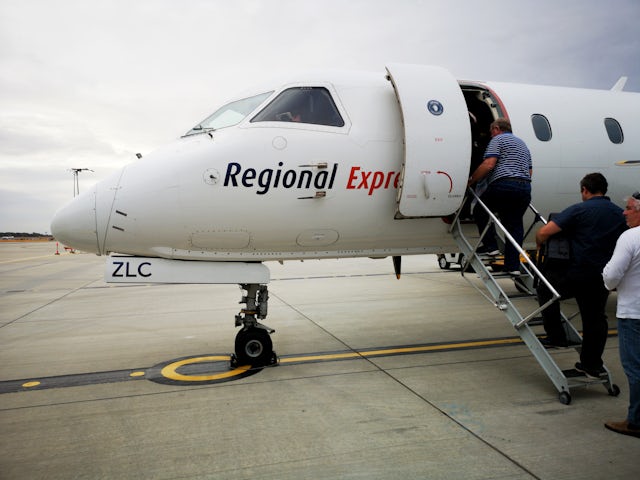
People boarding a Rex Airlines flight

Passenger rights have been brought into sharp focus after the recent financial difficulties of Rex Airlines and Bonza.

Support for an ombudsman

These failures will have emboldened the federal government’s plans to introduce stronger passenger protections and an airline ombudsman.

The release of its policy white paper is imminent. The paper covers aviation issues including competition between airports and airlines, the sector’s environmental impact and better mechanisms for consultation.

After years of opposition, Qantas and Virgin quietly fell in behind the idea in May, signalling a deal is close to being announced.

The ombudsman is designed to protect consumer rights in what is often monopolistic or quasi-monopolistic operating environments. With the exception of residents of southeast Queensland and the western suburbs of Melbourne, most Australians only have one airport from which to fly.

This, coupled with an effective airline duopoly, can lead to higher prices and poorer service for consumers, the Australian Consumer and Competition Commission (ACCC) has argued.
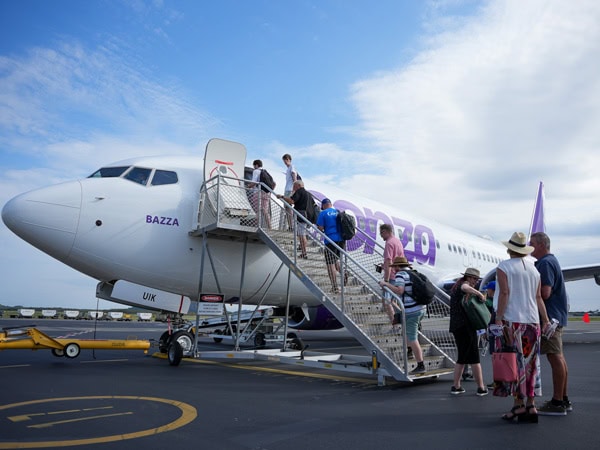
People boarding Bonza flight
Bonza suspended all flights and entered voluntary administration on 30 April.

The ACCC has been calling for better passenger rights for more than a decade. But its calls grew louder after it fined Qantas A$120 million for selling “ghost" flights in May.

Passengers did receive refunds, but the process was not easy compared to many overseas jurisdictions where compensation is automatic and based on distance travelled.

Australia is rare among developed countries for not having automatic compensation if a flight is cancelled or delayed.

The EU model

The leader in air passenger rights, as in many areas of consumer protection, is the European Union. The EU Passenger Rights regulation is 20 years old and now also applies to rail and bus passengers.

The regulation favours the passenger and awards compensation of up to €600 (almost A$1,000) for delays or cancellations. There are clauses for when a delay is unavoidable, but generally airlines have now built the scheme into their costs of doing business.

The scheme is well publicised and in 2022, about eight million passengers were eligible for refunds.

Air passenger rights in the UK continued in the EU mould after Brexit and were even strengthened.

But in a 2023 review into the UK scheme, some airlines argued “private insurance was a better option for some passengers", particularly those with disabilities.

The same reasoning led to the removal of Australia’s previous consumer protection scheme for airline passengers, the Travel Compensation Fund, which refunded customers when airlines or travel agencies went bankrupt.
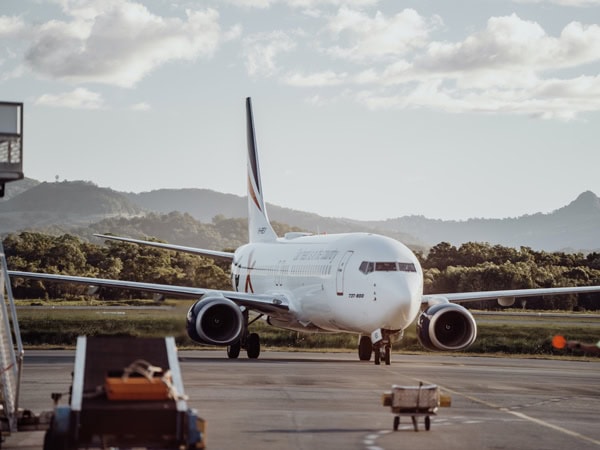
Rex flight on ground
Australia’s Travel Compensation Scheme was abolished in 2014. (Image: Josh Withers)

The scheme was ended under the Abbott government in June 2014, with travellers told instead to take out their own travel insurance.

Labor is expected to reintroduce an element of corporate responsibility for airline delays, not least since Brazil, Canada and Türkiye have also followed the EU’s lead.

Brazil’s scheme is particularly generous, with up to R7,500 (A$1,950) available to passengers who have to pay for last minute accommodation if their flight is cancelled.

Lawmakers there countered claims by airlines that low cost airline passengers could stay in cheaper hotels, by applying the compensation uniformly, regardless of travel class.

Air passenger rights can be a vote winner, too. Before he withdrew his bid for reelection, US President Joe Biden trumpeted the automatic airline compensation scheme the US Department for Transportation will bring in this year.

Until now, airline compensation was mandated by the states without coordinated processes meaning some airlines used vouchers, some credits and a few cash to compensate customers.

Despite this, about US$3 billion (A$4.6 billion) in refunds have been issued to US passengers since 2020, including more than US$600 million to Southwest Airlines passengers alone.

This was due to a serious scheduling crisis which forced the low-cost carrier to cancel almost 60% of its flights in the 2022 summer.

By contrast, in Australia, air passengers have only had basic protections under consumer rights law since deregulation in 2002.

There is no guarantee of a seat or even flight the consumer purchased. This has led consumer advocates including Choice to support calls for an airline ombudsman and automatic delay and cancellation compensation.The Conversation

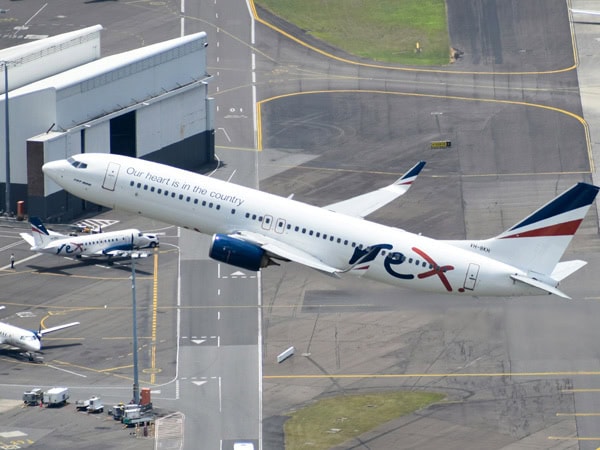
Rex flight in air
Australia offers weak consumer protection in a market with little competition. (Image: David Syphers)

Justin Wastnage, Adjunct Industry Fellow, Griffith Institute for Tourism, Griffith University.

This article is republished from The Conversation under a Creative Commons license. Read the original article.

Want to see more stories from Australian Traveller in your Google search results?

  1. Click here to set Australian Traveller as a preferred source.
  2. Tick the box next to "Australian Traveller". That's it.
Justin Wastnage
Justin Wastnage is the principal at aviation and tourism policy consultancy Message Shapers. In this position he has led research projects into cruise ship access options for Sydney Harbour, air transport access to New Caledonia and work around privatisation of council-owned airports in New South Wales.
View profile and articles
hero media

6 reasons the best way to experience the Kimberley is by cruise

    Kate Bettes Kate Bettes
    This remote corner of Australia is one of the world’s last frontiers. This is how to see it properly.

    Vast, rugged and deeply spiritual, the Kimberley coast in Australia’s North West feels a world away from everyday Australia – and there are countless ways to explore it. But if you want to reach ancient rock art, hidden gorges and lonely waterfalls, it has to be by boat. Whether you’re aboard a nimble expedition vessel or a luxury yacht with all the trimmings, exploring by the water brings exclusive experiences, shows unique views and makes travel easier than any other mode. And that’s just the beginning of Australia’s North West cruises.

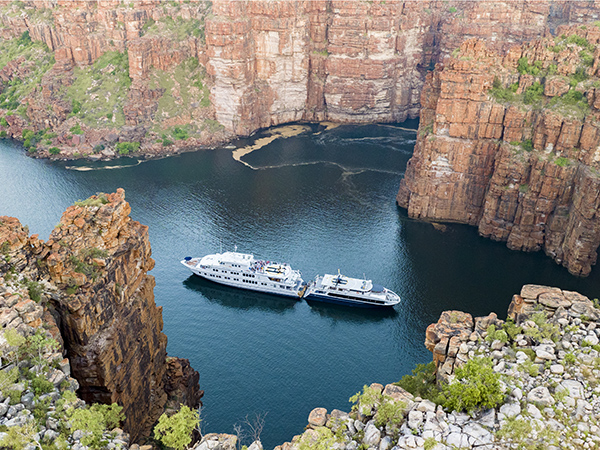
    The True North Adventure Cruise in between sandstone cliffs.
    Adventure starts where the road ends.

    1. Discover Broome, and beyond

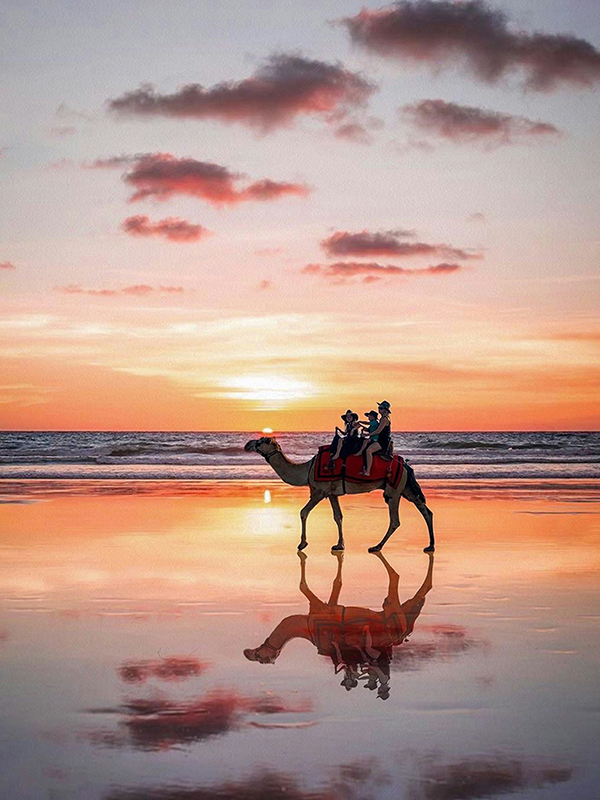
    Explore your launchpad before you set sail: Broome. Here camels and their riders stride along the 22 kilometres of powdery Cable Beach at sunset. That’s just the start.

    At Gantheaume Point, red pindan cliffs plunge into the turquoise sea, whose low tide uncovers fossilised dinosaur footprints. Broome’s pearling history runs deep. Japanese, Chinese, Malay and Aboriginal divers once worked these waters, and their legacy lives on in boutiques where South Sea pearls still shine.

    If the moon’s right, you may catch the Staircase to the Moon over Roebuck Bay. Or simply kick back with a cold beverage and a film under the stars at Sun Pictures, screening since 1916.

    Ride a camel along Cable Beach as the sun sinks into the Indian Ocean, casting golden light across the sand and sea.
    Ride a camel along Cable Beach. (Image: Nick Dunn)

    2. Unmatched access to The Kimberley

    Once you’re onboard, expect a backstage pass to some of the most isolated places on Earth. No roads. No ports. No phone reception.

    At Horizontal Falls/ Garaanngaddim, 10-metre tides surge through twin gorges like a natural waterpark ride that’ll make your palms sweat. Then there’s Montgomery Reef/ Yowjab: a giant living platform of coral and seagrass, where the sea pulls back to reveal waterfalls, sea turtles and ospreys.

    Up north, King George Falls/ Oomari rage 80 metres down red cliffs. Zodiac boats often nudge in closer so you can feel the spray on your sun-warmed cheeks. You might even fly in to reach Mitchell Falls/ Punamii-unpuu, a four-tiered cascade where you can swim in freshwater pools above the drop.

    Come spring, some itineraries veer west to Rowley Shoals: an atoll chain of white sand and reef walls. Then it’s up the winding Prince Regent River to King Cascade/ Maamboolbadda, tumbling over rock terraces, and into a Zodiac to view the Gwion Gwion rock art, whose slender, ochre-painted figures are older than the pyramids.

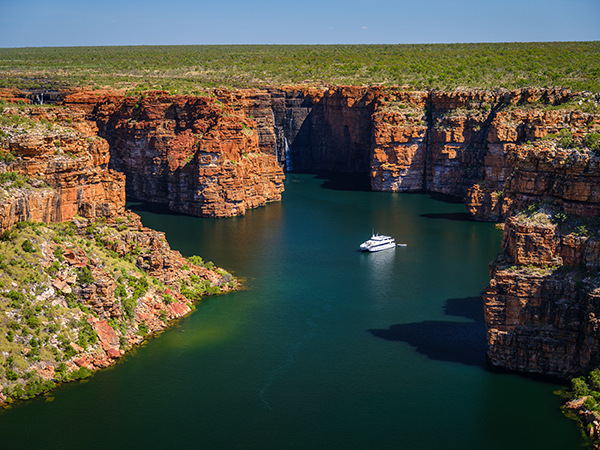
    A cruise drifts beneath King George Falls, where sheer sandstone cliffs frame the thunderous plunge into turquoise waters.
    Get closer to the Kimberley than ever before.

    3. Taste the Kimberley with onboard hospitality

    You might spend your days clambering over slippery rocks or charging past waterfalls. But when you’re back on the water, it’s a different story. Meals are chef-prepared and regionally inspired: grilled barramundi, pearl meat sashimi, mango tarts, and bush tomato chutney. One night it’s barefoot beach barbecues with your shipmates; the next, alfresco dining on the ship.

    Small expedition ships each have their own personality, but many carry just 12 to 36 guests, making being out on the water a whole other experience. You might sink into a spa on the foredeck or sip coffee in a lounge while watching crocodiles cruise by. It’s choose-your-own-relaxation, Kimberley style.

    4. Expert-led excursions through the Kimberley

    These voyages are led by people who know the Kimberley like the back of their sunburnt hand. Attenborough-esque naturalists might gently tap your shoulder to point out rare birds or tell the story beneath a slab of rock. Historians can explain exactly how that rusted World War II relic came to rest here.

    If your ship has a helipad, you might chopper straight to a waterfall-fed swimming hole. If not, you’ll still be hopping ashore for that wet landing at a secret creek.

    Then come the evenings: songlines shared by Traditional Owners under the stars, or astronomy sessions that link what’s overhead with what’s underfoot and what’s within.

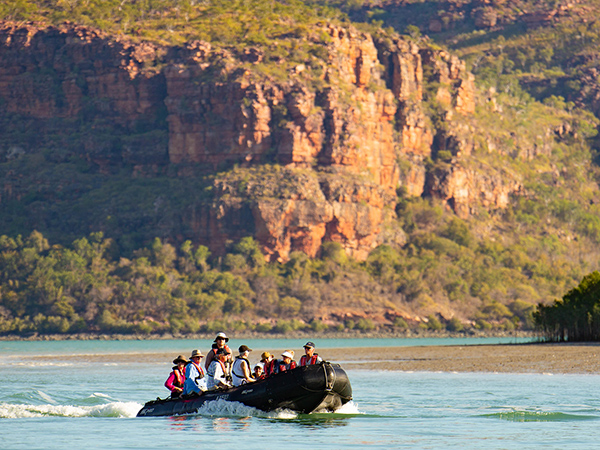
    A small group glides through Kimberley’s rugged coastline by boat, passing ancient cliffs.
    Explore with naturalists and historians by your side.

    5. Relax in luxurious lodgings

    Just because you’re off-grid doesn’t mean you have to rough it. These Kimberley vessels are small in size, but mighty in luxury. True North’s ships come with their own helicopters and a no-sea-days policy, so you’re always in the thick of it. Try the luxurious offerings from Ocean Dream Charters for exploration in style. Kimberley Quest offers a fast boat for easy, off-ship adventures. On the larger end of the scale, Coral Expeditions has open-deck bars and curated wine cellars. And then there’s Ponant’s luxury yachts – sleek and incredibly stylish French sailing yachts.

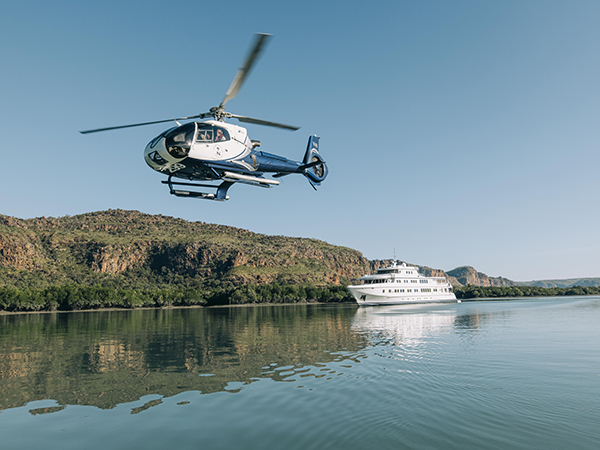
    A helicopter soars above the sea, with a sleek cruise ship gliding in the distance.
    See the Kimberley from sky to shore.

    6. The adventure continues with pre- and post-cruise experiences

    You’ve already come this far – so, why not go further? Broome makes it easy to ease in before you board, or wind down when your voyage ends, and there is no reason to stop there.

    Head an hour and a half south to Eco Beach to stay off-grid and off the clock. Join a Yawuru guide for a mangrove walk or ocean forage. Dive even deeper into Broome’s pearling past at Willie Creek or Cygnet Bay, where divers and craftspeople still pull the seawater-slicked gems from the deep.

    If you’re still craving adventure, it’s time to go further. Soar over the Buccaneer Archipelago, or detour inland with a 4WD trip along the Gibb River Road. Book a scenic flight over the Bungle Bungles. Or – because you never know when you’ll be back – do all three.

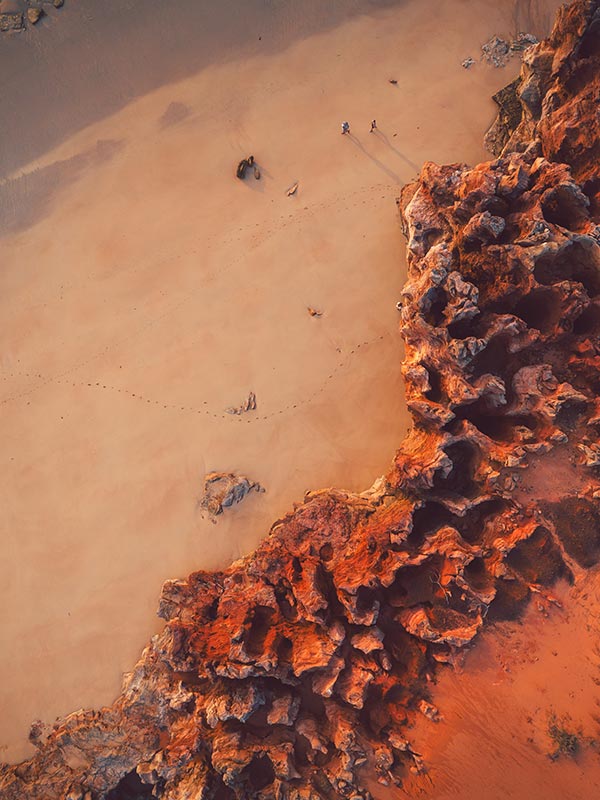
    aerial of people walking on eco beach in the kimberley western australia
    Stay off grid at Eco Beach. (Image: Tourism WA)

    Find out more about your trip to Australia’s North West at australiasnorthwest.com.

    If Australia Had This, Passengers Could Be Paid For Cancelled Flights