Outback survival stories that’ll stop your heart

hero media
The outback is a very beautiful place – but venture into it unprepared and you’ll soon find out just how hazardous it can be. Lauren Camp explores a few of the more miraculous (and ridiculous) stories of wilderness survival in what can often be a harsh and unforgiving place.

1. Spiritual quest goes awry

One of Australia’s most famous outback desert rescues occurred in 1999, when 33-year-old Alaskan fire fighter Robert Bogucki was found after 43 days wandering lost and alone in the Great Sandy Desert on a quest to “make peace with God". A little unluckily for Bogucki (and pray this never happens to you), he was found in some gorges east of Broome, not by police, Aboriginal trackers or the professional team of rescuers brought in from the US, but by Channel Nine’s A Current Affair news team.
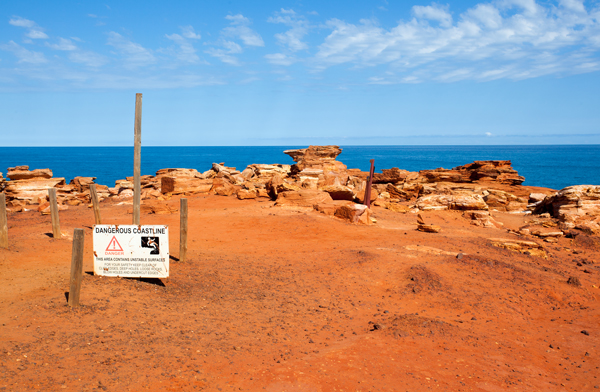
Gantheaume Point, Broome.

ACA came under intense scrutiny when it was revealed that, instead of flying him to a nearby camp to receive medical treatment, they spent almost 20 minutes interviewing Bogucki before flying him an hour back to Broome with their own TV reporter.


All-told, the rescue cost police and Bogucki’s parents around $150,000 – and Bogucki, who lost 20kg and survived by drinking muddy water and eating flowers and plants, told BBC News that he’d definitely “scratched the itch" that had him out there in the first place.

2. Addicted to getting lost

In September 2006 in Alice Springs, 50-year-old English tourist Martin Lake earned himself the nickname “the Bumbling Brit" when he got lost, in the words of local police, “within shouting distance of help".
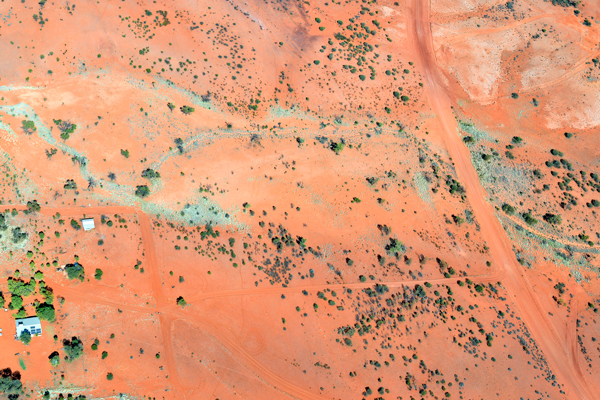
Alice Springs, NT.
Australia, NT, aerial view to farm in outback south of Alice Springs.

Wearing a black T-shirt and shorts, with no water, no hat and an almost-flat phone battery, he wandered off the path while looking for the old telegraph station north of town and wasn’t found for three days. But that’s not the absurd part. After apologising and receiving a stern lecture from rescue services, less than a week later he became lost again, under a mile from the exact same spot.


The helicopters and search parties were organised once more, to the tune of tens of thousands of dollars for local taxpayers, and Lake was re-rescued, this time after four days of wandering. It’s believed that he returned to the area because he dropped something the first time around and wanted to retrieve it.

Need tips, more detail or itinerary ideas tailored to you? Ask AT.

AI Prompt

3. Always carry a gizmo

Uluru (Ayers Rock), Uluru-Kata Tjuta National Park, Northern Territory.
Uluru (Ayers Rock), Uluru-Kata Tjuta National Park, Northern Territory, Central Australia.

In January 2009, an experienced Romanian hiker, who’d previously trekked through the likes of South America and Asia, got a nasty fright when he became lost for six days during a 45km walk near Uluru.


He ran out of food and water on day three and had to head sluggishly back. Once within mobile phone range – which is pretty incredible because the reception is very dodgy out there – he managed to alert rescuers by getting a message to his family back in Romania, including his GPS location.


Rescuers said it was this fact alone that saved the man, which proves how important it is to be well prepared in the food, water and GPS stakes before venturing into the unknown.

4. Survival of the fittest

When 35-year-old Ricky Megee from Brisbane was heading to Port Hedland in late January 2006, he stopped to help a group of stranded motorists near the WA/NT border and agreed to ferry the smallest of the group to the nearest town.
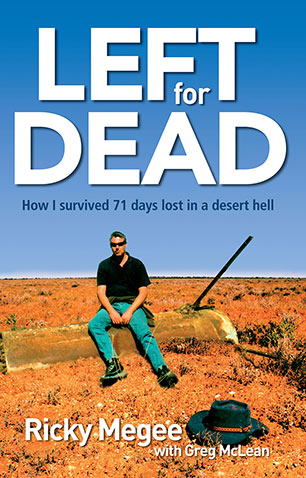
Left for Dead, the true story of Ricky Megee's outback survival.
Left for Dead, the true story of Ricky Megee’s outback survival.

That fateful day ended with Megee being drugged by his passenger and left for dead in a ditch, covered by a tarpaulin weighted down with rocks. He then wandered aimlessly for ten days before setting up camp under an old cattle trough beside a dam, which allowed him a constant flow of water and a diet of toads and lizards.


He survived in this fashion for ten weeks, before being discovered and rescued by two passing station hands – 60kg lighter, lucky to be alive.


Check out his book Left for Dead.

Weekly travel news, experiences
insider tips, offers, and more.

5. No water, plenty of beer

In October 2002, 36-year-old German man Kim Hardt sat alone in his 4WD for three days after getting bogged at Lake Disappointment on the rugged Canning Stock Route. He’d heard about the challenge the CSR presented to outback drivers on a German TV show, which must have been missing a few salient survival details because Hardt showed up by himself with hardly any water, no phone or GPS, but carrying ten litres of beer and a packet of bikkies.


Nothing like being well prepared. Some fellow tourists discovered Hardt and were able to leave some more water while they trundled off to alert a rescue team. By the time the team returned, Hardt was drinking the salt water from Lake Disappointment. Apparently he’d thought it would take about three days to traverse the 1700km CSR, 900 sand dunes and all.

6. Where there’s smoke, there’s a fire engine

This might not quite qualify as a survival story, but back in 2000, 43-year-old Edward Furtak got it into his head that a good way to give up smoking would be to drive his ancient converted fire engine into the desert and camp by himself for six months. “I needed to actually get out in the middle of nowhere where I just couldn’t have a smoke," he said later in an ABC radio interview.


While he claimed he “had a great time", his parents certainly didn’t, reporting him missing after three months. A police search was mounted but proved fruitless. The mystery of his disappearance from Sydney was finally solved after another three months went by, and he emerged from the desert into the small town of Forrest, 1150km east of Perth, to call his mum on her 78th birthday.


Still keen for an outback holiday? Of course you are! You now have your wits about you, so check out our guide to outback holidays right here.

Want to see more stories from Australian Traveller in your Google search results?

  1. Click here to set Australian Traveller as a preferred source.
  2. Tick the box next to "Australian Traveller". That's it.
hero media

The ultimate spring and summer guide to Melbourne

There’s nothing quite like Melbourne in the warmer months. Come spring, the city emerges from its cold-weather cocoon and brims with marquee events, vibrant seasonal menus, brilliant blooms and a fresh energy.

The centre of the city is where most of the magic happens. It’s a labyrinth of art-lined alleys and meandering laneways, filled with restaurants, cafes, rooftop bars, galleries, live music joints, theatres, boutiques, high-end hotels like The Westin Melbourne and much, much more. In spring and summer, especially, locals and travellers alike come to enjoy the balmy weather and celebratory spirit.

If you’re planning to be one of them, here are the best places for eating, drinking, exploring and staying.

Where to stay

The Westin Melbourne

couple inside their room at the westin melbourne
View the city from above in your suite.

Situated in the heart of the city on bustling Collins Street, The Westin Melbourne is a supremely convenient base. With the hotel as a base, explore the entire CBD – including Federation Square and Melbourne’s shopping, dining, theatre and sporting precincts – on foot.

Despite its central location, the hotel is something of an oasis. It has a serene ambience and elegantly understated design that provides respite at the end of a busy day. Think timeless interiors with warm timbers and neutral tones, and spacious rooms with signature Heavenly® beds and sumptuous linens. You’ll also indulge in impeccable service and amenities like fitness and wellness centres and an indoor pool. Selected rooms have sweeping city views.

Where to eat and drink

1. Allegro

Allegro is refined yet welcoming, pairing seasonal Australian produce and international flavours, finished with finesse. The à la carte, set and pre-theatre menus change seasonally. In spring and summer, expect a lively and creative line-up of dishes. You can also partake in a playful and limited-edition High Cheese offering that’s well worth trying if you’re a lover of blues and bries.

The restaurant happens to be located right inside The Westin Melbourne. It’s an ideal spot if you’re staying at the hotel and need somewhere to dine or drink before hitting the town.

2. Lobby Lounge

the westin melbourne lobby lounge
Step into the Lobby Lounge.

Whether you’re after a quick bite before exploring the city, a leisurely lunch or dinner, or a post-theatre nightcap, head to The Westin Melbourne’s elegant Lobby Lounge.

The menu features everything from moreish snacks, small bites and share plates to hearty all-day meals and desserts. The accompanying drinks list is a treasure trove of varietals, with a notable leaning towards Victorian drops and an excellent selection of spirits.

For a truly indulgent experience, book yourself in for the signature high tea. You’ll savour three tiers of beautifully crafted sweet and savoury treats, specialty tea and coffee, and the option for a sneaky glass of bubbly.

3. Other places to dine

diners at supernormal melbourne
There’s no shortage of tasty dining options, in and nearby The Westin Melbourne. (Credit: Visit Vic)

Dotted around the city are some of Melbourne’s most acclaimed dining destinations. Supernormal is a local institution. Feast on inventive Pan-Asian dishes made with fresh ingredients, paired with a Japanese whisky or sake from the extensive drinks list. At Gimlet, the surroundings are utterly romantic, the service impeccable and the food outstanding. Expect sustainably sourced meats, seafood and produce finished with European flavours and technique.

Apollo Inn – the sister venue to Gimlet and Supernormal – does punchy snacks, share plates and incredible drinks. Try the signature Picon Biere, a refined take on a shandy.

Dukes Coffee Roasters at Ross House is a great place to start your day, serving up organic and sustainable brews made with precision.

While you’re in the city, take a wander down Hosier and AC/DC Lanes. Beyond the famed street art along both, you’ll find a cluster of must-try eateries and bars, including MoVida, Pastuso, Bar Bambi and Tres a Cinco.

Things to do

1. Take a run through Melbourne’s green spaces

a bridge across yarra river
Run or walk along the Yarra River. (Credit: Visit Vic)

Melbourne’s outdoors look their very best in spring and summer. The parks and gardens come alive with colourful blooms, the trees in and around the CBD regain their verdant canopy, and the Yarra River sparkles in the sun.

A run or walk in nearby green spaces, like Carlton Gardens, Fitzroy Gardens and the Royal Botanic Gardens, lets you soak up the scenery. The Westin Melbourne also provides curated running routes through surrounding gardens and along the Yarra. Workout gear and Bala weights can be borrowed from the hotel if you forget to pack your own.

2. Browse the boutique galleries

two women looking at an exhibition in the national gallery of victoria
See the collections of NGV. (Credit: Visit Vic)

Independent art galleries are practically synonymous with Melbourne, and many of them are conveniently situated in the city centre. You can easily hop between Flinders Lane Gallery, Arc One Gallery, Outre Gallery, Caves Gallery, Gallery Funaki and D’Lan Contemporary, allowing you to experience the city’s vibrant art scene in a single day.

If you’ve got an afternoon to spare, venture over the Yarra to the National Gallery of Victoria. The iconic and historic institution houses both a vast permanent collection and an exciting roster of rotating exhibitions.

3. Catch some live music

live music at the cherry bar in melbourne
Dive into Melbourne’s live music scene. (Credit: Visit Vic)

Melbourne’s live music scene reignites when spring hits. In and around the CBD are several beloved live music venues that showcase everything from jazz to rock to electronic.

Visit intimate venues like Bird’s Basement, Wax Music Lounge and Cherry Bar, or larger ones, such as The Toff, Forum and Palais Theatre, for major acts. Plenty of bars, restaurants and clubs host regular gigs, too, including The Westin Melbourne’s Lobby Lounge. Every Saturday from 12-3pm, enjoy live strings alongside your lunch or afternoon tea.

4. Soak up the atmosphere at the MCG

three punters in big hats at the melbourne cricket ground
Book tickets for a big sports bash. (Credit: Visit Vic)

The Melbourne Cricket Ground welcomes its namesake sport in the warmer months. Watch One-Day Internationals, T20 Internationals, Big Bash League and Sheffield Shield matches throughout the season, or settle in for the multi-day Boxing Day Test.

Spring and summer are also when the MCG holds big events and concerts. Surrounded by the roar and energy of the venue’s legendary crowds, there are few places better than this to see a live gig.

5. Experience the magic of the Regent Theatre

the inside steps of melbourne's regent theatre
Soak in Regent Theatre’s architecture. (Credit: Visit Vic)

Standing proud for nearly 100 years, the Regent Theatre is a stunning venue: its grand exterior opens to a gorgeously ornate interior decked out with chandeliers, plush drapes and gilded details.

Stopping by to take in its architecture is memorable enough. But if you’ve got the time, book a ticket to one of the spectacular shows that take place inside. The venue hosts a diverse line-up of live music, musicals, opera, dance, theatre and comedy. In spring and summer, the program is at its most energetic, with events to suit all tastes.

Whatever draws you to Melbourne, The Westin Melbourne is at the centre of it all. Start preparing for an adventure at marriott.com.