hero media

10 iPhone hacks to take travel photos like a pro

The new iPhone is almost here, and it could change the way we capture our travels.

I have been hanging out for the iPhone 17 Pro to launch before upgrading my iPhone 14 Pro. Back when I bought the 14 Pro, it was top of the line, but smartphone cameras are advancing at lightning speed. Every generation seems to reinvent what pocket photography can do, and this one has me particularly excited. With three 48MP rear lenses, improved low-light performance and cinematic zoom, it will be like carrying a mini DSLR in my carry-on.

Three women of the Yakel tribe in Tanna, Vanuatu
A photo of three women from the Yakel tribe taken on an iPhone 14 Pro. (Image: Emily Murphy)

Now, before you say that iPhone photos will never quite measure up to a real DLSR, which is true to an extent, iPhone quality isn’t what it used to be. I’ve had multiple images published in our print magazines that I took on my iPhone, including a stunning portrait of three young women from the Yakel tribe in Tanna, Vanuatu, which is the best picture I’ve ever taken.

And because I travel for a living, I have learnt that even the best camera is wasted without the right tricks. Here are the hacks I swear by to take my iPhone travel photos from “holiday snaps" to “wish you were here" moments.

1. Use the grid for symmetry

Josef Chromy Wines in Launceston, Tasmania
The grid is your trusty sidekick. (Image: Emily Murphy)

Head to Settings > Camera > Grid and switch it on. Lining up the horizon on the lower third makes that endless outback road look like it belongs on a movie poster.

2. Shoot in ProRAW

Uluru at sunset
Shoot in ProRAW and edit the image later. (Image: Emily Murphy)

Standing at the base of Uluṟu or floating on a canoe in the Cocos Keeling Islands deserves more than a quick snap. Switch to ProRAW mode to capture all the detail you can, then polish it later without losing sky colour or texture.

Need tips, more detail or itinerary ideas tailored to you? Ask AT.

AI Prompt

3. Master night mode

From street food markets in Melbourne to light shows in Adelaide, night mode on the iPhone 17 Pro captures vibrant colour and sharp detail. Hold steady for a few seconds and watch the magic appear.

4. Use the telephoto lens with confidence

Direction Island in the Cocos Keeling Islands
For the first time ever, all three iPhone lenses are the same quality. (Image: Emily Murphy)

Sometimes you cannot get closer, like when you are peering over a cliff edge or watching wildlife from afar. The 17 Pro’s new 5x telephoto zoom makes it possible to frame details without sacrificing quality.

5. Go ultra-wide for landscapes

Wollongong oceanscape
Use ultra-wide to show scale. (Image: Emily Murphy)

From Tasmania’s Bay of Fires to The Kimberley’s Horizontal Falls, the ultra-wide lens is perfect for showing the scale of a place. Tilt your phone upwards slightly to exaggerate the height of cliffs or mountains.

6. Capture motion with Live Photos

Hold down the shutter to record a few seconds of movement. Crashing waves, lanterns drifting into the sky, or a kookaburra mid-flight will bring your memories to life. Later, you can even turn these into long exposure shots.

7. Edit on the fly

Sunset in Brooklyn, NYC
Edit your pictures as you go. (Image: Emily Murphy)

Travelling light? The built-in editing tools do more than enough. Bring out shadows, soften highlights and use the vibrance slider instead of saturation for natural-looking colour.

Weekly travel news, experiences
insider tips, offers, and more.

8. Clean the lens every time

Hamilton Island
Don’t forget to clean your lens. (Image: Emily Murphy)

It sounds basic, but a quick wipe before shooting makes all the difference. Think of it as part of your pre-photo ritual.

9. Pack a pocket light

Natural light is king, but travel does not always deliver perfect conditions. A small portable light can rescue a dim hotel room, a moody restaurant, or a shadowy temple interior. I always carry one, and it makes a huge difference. This is the one I use.

10. Shoot video with intention

If you haven’t added the Cocos Keeling Islands to your bucket list, now’s your time!

The iPhone 17 Pro is a beast for video, with cinematic mode, stabilisation and Dolby Vision HDR. The trick is to treat it like you are directing a film. Move slowly, only pan with purpose and use both hands for stability. Bonus points if you have a gimbal. Short clips are best for editing later, and always think about capturing sound – a bustling market or crashing waves can bring your travel video to life.

The iPhone 17 Pro is already a powerhouse for travel photography, but the real magic comes when you learn how to use it well. With a few simple hacks, your shots will capture the spirit of your travels so vividly that your friends will feel like they are right there beside you.

Want to see more stories from Australian Traveller in your Google search results?

  1. Click here to set Australian Traveller as a preferred source.
  2. Tick the box next to "Australian Traveller". That's it.
Emily Murphy
Emily Murphy is Australian Traveller's Email & Social Editor, and in her time at the company she has been instrumental in shaping its social media and email presence, and crafting compelling narratives that inspire others to explore Australia's vast landscapes. Her previous role was a journalist at Prime Creative Media and before that she was freelancing in publishing, content creation and digital marketing. When she's not creating scroll-stopping travel content, Em is a devoted 'bun mum' and enjoys spending her spare time by the sea, reading, binge-watching a good TV show and exploring Sydney's vibrant dining scene. Next on her Aussie travel wish list? Tasmania and The Kimberley.
View profile and articles
hero media

7 Kimberley experiences that need to be on your bucket list

From thundering waterfalls to ancient Indigenous art, Kimberley’s raw beauty will take your breath away.

Wild, pristine, and shaped by nature, the Kimberley Coast is one of Australia’s most spectacular landscapes. A remote and rugged frontier that remains a bucket list destination for many travellers. Its most breathtaking attractions – including Montgomery Reef, King George Falls and Horizontal Falls – are accessible only by sea or air, making a guided expedition cruise aboard Silversea’s luxury expedition ship, Silver Cloud, the ideal way to explore it.

From its intricate intertidal zones to ancient rock art, extreme tides and rare wildlife found nowhere else in Australia – or the world – this journey offers an unparalleled exploration of one of Earth’s last true wildernesses.

Why Silversea?

Silversea offers a 10-day expedition departing Broome, or an extended 16-day expedition voyage from Indonesia, including landings on the hidden gems of Palopo Sulawesi and Komodo. Accompanied by expert guides and specialists in marine biology, history and geology, guests gain a deeper understanding of the Kimberley’s dramatic landscapes, rich cultural heritage and extraordinary biodiversity.

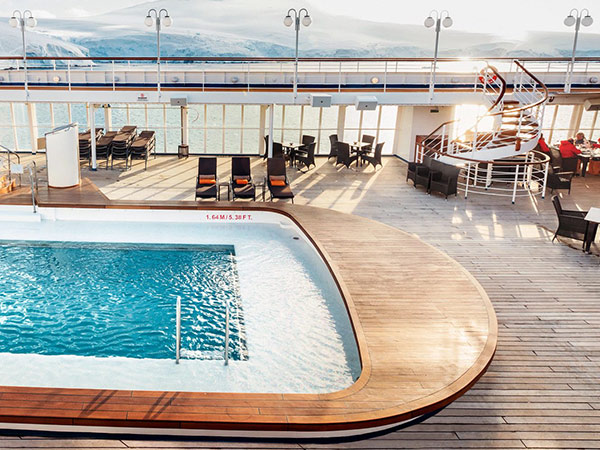
Silversea offers one of the experiential travel industry’s leading crew-to-guest ratios. Along with all-suite accommodation (80 per cent with private verandah), 24-hour butler service, a swimming pool and four dining options. Silver Cloud also has an experienced crew of multilingual expedition guides and specialists in marine biology, history and geology to enhance your Kimberley Experience.

silversea cruise ship pool deck
Take a dip in the pool deck.

1. Koolama Bay

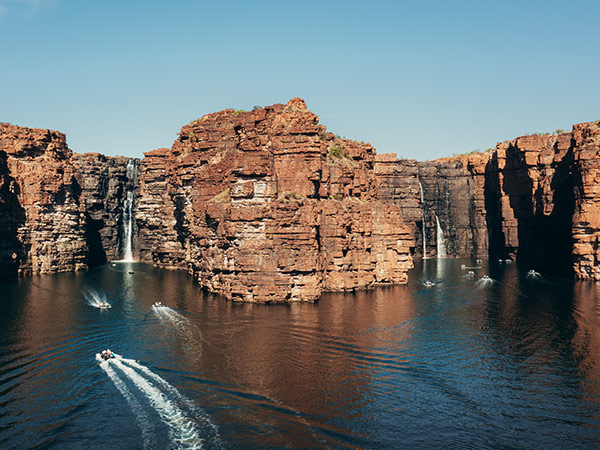
​​Before visitors see King George Falls, they hear them – a growing rumble in the distance, steady and foreboding as the Zodiac glides through the gorge, the sound echoing off sheer rock formations. At 80 meters tall, the twin cascades carve through the red cliffs, churning the waters below in a spectacular finale – but Koolama Bay holds secrets beyond its striking scenery.

Named after a ship that beached here following an aerial attack by Japanese bombers in World War II, the bay may seem desolate, yet it teems with life. With Silversea’s expert guides on their 10-day Kimberley itinerary, guests gain a sharper eye for its hidden wonders – rock wallabies darting across the cliffs, crocodiles lurking among dense green mangroves, and high above, the silhouette of a bird of prey circling the sky.

King George Falls at koolama bay excursion on Silversea Kimberley Cruise
Take a shore excursion to see King George Falls.

2. Freshwater Cove / Wijingarra Butt Butt

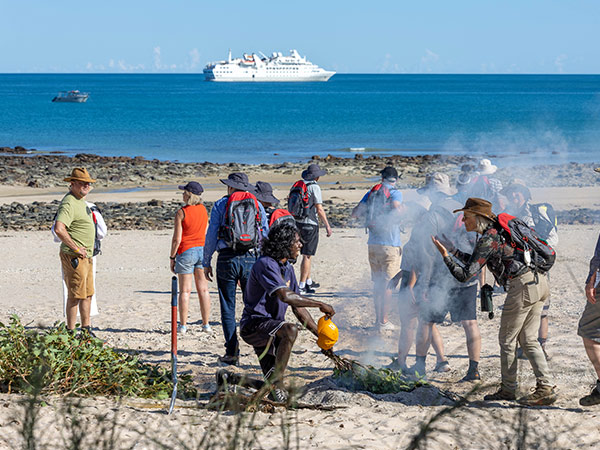
Connect with Country on a wet landing at Freshwater Cove, also known as Wijingarra Butt Butt. Considered one of the most special experiences on both the 16-day and 10-day Kimberley cruises, Silversea guests are welcomed by the traditional Indigenous custodians of the land, painted with traditional ochre, and invited to take part in a smoking ceremony.

Located on the mainland near Montgomery Reef, Wijingarra Butt Butt holds deep cultural significance to the local Indigenous community. Here, rock formations along the shore represent spiritual ancestors, and guests are guided to a nearby rock overhang filled with ancient art, where traditional owners share the stories and meaning behind these sacred paintings.

welcome to country on freshwater cove during silversea kimberley cruise
Take part in a smoking ceremony. (Image: Tim Faircloth)

3. Vansittart Bay (Jar Island)

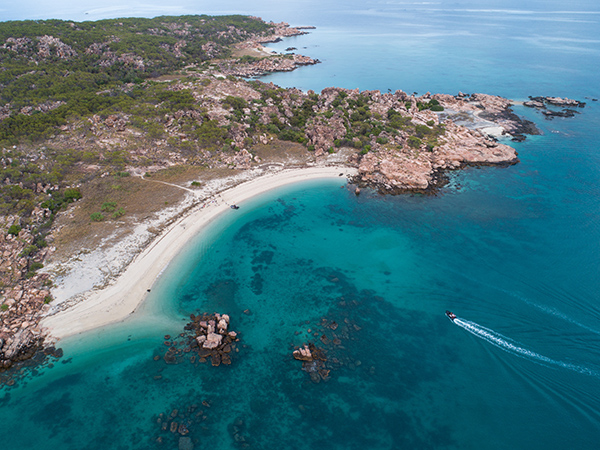
Modern history, ancient culture and mystery converge in Vansittart Bay, which is also known as Jar Island. Here, the first thing to catch the eye is the dented, silver fuselage of a World War II-era C-53 plane – a striking relic of the past. Yet, the true cultural treasures lie just a short hike away where two distinct styles of Indigenous rock art – Gwion Gwion and Wandjina – can be found.

The Wandjina figures, deeply connected to Indigenous traditions, stand in stark contrast to the enigmatic Gwion Gwion (Bradshaw) paintings, which date back more than 12,000 years. Significantly different in form and style, the two different styles create a striking juxtaposition, offering a rare glimpse into the region’s rich and complex past.

aerial view of Vansittart Bay, See it in you Silversea Kimberley Cruise.
Explore ancient Gwion Gwion rock art at Vansittart Bay. (Image: Janelle Lugge)

4. Horizontal Falls

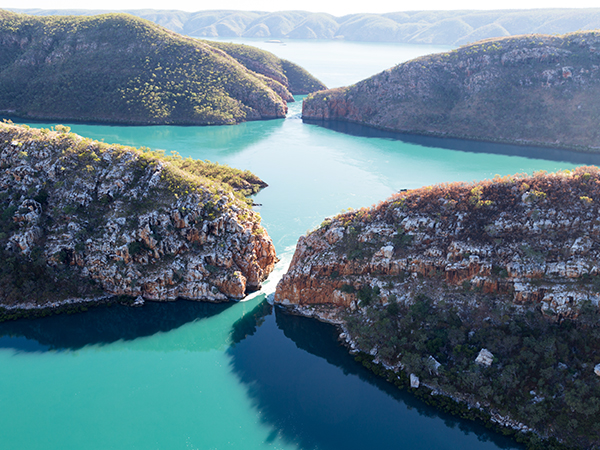
Part illusion, part natural phenomenon, the Kimberley’s much-lauded Horizontal Falls aren’t a waterfall, but a tidal and geographic spectacle that visitors have to see to comprehend. Known as Garaanngaddim, the phenomenon occurs when seawater rushes through two narrow gaps- one just twenty metres wide, and the other seven metres in width, between the escarpments of Talbot Bay.

With each tidal shift,  the force of the water creates whirlpools, furious currents and the illusion of a horizontal cascade as thousands of gallons of water are pushed and pulled in through the gap every six hours with relentless movement, making this one of the Kimberley’s most mesmerising natural wonders.

Horizontal Falls are described as "One of the greatest wonders of the natural world". They are formed from a break in-between the McLarty Ranges reaching up to 25m in width. The natural phenomenon is created as seawater builds up faster on one side of the gaps than the other, creating a waterfall up to 5m high on a King tide.
Watch whirlpools and furious currents collide. (Image: Janelle Lugge)

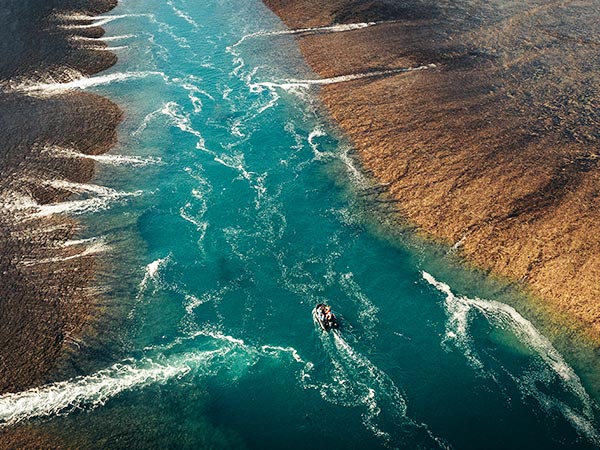
5. Montgomery Reef

As the tide turns in Montgomery Reef, magic happens. With the Kimberley’s legendary tides varying up to ten metres, at low tide the submerged reef almost appears to rise from the depths: exposing up to four metres of the sandstone reef.

The impact is otherworldly: as the water drains, waterfalls cascade on either side of the channel,  turtles left exposed scramble and dive, and fish leap in search of sanctuary in shallow pools. Meanwhile, the dinner bell rings for the migratory seabirds dugongs, reef sharks and dolphins that scavenge and feast in the area.

Using zodiacs, guests cruise through one of the world’s most significant inshore reef systems navigated by experienced guides, exploring the most intricate and fascinating parts of a 300-square-kilometre-wide biodiversity hotspot.

aerial view of boat going along Montgomery Reef
Witness seabirds, dolphins and reef sharks on the hunt.

6. Mitchell Falls by Helicopter

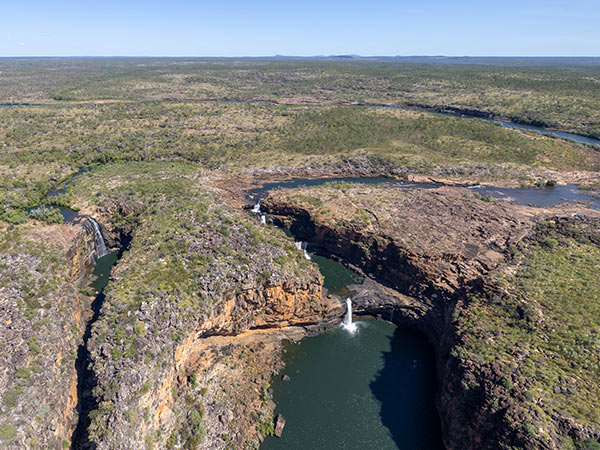
Experiencing the Kimberley by sea allows you to feel the power of the tides, but travelling by helicopter reveals the sandstone tapestry of the Kimberley, a landscape geologists believe is over 1.8 billion years old.

One of Silversea’s most popular optional excursions, guests who opt to fly into the interior from the onboard helipad soar up above the rust-coloured landscape of the Mitchell plateau, taking in one of Australia’s most scenic waterfalls: Mitchell Falls, a series of four emerald-coloured pools gently cascades into each other, before plunging down to the river below.

Seeing the landscape from above reveals a landscape weaved and shaped by the power of the freshwater wet season, juxtaposed to the constant lapping of the relentless and powerful tide on the coast.

aerial view of mitchell falls on silversea helicopter excursion
See emerald pools cascade into the river below. (Image: Tim Faircloth)

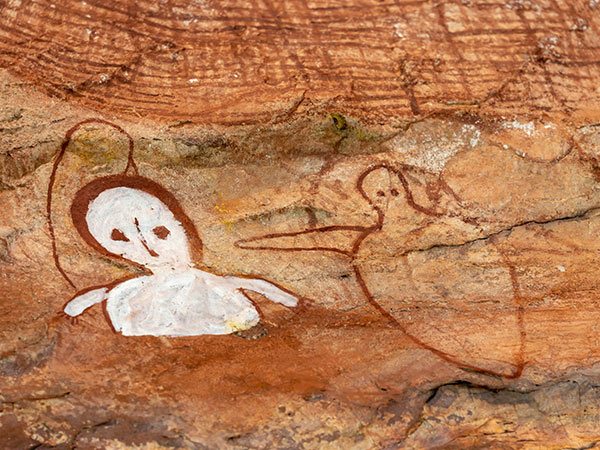
7. Indigenous Art Caves, Wandjina Art

The Kimberley Region of Western Australia is home to some of the most striking and significant

Indigenous rock art in Australia. Dotted throughout the landscape are caves, cliffs and rock overhangs depicting the striking, ethereal image of Wandjina, the rainmaker spirit and creation being central to many of the Dreamtime stories in this region.

Some of the paintings are regularly repainted by traditional custodians, while others are believed to be over 4,000 years old. Each artwork serves as both a cultural record and a living connection to the past, offering a rare opportunity to engage with the enduring traditions of the Kimberley’s Indigenous communities.

Freshwater Cover Rock Art the kimberleys
Walk among cultural records preserved in stone. (Image: Tim Faircloth)

See the best of this incredible part of the world on a Silversea Kimberley cruise. Book your 10- or extended 16-day expedition voyage at silversea.com