From ocean to plate: catch and cook on the South Coast

hero media
Elisha Kennedy dives into the catch-and-cook philosophy, literally, by taking a hands-on tour through the bountiful waters of NSW’s Far South Coast.

We had always planned to make our road trip to the base of the New South Wales south coast our ‘seafood holiday’. As city-dwellers, my partner and I relished the opportunity to cast our phones aside and drive to a place where the ocean is sapphire blue and you can pick up a dozen delicious oysters from a roadside stall for under $10.


That is our idea of heaven, but we wanted more than just buying our meals – we wanted to physically catch our own. We’re both competent at fishing and were keen to try something more hands-on, but how would we know where to look? What to bring? Or what to do with it when we found it? Easy – ask a local.


Scott Proctor grew up on the Sapphire Coast and has spent a large portion of his life either in the ocean, or learning about it. After studying marine science at the University of Wollongong, he returned to his hometown of Pambula, deciding to share his passion for the sustainable seafood that is available there through his tour company, Australia’s Coastal Wilderness Adventures (ACWA).


Through ACWA, Scott offers small-group marine experiences including snorkelling, prawning and ocean to plate. We chose the ocean-to-plate experience, which incorporates a targeted dive for abalone, lobsters, mussels, crayfish and sea urchins followed by a cook-up of the seafood harvest for lunch. The market value alone to buy this produce is hundreds of dollars, but it was the opportunity to pick the brains of a local marine expert that really had us hooked.


We met Scott at the Eden Visitor Information Centre, and from here he drove us to a remote access point to Twofold Bay. All necessary gear, equipment and a fishing licence is provided and, after kitting up, we clambered over rocks to the shore.


A quick verbal run-through from Scott on snorkelling and breathing techniques, and we were in practising our dives. It doesn’t take long to get the hang of it, and we improved with each resurfacing. When we felt comfortable in depths of several metres, Scott led us further offshore to begin ‘the hunt’. We snorkelled through a changing ocean landscape: rocky walls, seagrass beds and shallow reefs.


The bay was teeming with marine life. On our two-hour dive we encountered wobbegong sharks, eastern rock lobsters, black and red spined urchins, starfish, abalone, blue mussels and a variety of fish species. But only some of those are good eating, and we were after a meal.


The prized abalone hide in crevices, cementing themselves between the curves of rocks in the deep. The smaller ones are plentiful here in the bays of Eden, but the minimum legal size to keep is 11.7 centimetres, and finding the larger ones takes patience. What we were really after were lobsters, and finding them is no easy feat. They’re extremely well camouflaged and surprisingly strong. Scott’s well-trained eye spots them, lying low in the crayweed – given away only by their thin and reddish antennae. A quick and agile grab secured them, and we kept them in netted bags attached to our weight belts. Deeper offshore we found mussel beds, easy enough to twist off the rocks – if you can hold your breath long enough to do so.


Between the three of us we bag two crayfish, four abalone and 40 mussels. Scott chats about the importance of bag limits, encouraging you to take “just enough for lunch", and he always varies dive locations. “It’s crucial not to harvest too much from the same area," he tells us. “It might be tempting but it’s not sustainable, for you or the ecology."


We carted our harvest up the hill to Eden’s Rotary Park lookout, to cook what we would go on to confidently claim as the best meal of our lives. After two hours of intense swimming and diving in the salty ocean we had worked up a healthy appetite and, as we readied lunch together, Scott demonstrated the best ways to prepare and cook our catch.


We couldn’t believe the immense satisfaction and overall sense of wellbeing we gained from a single meal. You haven’t tasted fresh until you’ve eaten seafood that your own hands have plucked out of the ocean and thrown into the frypan in a matter of minutes. Our catch is paired with a local sourdough from Wild Rye’s Baking Co in Pambula and oysters fresh from the Merimbula leases. “It’s so important for me to support the local producers," Scott explains. “In this way, we’re working together." Everything we ate for lunch came from the local region – even the tomatoes were grown in Scott’s family’s backyard.


At the end of our ocean-to-plate experience, our bodies felt fit and full. In such a short amount of time we had gained a skillset that could feed us for many meals to come, and that is an invaluable experience.


Need tips, more detail or itinerary ideas tailored to you? Ask AT.

AI Prompt

Want to see more stories from Australian Traveller in your Google search results?

  1. Click here to set Australian Traveller as a preferred source.
  2. Tick the box next to "Australian Traveller". That's it.

8 secret places in Western Australia you need to know about

    Kate Bettes Kate Bettes
    hero media
    WA might be enormous, but the right insider knowledge brings its mysteries a whole lot closer.

    “Western Australia is a land of record-breakers,” says Carolyn Tipper, a Travel Director working on AAT Kings Western Australia tours. “It has the second-longest fault line, the second-largest meteorite crater, the second-fastest flowing river—it just keeps surprising you. And every area has its charm.”

    From tropics to deserts, Australia’s largest state is a land of extremes. You can’t see all of Western Australia in a lifetime, but with the right guide, you can discover its hidden pockets of magic.

    Carolyn wishes to reach her guests’ hearts. “I want them to enjoy and be in awe,” she says. “I want them to have the holiday of a lifetime.”

    1. Mimbi Caves

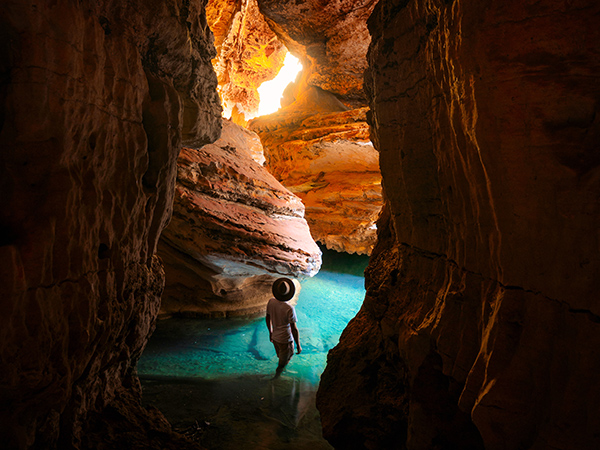
    You wouldn’t expect a Great Barrier Reef in the outback – but that’s what you’ll find at Mimbi Caves. Once part of a 350-million-year-old reef, these caves hold marine fossils, ancient Indigenous rock art, and Dreamtime stories shared by a Gooniyandi guide.

    “That’s when the real connection happens,” says Carolyn, who has taken guests through on the AAT Kings Wonders of the West Coast and Kimberley tour. “When guests connect, not just with the land, but with the people who have called it home for tens of thousands of years.”

    Eye-level view of traveller exploring Mimbi Caves.
    Walk through ancient limestone passages. (Image: Tourism Western Australia)

    2. Kalbarri National Park

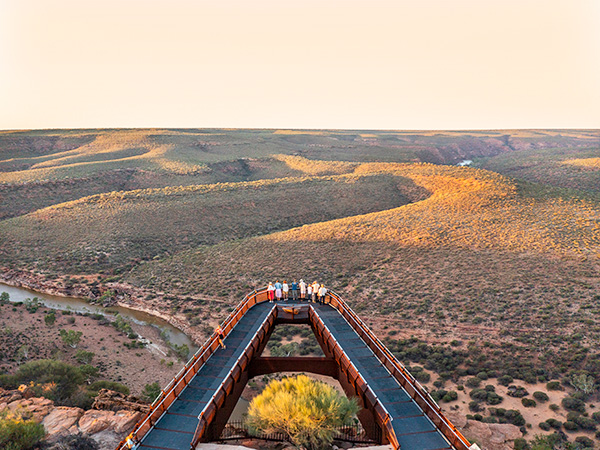
    Nothing prepares you for the Kalbarri Skywalk: a 25-metre platform jutting over Murchison Gorge, 100 metres above the red cliffs and river below. From July to October, join the AAT Kings Untamed Pilbara and West Coast tour to see over 1000 wildflower species paint the park, and listen as an Indigenous guide shares their uses, bush foods and medicine plants.

    “I want our guests to have an emotional experience,” says Carolyn. “It’s not just about seeing the land, it’s about stepping into the stories.”

    An aerial view of the Kalbarri Skywalk, one of the secret places in Western Australia, with visitors on the edge.
    Stand on the Kalbarri Skywalk in Western Australia. (Image: Tourism Western Australia)

    3. Hamelin Bay Wines

    Margaret River isn’t just a top wine region – it’s a winner in every category. Where the Indian and Southern Oceans collide, granite cliffs rise, limestone caves sprawl and Karri forests tower. It almost distracts from the world-class Cabernet Sauvignon and Chardonnay.

    Almost.

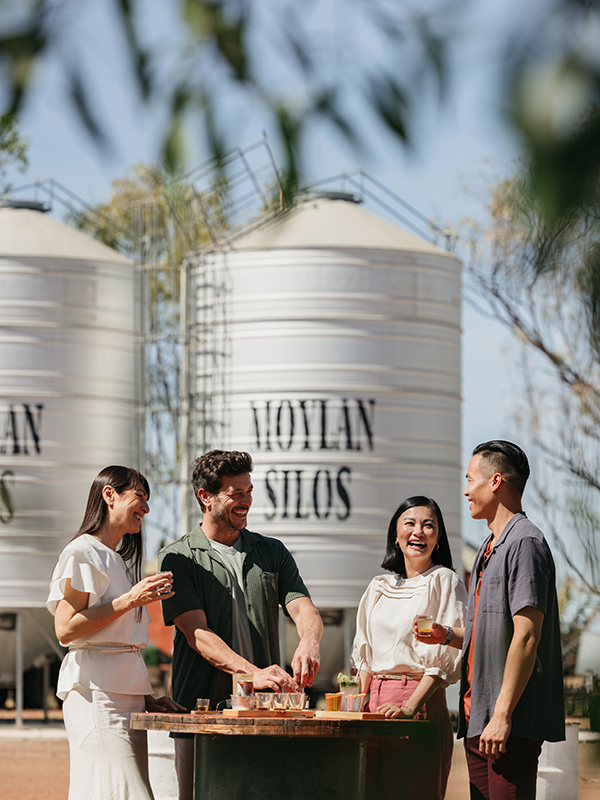
    Out of over 100 cellar doors, AAT Kings pick Hamelin Bay Wines as a favourite. Hosted tastings of small-batch wines on the Western Wonderland tour end with a group meal. The menu shifting with the seasons.

    “Get off the beaten track to one of WA’s most relaxed venues for some amazing red and white signature wines,” explains Carolyn, “accompanied with upmarket pub food.”

    Spectacular views.

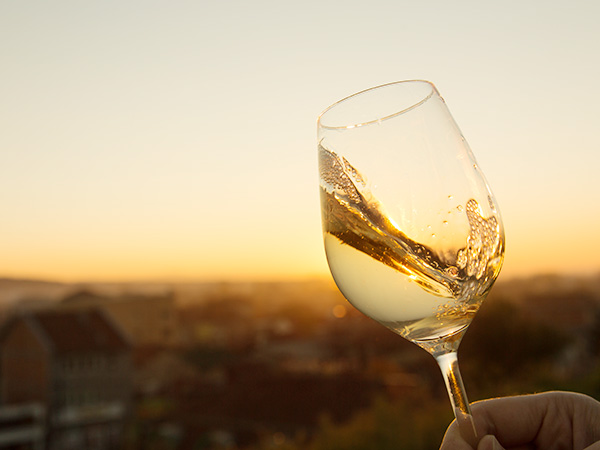
    A person raising a glass of Chardonnay against a glowing Western Australia sunset.
    Sip world-class wines at Hamelin Bay in Western Australia. (Image: Getty)

    4. Wildflower Guided Walk, Kings Park

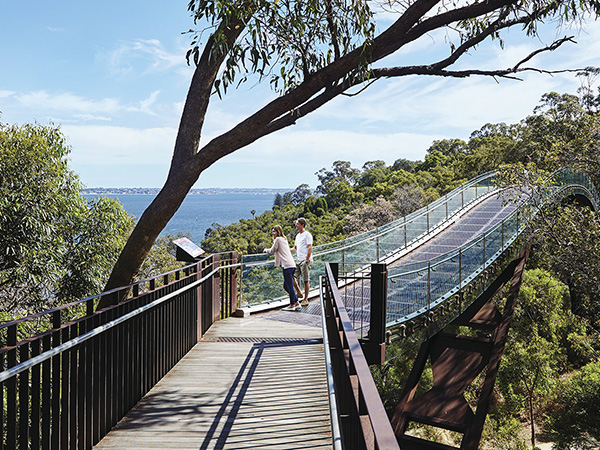
    Western Australia is home to 12,000 native plant species – 3000 bloom in Kings Park’s Botanic Garden. Stroll past Kangaroo Paw, Banksia and blooms from the Goldfields, Stirling Ranges and Kimberley. “The diversity of Western Australia is immense,” says Carolyn, who leads guests through on the South Western Escape tour.

    Couple enjoying the view from the Lotterywest Federation walkway at Kings Park and Botanical Garden.
    Wander among thousands of native plant species. (Image: Tourism Western Australia)

    5. Hoochery Distillery

    Did you know that between Kununurra and Emma Gorge lies the state’s oldest continuously operating distillery? Well, the oldest legal one. Set on a family farm, Hoochery Distillery was hand-built using materials found on the property, conjuring up award-winning rum from local sugarcane, wet season rainwater and yeast.

    Today, visitors can sample a hearty nip of rum, along with whiskies and gins – all crafted using traditional, labour-intensive methods. It’s the ideal way to soak up the ‘spirit’ of the Kimberley on the AAT Kings’ Untamed Kimberley tour.

    People enjoying a rum tasting at one of the secret places in Western Australia.
    Sample award-winning rum. (Image: Tourism Western Australia)

    6. Geraldton

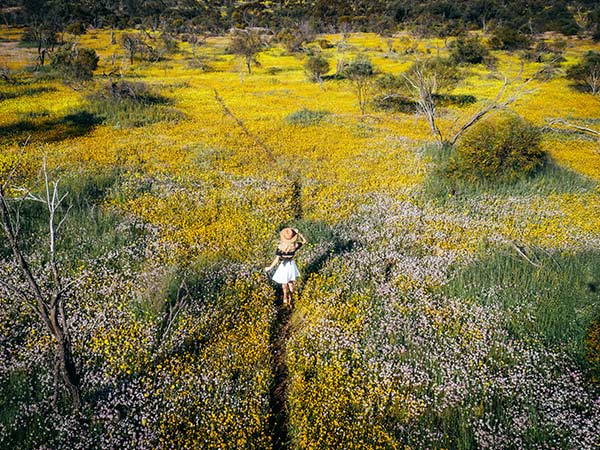
    The wildflowers of the Midwest will make your heart blossom. In Geraldton, the Helen Ansell Art Gallery brings the region’s botanicals to life in vivid colour and intricate detail. In nearby Mullewa, wander bushland trails lined with everlastings and native blooms. Further afield, Coalseam Conservation Park bursts into carpets of pink, white, and yellow each spring. Do it all on the Wildflower Wanderer tour with AAT Kings.

    woman walking through Wildflowers, Coalseam Conservation Park
    Chase vibrant wildflower trails. (Image: Tourism Western Australia)

    7. El Questro

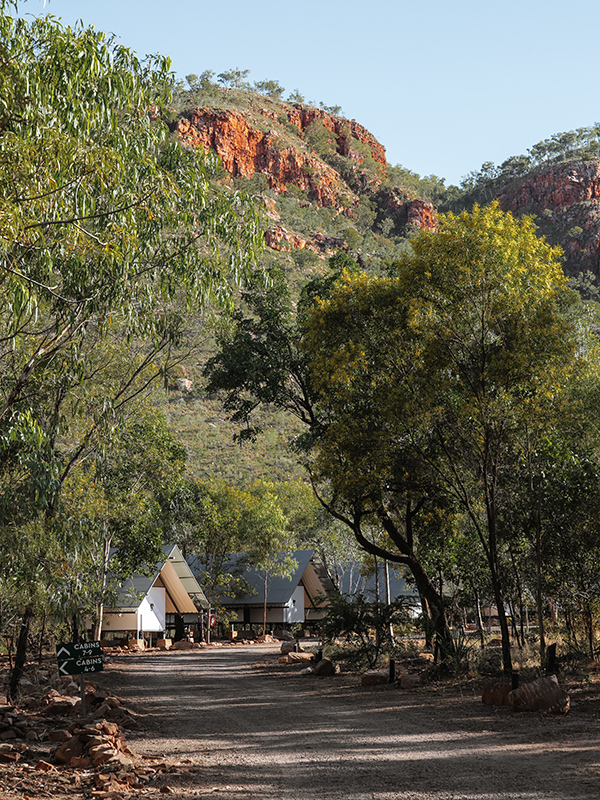
    Wake up after a night under the stars at Emma Gorge Resort, ready to explore the mighty beauty of the El Questro Wilderness Park. With deep gorges, thermal springs, and cascading waterfalls, time slows here.

    Join the AAT Kings’ Wonders of the West Coast and Kimberley tour to drift through Chamberlain Gorge, where sheer sandstone walls glow burnt orange in the sun, archer fish flick at the surface, and rock wallabies peer down from ledges above. Then, step into Zebedee Springs, a secret oasis of warm, crystal-clear pools among prehistoric Livistona palms – a moment of pure, wild stillness.

    Emma Gorge Resort at El Questro.
    Wake to adventure at Emma Gorge Resort. (Image: Tourism Western Australia)

    8. Lake Argyle

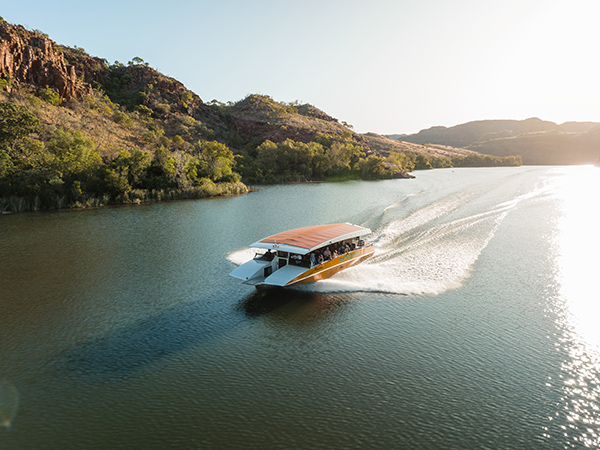
    Once vast cattle country, Lake Argyle now sprawls like an inland sea – Western Australia’s largest freshwater lake, created by the damming of the Ord River. Scattered with over 70 islands, its glassy waters teem with life, like freshwater crocodiles, barramundi, bony bream, sleepy cod and over 240 bird species. That’s nearly a third of Australia’s avian population.

    Glide across the lake’s surface on a cruise as part of AAT Kings’ Untamed Kimberley tour, where the silence is only broken by the splash of fish and the call of birds. For Carolyn, this place is a perfect example of how WA’s landscapes surprise visitors. “Lake Argyle is a big puddle of water that became a game-changer,” she says. “Seeing it from a boat, coach, and plane is mind-blowing. It puts time, isolation and the sheer scale into perspective.”

    Aerial View of Triple J Tours on the Ord River, near Kununurra.
    Glide past islands on Western Australia’s largest freshwater lake. (Image: Western Australia)

    Discover more of Western Australia’s hidden gems and book your tour at aatkings.com.