Why you should tick that carbon offset box when flying

hero media
Air travel is a notorious guzzler of fossil fuels, which should make offsetting a no-brainer for conscious travellers.

What is offsetting?

In layman’s terms, the concept of carbon-offset schemes effectively means you are paying a price to remove the emissions produced when you fly or drive by investing in programs that have a positive effect on the Earth, thereby cancelling out or neutralising your impact. Think of it as yin and yang with the added bonus of frequent flyer points. Programs that airlines or their offsetting partners contribute to include reforestation, landcare and social initiatives that prevent the same amount of CO2 entering the atmosphere through their actions.

View from plane window
Cancel out the CO2 emissions you use when flying by offsetting.

Why should you do it?

Before the pandemic, research showed that greenhouse gas emissions from commercial air travel were growing at a much faster rate than previously predicted by the United Nations’ International Civil Aviation Organization (ICAO) – up to 70 per cent faster, in fact. And while we all bought into the silver lining of lockdown resulting in a dramatic drop in greenhouse emissions, the zeal with which we have taken to the skies again over Australia means this was just a pause in proceedings. Indeed, a return to the larger-than-forecast increases of the past will end up cancelling out initiatives like developments in engine and aircraft efficiency and clean fuels altogether. So, short of never flying again, offsetting is a tangible way to cancel out the damage you do every time you board a plane.

Solar panels in Flinders Ranges National Park SA
Carbon offsetting is one way we can support initiatives that work to fight against the damage we’ve already done.

What difference does it make?

Maybe the question should be: ‘What is the alternative?’ With many tipping points already reached when it comes to climate change, at this stage we have to work on the premise that every little bit counts because the alternative is actually too frightening to contemplate. A good rule of thumb, if you are concerned about where exactly the difference is being made when you offset, is to choose companies and not-for-profits that support Australian initiatives so you can see both the benefit and the results in action.

Sand dune conservation in Australia
Check that your carbon offsets support Australian initiatives so you can see both the benefit and the results in action.

Need tips, more detail or itinerary ideas tailored to you? Ask AT.

AI Prompt

How much does it cost?

Probably not as much as you think. While you would need an economics degree to properly understand the ins and outs of how carbon pricing works, and there is actually no standardised price on carbon, what we can tell you is that your emissions when flying are calculated based on the length of your journey, the type of aircraft you are travelling on and the cabin class you are seated in. All of this information is combined to produce a total CO2 emissions amount in tonnes, and then a charge is applied to this.

Drone view of pine plantation forests in the Sunshine Coast Hinterland
Protecting our green spaces is of paramount importance.

Greenfleet, a leading Australian not-for-profit environmental organisation established in 1997 with a mission to protect the climate by restoring forests, offers domestic carbon offsetting on both long-haul and short-haul flights. The cost of offsetting a return domestic short-haul flight (Melbourne to Sydney or Brisbane to Darwin) is just $14.40, while long-haul (Sydney to Perth or Melbourne to Broome) is $43.20.

It is often cheaper to offset through your chosen airline at the time of booking; a carbon-offset price for a return economy-class flight from Sydney to Adelaide on Qantas was just $3.30 when we logged onto the airline’s website, with an added commitment from the airline to match every dollar spent, doubling the positive impact (although we did note that ‘No thanks, not this trip’ is the default selection when the offsetting option appears in the booking process). Virgin Australia invests in programs that have social, environmental and economic benefits such as the Tasmanian Land Conservancy.

A tiny cloud hovers over the dark waters of Gordon River
Research where your carbon offsetting contribution goes. (Image: Gordan River Tasmania; Steve Madgwick)

The best ways to do it?

One of the easiest ways to offset your flights is directly through the airline at the time of booking. The option is usually presented towards the end of the booking process (after adding check-in baggage, choosing travel insurance, and booking a hire car…), so make sure you scroll through all the pages and keep your eyes peeled for it. Some airlines use a calculator that allows you to put in your flight details separately and then click to buy. If the airline you are travelling with doesn’t provide offsetting options, you can then opt to offset your flights yourself through an Australian-based offset company like Greenfleet or TEM.

For more tips and advice visit our guilt-free guide to sustainable travel.

Want to see more stories from Australian Traveller in your Google search results?

  1. Click here to set Australian Traveller as a preferred source.
  2. Tick the box next to "Australian Traveller". That's it.
Australian Traveller

Australian Traveller

View profile and articles
hero media

7 features of a quintessential Aussie road trip

    Kassia Byrnes Kassia Byrnes
    No one does road trips like Australians. Make your journey perfect.

    The humble road trip is a way of life in Australia, and it’s not the same here as it is anywhere else. Sure, you could fly, but then you’re missing out on the bonding time and priceless memories that get made along the way (good or bad, you’ll be sharing them for years to come). Not to mention, some of Australia’s most worthwhile and untouched places can only be accessed by road.

    But how to ensure your road trip is quintessentially perfect? Why use this checklist, of course.

    1. Start with the perfect vehicle

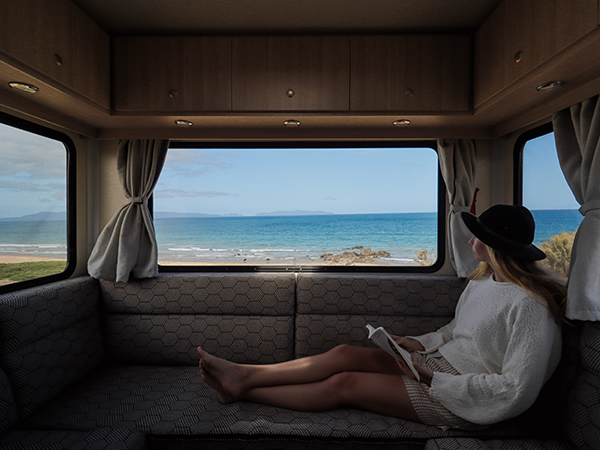
    A woman sitting while reading inside Star RV Motorhomes spacious Polaris 6.
    Relax with stunning views in a spacious motorhome. (Image: Demi Gavin)

    I can tell you from experience, nothing will push even the most tight-knit group to devolve into chaos and fighting faster than a vehicle that isn’t up to the task of a proper road trip. Enter the premium options of Star RV Motorhomes.

    They have a range of sizes to suit any group, from solo travellers and couples to families. And they’re designed to be easy to drive.

    Take the Polaris 6, for example. This light-filled sanctuary of comfort has plenty of space for bigger groups. Three double beds, a shower and toilet, and an extendable awning (with room to move between them all) make it perfect for exploring Australia.

    Couples might prefer the Polaris 2 with a fully self-contained bathroom, kitchen and a bed for two that transforms into comfortable seating during the day. Both models are pet-friendly.

    2. Pack the tastiest snacks

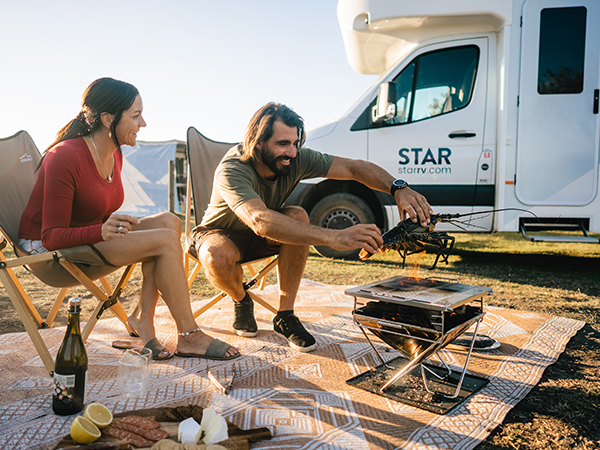
    A couple having a picnic beside Star RV Motorhomes.
    Make use of the spacious storage in your Star RV.

    Road trip snacks are an Australian art. Some, you’ll need to pick up along the way. We’re talking the iconic Chico Roll, choccie milk and maybe a sneaky potato scallop (or several).

    Others, you can pack ahead of time to save on time and, usually, money. Thankfully, Star RV Motorhomes all come with plenty of storage space, so your snacks can last as long as your road trip. Think fresh fruit and other supplies to cook lunch and dinner along the way. Plenty of lollies and maybe even some soft drinks and Red Bulls for the road.

    Not to mention, many Star RV motorhomes have a kitchen onboard, complete with a full-size kitchen, so you won’t need to lug an esky around.

    3. Bring your pet for the ride

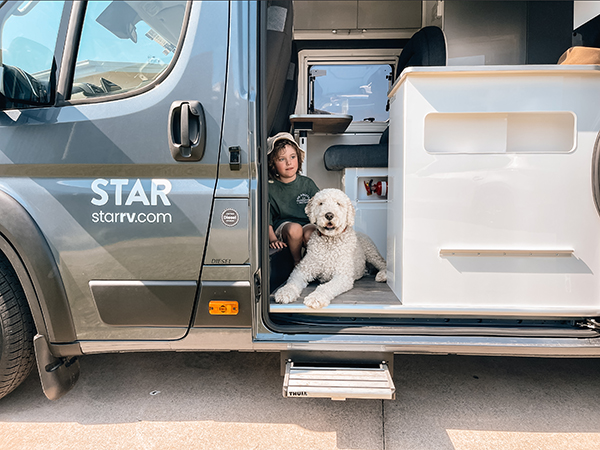
    A child and its pet inside Star RV Motorhomes.
    Travel Australia with your four-legged co-pilot. (Image: Erin Bacchi)

    Man’s best friend is essential for a truly Aussie road trip. Pet-friendly Star RV Motorhomes not only mean your dog (or cat, if they enjoy the open road more than mine do) can experience Australia with you, but that you save a small fortune on pet sitters or dog hotels.

    4. Prepare the perfect soundtrack

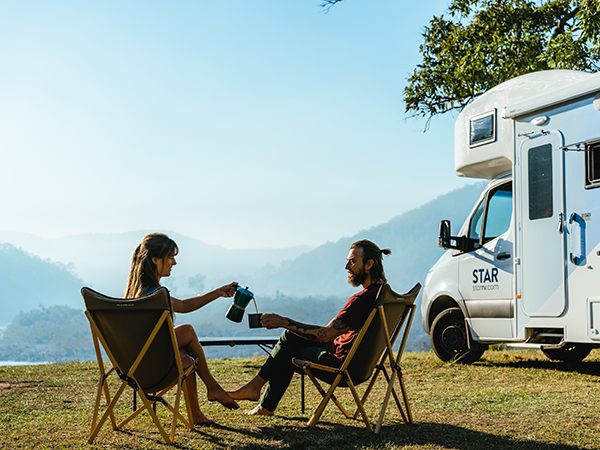
    Two people having coffee with a view.
    Chase the journey and the destination.

    No ifs, ands or buts, the perfect soundtrack can make or break a road trip. It’s really up to you, but we recommend plenty of Australian classics. Cold Chisel never hits quite the same as when you’re listening to it with only gumtrees and kangaroos for company.

    Of course, this means you’ll also need a good sound system to listen to your carefully curated tunes on. Star RV motorhome sound systems allow you to connect your device and play your own music. Goodbye, spotty radio reception.

    5. A spacious tent and camping gear

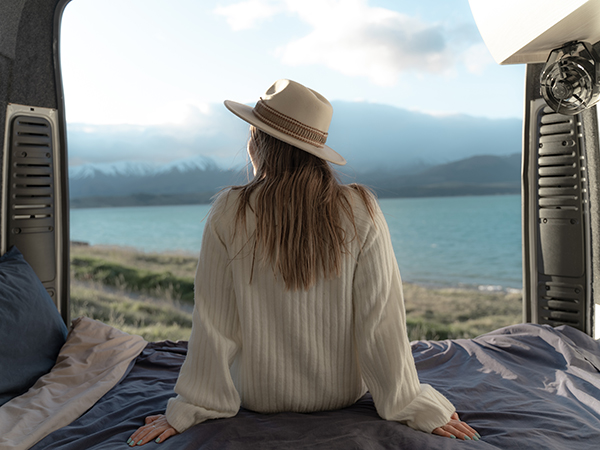
    A woman sitting inside Star RV Motorhomes with a view of the lake in the background.
    Enjoy soft linens and space to stretch. (Image: Cariund Hannes)

    If there’s one thing that a road trip can guarantee, it’s a campsite or several. So you’d better source a good sturdy tent, sleeping back, and a camping mattress that probably won’t help much – but it’s better than the ground.

    Or, just hire a motorhome so your vehicle is also your bed, and comfort is a priority (goodbye foam camp mattresses) with linens provided. And you’ll have room to unpack and move around. Heaven.

    6. Plan your toilet breaks

    Typically, an Aussie road trip means pulling over at a good bushy area or finding a horrific pit toilet on the side of the road – the smell of which will stay with you forevermore. If you’re planning to camp, better pack that handy shovel and find a good, bug-free place to dig your own loo hole.

    To avoid that hassle (and smell), forgo the shovel and hire a motorhome with an onboard toilet. When the toilet comes with you, there are no emergency roadside stops. Plus, it’s a whole lot fresher.

    7. Pick the ultimate destination

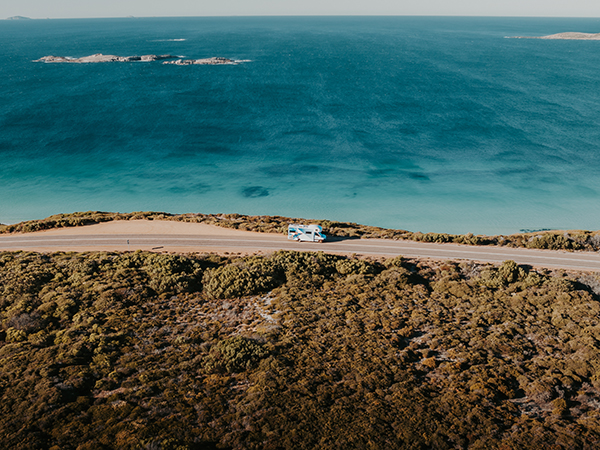
    Aerial view of the Polaris 6 cruising along a coastal road with sweeping beach views.
    Hit the road, Aussie-style. (Image: Matt Finch)

    Of course, the journey is half the fun. But the other half is an incredible destination. With accommodation and transportation sorted out with one motorhome, you have the flexibility to choose a gorgeous view for the night (or several).

    There are endless views to choose from, like the rugged cliff faces of Queensland’s Carnarvon Gorge National Park. Carnarvon Gorge camping area (near the visitor area) and the Big Bend walkers’ camp both have bushy surrounds and a trail to the gorge itself.

    Or Lake Argyle, Western Australia‘s largest man-made freshwater reservoir. Find the only dedicated camping and caravan park at Lake Argyle Resort.

    Meanwhile, Mount Buffalo National Park in Victoria is prolific for its wildlife. Wander through snow gum forests and keep an eye out for wombats, Australian kestrels and more. There are several camp options here.

    Start planning your Australian road trip adventure (and get 15 per cent off on any Star RV motorhome rental in Australia) at starrv.com/au.

    Explainer: Why you should tick that carbon offset box - Australian Traveller