‘Just caught a baby wombat’ is another case of cruelty for content

hero media
Thinking about snatching a joey from its mother for a video? Dilvin Yasa is going to stop you right there…

Many years ago, I was on a safari in Kenya where I witnessed a man throw apples – one by one – at a pride of sleeping lions. “I didn’t pay all that money to look at sleeping lions," he fumed as our guide took his backpack filled with Granny Smiths and led him away to read him the riot act.

It was the first time I saw such bad behaviour towards wildlife first-hand, but sadly, it wasn’t to be the last. During my travels in the last few years, I’ve witnessed people run over sun-baking snakes ‘for fun’, chase terrified animals for photos and attempt to pick up a sleeping koala for a selfie (she only stopped after I screamed that 80 per cent* of koalas are dripping with chlamydia). A few weeks ago, I stumbled upon a bunch of kids throwing rocks at sheep who were locked in a pen and had no way of escaping the carnage.

I don’t sit back in silence when I witness such horror; I just can’t. I’m not proud of the way I react, but any time I see a situation where someone is scaring or hurting an animal, I “educate" the perpetrator – and if the perpetrator is a child, I turn my response to the parent who is often on their phone and not noticing what their mini Ted Bundy in the making is up to. My words are strong and often, they’re foul-mouthed, but you know what’s further fuelling my rage? The number of people who’ve also witnessed the crime, yet haven’t said or done a thing to help.

Baby Wombat exploring Maria Island in Tasmania with its Mother
There have since been calls to deport an American influencer who took a baby wombat from its mother. (Image: Getty Images/Tom Wayman – TD Events)

In yet another case of ‘cruelty for content’, this kind of behaviour has come to the forefront again this week, when American influencer Sam Strable (known as Sam Jones on her social media channels) shared a video in a since-deleted Instagram reel of her catching a baby wombat and carrying the joey–screeching and hissing with terror–away from its distressed mother, who is seen chasing after her baby. Strable then returned the joey to the grassy side of the road, but whether the mother and baby were reunited is not yet known. There have since been calls to deport Strable and rightly so, but what do we make of her accomplice with the Australian accent laughing while filming the encounter? He should obviously know better, but clearly more education about not only approaching and interacting with wildlife is needed, but also what to do if you see someone harming an animal.


View this post on Instagram


A post shared by 9News (@9news)

Communications manager for PETA (People for the Ethical Treatment of Animals), Emily Rice, has long maintained that the key to enjoying our animal kingdom is to put yourself in the place of the animal. “Like you, each is an individual with a unique personality," she says. “They’re not toys that sit and wait for you to activate them. If you love animals, observe them from a safe, respectful distance in nature."

Baby wombat next to his mother at Maria Island Tasmania.
Animals are not toys that sit and wait for you to activate them. (Image: Getty Images/Tiffany-Jane Pe Than)

For wild animals, this means watching them behave normally in their own natural environment, not interacting with them in unnatural ways, Rice adds. The best bet?

  • Watch them from a safe distance. Moving in too close will unsettle them and in some cases, force them to relocate. A good indicator of whether you’re too close or not is whether they’ve modified their behaviour since you arrived. If they’ve stopped eating or moving around, it’s time for you to back away.
  • Resist the urge to touch them – even if they come up to you. Cute and cuddly they may be, but they’re still wild animals who can lash out unexpectedly, particularly if they have their baby or babies nearby.
  • Avoid feeding them. As tempting as it may be to throw a few pieces of bread, it’s helpful to remember that not only can food outside of an animal’s natural diet make them sick, but we also don’t want them to associate humans with food so that they’re always attacking us (like the mighty seagull) for our snacks.

If you see someone willfully putting an animal in harm’s way? Intervene immediately (if deemed safe to do so) but also make sure you call the police, who will refer you to the appropriate service related to your location. Take care, too, to give the responder information on the time and place the incident occurred, the type of offence and a clear description of the perpetrator or perpetrators. You can also contact your state RSPCA. In NSW, for example, RSPCA NSW, along with Animal Welfare League NSW and NSW Police, have the power to investigate and commence prosecutions under the Prevention of Cruelty to Animals Act.

Emily also says that PETA has added their voice to the others calling for the American’s deportation. “PETA is calling on authorities to deport Sam Strable and to fine her but is also calling on her to pay up at least AUD$100,000 dollars to bona fide wildlife rescue organisations as partial compensation for taking a terrified wombat baby from their mother for her personal, selfish interests. If Strable is contrite and has learned any lesson, she needs to show it. While she cannot ever compensate for the distress caused a wombat mother and her joey, she can help other wildlife in trouble by forking over cold hard cash to bona fide certified rescue groups that are currently inundated with wildlife displaced by Cyclone Alfred."

So what now becomes of Strable? Australian immigration officials are currently reviewing the conditions of the influencer’s visa to determine whether immigration law had been breached, but Home Affairs Minister Tony Burke has released a statement indicating that Strable may have a difficult time returning to our shores. “Either way, given the level of scrutiny that will happen if she ever applies for a visa again, I’ll be surprised if she even bothers," he said.

Let’s just hope the penalty for such behaviour sends a strong message to anyone tempted to stoop to cruelty for content.

Mum and bub wombats
Report animal cruelty if you see it online. (Image: Dearna Bond)

*Note: The percentage of chlamydia infection in koalas was exaggerated for effect, actual percentages range from population to population and can be as low as zero and as high as 90 per cent.

Need tips, more detail or itinerary ideas tailored to you? Ask AT.

AI Prompt

Want to see more stories from Australian Traveller in your Google search results?

  1. Click here to set Australian Traveller as a preferred source.
  2. Tick the box next to "Australian Traveller". That's it.
Dilvin Yasa
Dilvin Yasa is a freelance journalist, author and TV presenter whose travels have taken her from the iceberg graveyards of Antarctica to the roaring rapids of Uganda. Always on the lookout for that next unforgettable meal, wildlife moment or 80s-themed nightclub, she is inexplicably drawn to polar destinations despite detesting the cold.
View profile and articles
hero media

7 great day trips from your Coffs Coast homebase

    Meredith Bryan Meredith Bryan
    Make this dazzling stretch of beaches and natural wonders your home base for a grand adventure

    Whether you’re setting out solo, bringing a mate, or packing in the whole family, no road trip along Australia’s East Coast is complete without at least a few days spent exploring the Coffs Coast. A stunning stretch of NSW coastline nestled between ancient high-elevation rainforests and magnificent, undiscovered beaches, Coffs offers amazing biodiversity, stunning natural beauty, and heaps of local charm, without the crowds. Pull up in Coffs Harbour, your perfect home base for these unforgettable day-trips.

    1. Southern Beaches

    The Coffs region boasts 30 of Australia’s most beautiful, unspoiled beaches, directly abutting a dramatic tableau of mountains and rainforests. Drive South of Coffs Harbour to find up-and-coming surf destinations where it’s still possible to catch an empty wave. First up is the picturesque Sawtell village. Wander the famous fig-tree-lined main street packed with laid-back places to eat and drink. Enjoy panoramic views and seasonal whale sightings at Bonville Headland on the Southern end of the beach.

    Nearby Bongil Bongil National Park boasts seven kilometres of empty beach, along with hiking and cycling trails through beachfront rainforests – keep an eye out for koalas living in the trees. Boambee Beach and Boambee Creek Reserve are great for families, with shallow waters perfect for kayaking and SUPing, plus an off-leash dog beach.

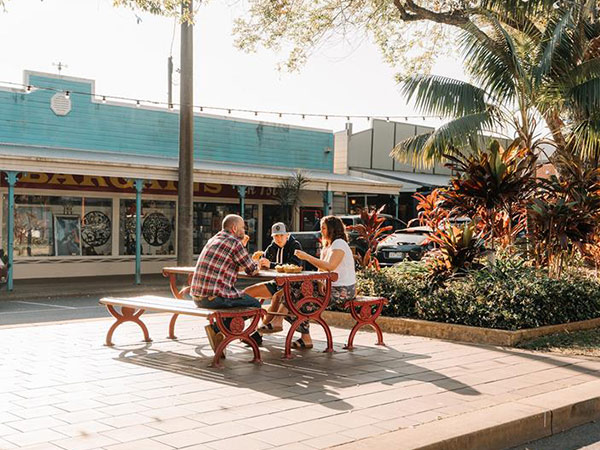
    family eating lunch in sawtell
    Experience small-town charm in Sawtell.

    2. Orara Valley Tourist Trail

    The Orara Valley Tourist Trail has it all: hinterland bushwalks, birdwatching, horse riding, pristine swimming holes and rolling green pastures dotted with dairy farms and historic villages. And it’s only 15 minutes west of Coffs Harbour.

    Sample produce at a roadside stall, stop into Coramba Hotel for a quintessential country pub lunch, or try the Idle in Cafe in Nana Glen for coffee and scones. Then spend the afternoon kayaking the Orara River or mountain biking on Mt Coramba. If you’re feeling adventurous, follow the 4WD touring route along the Orara Escarpment in Bindarri National Park, a rugged landscape with dazzling views that winds through untouched eucalypt rainforests and waterfalls.

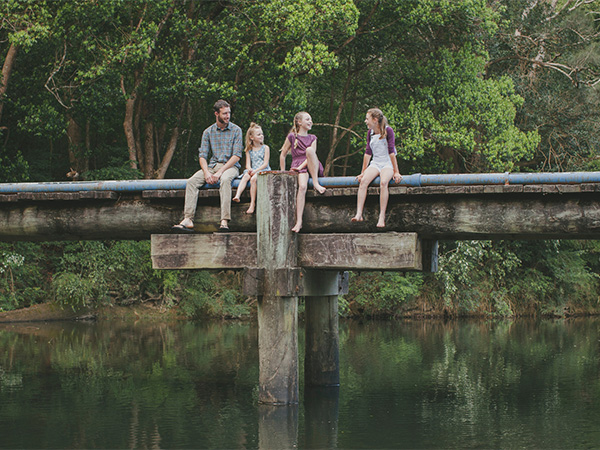
    A family sitting by the Orara Valley Tourist Trail.
    Explore the green heart of Coffs.

    3. Dorrigo National Park

    Enjoy a classic day trip from Coffs to forest bathe in some of the oldest subtropical rainforests in the world at Dorrigo National Park, part of the World Heritage-listed Gondwana Rainforests. These million-year-old ecosystems promise rare bird sightings, towering strangler figs, and epic walking tracks and picnic spots. Try the 6.6 km Wonga Walk to experience dreamy Crystal Shower Falls (where you can walk behind the falls) and the Skywalk Lookout, which offers spectacular views of the valley and coast. Then stop in Dorrigo town for a homey lunch. It’s worth noting that a section of the road between Ulong and Dorrigo – which dates to the 1880s – is unsealed, adding to the area’s end-of-the-earth allure but making travel difficult in adverse weather conditions. Alternatively, head to Dorrigo via the delightful township of Bellingen.

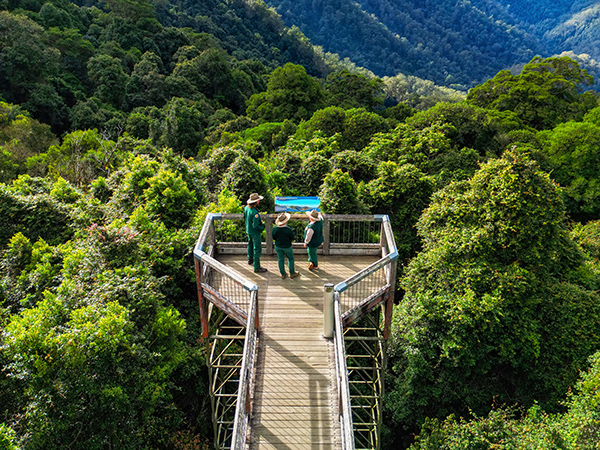
    Three people standing at the SkyWalk lookout.
    Wander the Skywalk.

    4. Northern Beaches

    For another tranquil expanse of sun, sand and surf breaks, head north to Woolgoolga (Tourism Australia’s Best Mainland Beach for 2025. Taste the coffee and local-produce breakfast at one of several cafes, then spot whales during their migration season along the Woolgoolga Whale Trail to the headland. Emerald Beach offers clear blue waters and another headland walk, perfect for taking in views of South Solitary Island, a dramatically rocky-cliffed island with a historic lighthouse. Red Rock, some 40km north of Coffs and named for its striking coastal rock formations, boasts a gorgeous estuary reserve that’s perfect for languorous days spent picnicking, swimming, fishing, and connecting with the relaxed local pace.

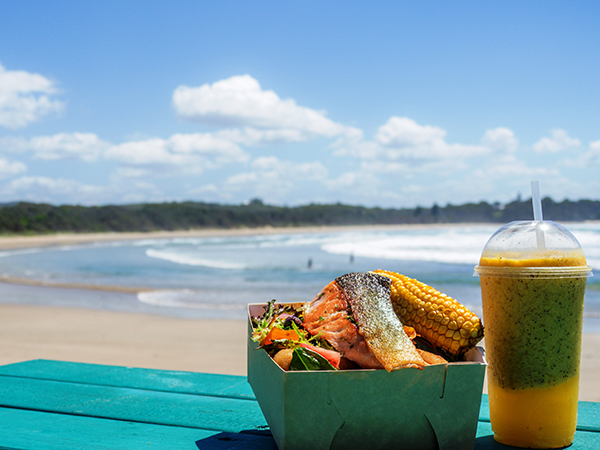
    Freshly caught seafood by the beach, with sparkling ocean views.
    Enjoy fresh seafood overlooking Woolgoolga Beach.

    5. Jetty precinct

    You could easily spend a whole day exploring the Jetty precinct – from its foreshores to the marina to Muttonbird Island. Start with fresh fish and chips from local institution Coffs Harbour Fisherman’s Co-op, before browsing the popular Harbourside Markets held every Sunday on the foreshores.

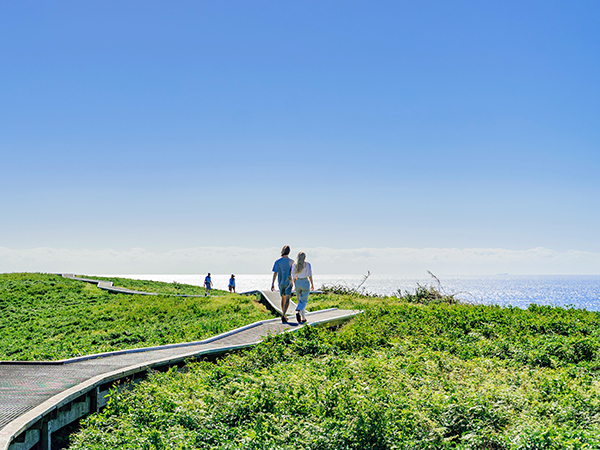
    Take a scenic walk along the breakwall to Muttonbird Island, a cultural and ecological treasure with panoramic views and rich Gumbaynggirr heritage. The Giidany Miirlarl Education Space shares the island’s ancient stories, or join a guided moonlight tour to see the seasonal return of the muttonbirds.

    Back at the Jetty Strip, find a buzzing mix of cafes, bars and restaurants with cuisines from around the world, open from morning until late. Don’t miss The Jetty Pavilion, a favourite for its unique menu blending modern Australian cuisine with vibrant world flavours.

    walk to muttonbird island from coffs harbour
    Walk the path where land meets sea and sky.

    6. Grafton

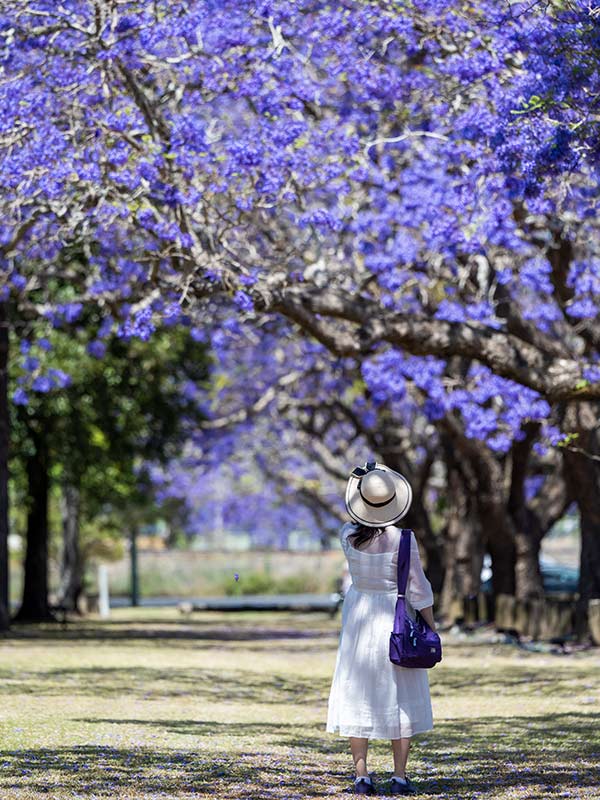
    Head inland from mid-October to early November to catch Grafton’s jacaranda season, when the town’s streets and parks are covered in purple. Even better, time your trip between 24 October and 2 November to attend the famous Jacaranda Festival, with special food items, performances and more. At any time of year, follow the self-guided Grafton Heritage Trail to discover the town’s historic buildings, landmarks and stories. Or get the blood pumping with a trip along the longest mapped white-water trail in Australia – the Clarence Canoe and Kayak Trail. Book a tour with Exodus Adventures.

    woman walking through jacaranda trees in grafton
    Time your Grafton trip to see the jacarandas in full bloom. (Image: @myclarencevalley)

    7. Nambucca

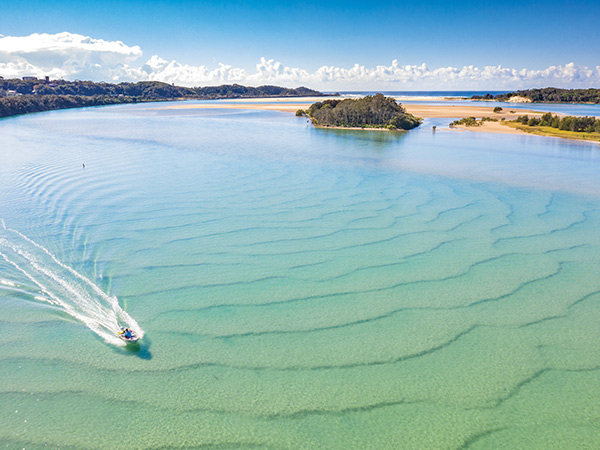
    Just south of Coffs Harbour sits Nambucca, the ideal town for a relaxed, coastal day trip. Hire a canoe, kayak or boat to explore over 80 kilometres of waterways stretching from the hinterland to the ocean. For those who prefer to stay on dry land (or double up their adventure for the day), stretch your legs along the V-Wall – a scenic coastal walk along the Nambucca River – dotted with boulders painted by the community, sharing messages, art and local stories. Stop along the way to buy Sydney rock oysters direct from local farmers, or try your own hand at fishing. Before heading back to Coffs, refuel on fresh seafood and wood-fired pizzas at Matilda’s in Nambucca.

    a boat zooming through Nambucca Heads
    Explore Nambucca’s waterways. (Image: Seen Australia)

    Visit coffscoast.com and download the Coffs Coast Explorer App for more daytrips and trails.