Can you say these 10 tongue-twister Australian place names?

hero media
The awkward moment when you realise you’ve been mispronouncing a place your whole life…

In Australia, our place names often originate from First Nations languages that have unique phonetic structures and sounds that are uncommon in English. Unfortunately, that means they are often mispronounced.

New research by language learning and culture experts Preply has analysed Australian place names and revealed the biggest tongue twisters.

Sylvia Johnson, head of methodology at language learning and culture experts Preply, says Australian place names are a clue to the country’s unique cultural heritage.

“While accurate translations and spellings may have been lost to time, many Australian place names are emblematic of those who have existed before," she says.

“When it comes to pronouncing long or unfamiliar place names, my advice is to speak the name slowly and sound out each syllable. Hearing the name phonetically can help imitate the native pronunciation."

How many of these places can you pronounce correctly on the first try?

Carrickalinga Beach in South Australia with person
New research has analysed Australian place names and revealed the biggest tongue twisters. (Image: Mitch Toft)

10. Albury-Wodonga, NSW/Victoria

The border city of Albury-Wodonga is separated by the Murray River with Albury in NSW and Wodonga in Victoria. The Albury-Wodonga area was known as Bungambrawatha, or ‘Homeland’, by the Wiradjuri people, until 1838 when colonisers decided ‘Albury’ was easier to pronounce. Wodonga, meaning ‘bulrushes’, still retains its Aboriginal name.

Pronunciation: Al-buh-ree-Wod-on-gah

Couple enjoying a riverside picnic at Noreuil Park, Albury.
Albury-Wodonga is separated by the Murray River. (Image: Destination NSW)

9. Widgiemooltha, Western Australia

An abandoned town in Western Australia, Widgiemooltha is not quite a ghost town, but it was once a thriving mining community found on the southern shoreline of Lake Leffroy. Located on Kalaako land, Widgiemooltha is believed to be derived from a word meaning ‘beak of an emu’.

Pronunciation: Wid-gee-mool-tha

Lake Leffroy near Widgiemooltha in Western Australia.
Lake Leffroy is near the abandoned Widgiemooltha.

Need tips, more detail or itinerary ideas tailored to you? Ask AT.

AI Prompt

8. Koolyanobbing, WA

Meaning ‘place of large rocks’, Koolyanobbing is an iron ore mining town between Perth and Kalgoorlie on Kapurn Country. Salt is also harvested from nearby Lake Deborah, a five-million-year-old salt lake.

Pronunciation: Kool-yah-nob-ing

7. Bishopsbourne, Tasmania

Bishopsbourne, or The Bourne as it’s called by the locals, is a tiny rural town (only 137 residents were recorded in the 2021 census) in northern Tasmania around half an hour from Launceston. The 13-letter place name is the easiest one for me on this list!

Pronunciation: Bish-ops-bourne

Bishopsbourne Church Of The Holy Nativity
Bishopsbourne is known as The Bourne to locals.

6. Carrickalinga, South Australia

Carrickalinga – or Karrakardlangga/Karragarlangga in Kaurna, a branch of the Pama–Nyungan languages – is a small, coastal town on South Australia’s Fleurieu Peninsula, on Kaurna land. The name is reportedly a corruption of the name given to a former Aboriginal camp meaning ‘place of redgum firewood’.

Pronunciation: Ka-ruh-kuh-ling-guh

Aerial shot of Carrickalinga Beach in South Australia
Carrickalinga has a stunning coastline. (Image: Jesse Ehlers)

5. Coonabarabran, NSW

On Wiradjuri Country, Coonabarabran is a small town that sits on the divide between the Central West and the North West Slopes regions of NSW. Meaning ‘inquisitive person’, Coonabarabran is actually the stargazing capital of Australia! The town is right beside Warrumbungle National Park, Australia’s first International Dark Sky Park.

Pronunciation: Koo-nuh-ba-ruh-bran

Scenic sunrise views across Warrumbungle National Park, near Coonabarabran.
Coonabarabran is the stargazing capital of Australia. (Image: Destination NSW)

Weekly travel news, experiences
insider tips, offers, and more.

4. Nowra-Bomaderry, NSW

Nowra-Bomaderry is one of the easier place names to say on this list, but it does have 14 letters in its name. Nowra-Bomaderry sits on either side of the Shoalhaven River on the NSW South Coast. The land to the north of the river is Dharawal Country, and the land to the south is Yuin Country. Nowra means ‘black cockatoo’ and Bomaderry means ‘fighting ground’ or ‘running water’ in the native languages.

Pronunciation: Now-rah-bow-ma-de-ree

Scenic views of the Shoalhaven River passing through Nowra.
Nowra-Bomaderry sits on either side of the Shoalhaven River. (Image: Destination NSW)

3. Boomahnoomoonah, Vic

Containing 15 letters, Boomahnoomoonah comes in third for Australia’s longest place names. Boomahnoomoonah is located roughly three hours’ drive from Melbourne, in the Shire of Moira in Victoria, an area known for its agriculture. Sitting between Yarrawonga and Wangaratta in north-eastern Victoria, Boomahnoomoonah is said to mean ‘big water’ in the local Yorta Yorta language.

Pronunciation: Boo-mah-noo-moo-nah

2. Cadibarrawirracanna, SA

Lake Cadibarrawirracanna is one of Australia’s beautiful salt lakes located near the well-known Kati Thanda–Lake Eyre in South Australia. It’s also the second biggest tongue twister when it comes to Australian place names with 19 letters. Often referred to as Lake Cadi, Cadibarrawirracanna means ‘the stars were dancing’ in the Arabana language.

Pronunciation: Cad-i-bar-rah-wir-a-can-nah

Aerial shot of Lake Cadibarrawirracanna in South Australia
Lake Cadibarrawirracanna is one of Australia’s beautiful salt lakes.

1. Mamungkukumpurangkuntjunya, SA

Taking out the top spot is Mamungkukumpurangkuntjunya, a hill in the Aṉangu Pitjantjatjara Yankunytjatjara lands of South Australia. With 26 letters, Mamungkukumpurangkuntjunya translates to ‘where the devil urinates’.

Pronunciation: Ma-mung-koo-kum-pu-rang-kunt-jun-ya

Want to see more stories from Australian Traveller in your Google search results?

  1. Click here to set Australian Traveller as a preferred source.
  2. Tick the box next to "Australian Traveller". That's it.
Emily Murphy
Emily Murphy is Australian Traveller's Email & Social Editor, and in her time at the company she has been instrumental in shaping its social media and email presence, and crafting compelling narratives that inspire others to explore Australia's vast landscapes. Her previous role was a journalist at Prime Creative Media and before that she was freelancing in publishing, content creation and digital marketing. When she's not creating scroll-stopping travel content, Em is a devoted 'bun mum' and enjoys spending her spare time by the sea, reading, binge-watching a good TV show and exploring Sydney's vibrant dining scene. Next on her Aussie travel wish list? Tasmania and The Kimberley.
View profile and articles
hero media

Your Mandurah guide: art, dining & dolphins await in WA’s coastal gem

    Monique Ceccato Monique Ceccato
    Discover the perfect road trip stopover between Perth and wine country.

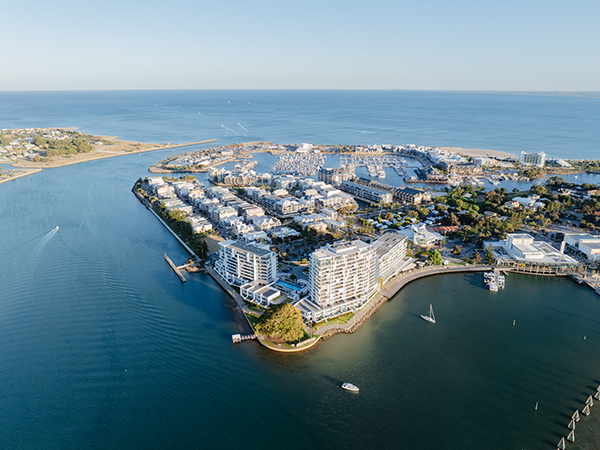
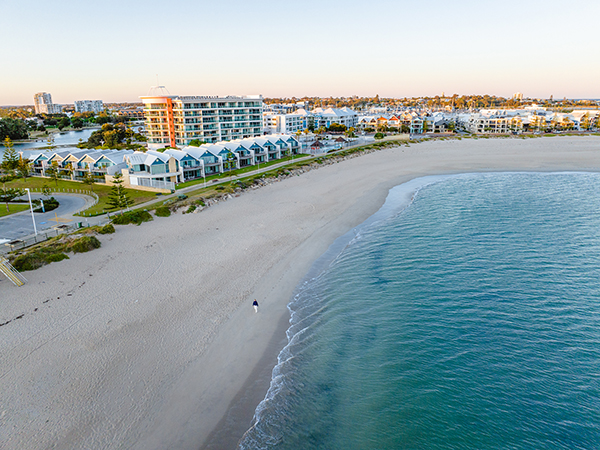
    Western Australia punches above its weight when it comes to coastal hot spots, but no other town or city has seen a tourism boom quite like Mandurah. Named Australia’s Top Tourism Town in 2023, it’s the relaxed, beachside break you’ve been searching for. And it’s perfectly placed, sitting between Margaret River and Perth, as it’s just a 55-minute drive from Perth’s CBD. Which is why we’ve put together your ultimate Mandurah guide.

    Aerial view of Mandurah.
    Plan your perfect coastal escape to Australia’s Top Tourism Town of 2023.

    The best things to do in Mandurah

    Wetlands and rivers, ocean and inlet; Mandurah’s laid-back lifestyle centres around the aquatic. Its waterways cover twice the ground of Sydney Harbour – measuring some 134 square kilometres in total – and form a unique environment for oceanic and estuarine flora and fauna to thrive.

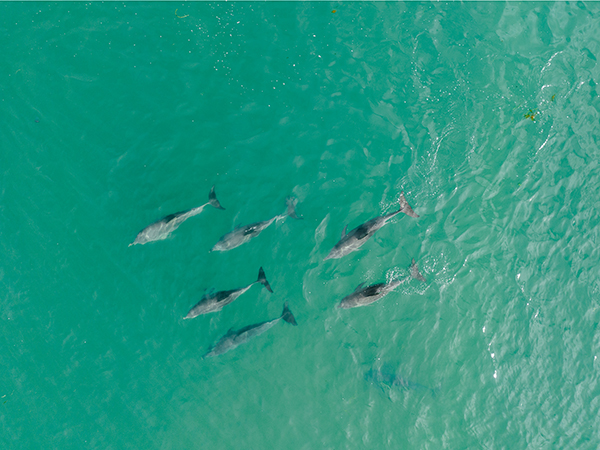
    In the city’s estuary lives perhaps the region’s most famed inhabitants – a resident pod of 100 bottlenose dolphins – and the inlet’s silty bottom is home to the prized blue manna crab. Spot the former breaching and playing on an hour-long dolphin cruise through the channels, or try your hand at catching the latter by wading through the estuary’s shallows with a scoop net in hand.

    While swimming at the circular Kwillena Gabi Pool, chance encounters with the local wildlife aren’t uncommon. The sheltered estuarine pool takes its name from the traditional custodians of the land, the Bindjareb people, and directly translates to ‘dolphin waters’. Jutting out of the eastern foreshore, it’s enclosed by a ring of net-free floating pontoons, which allow the dolphins to swim freely through the attraction.

    If that’s a little too close for comfort, book a kayak tour with Down Under Discoveries. The dolphins have been known to cruise beside the paddle-powered crafts, which are a fun, family-friendly way to explore the city’s inner waterways.

    Dolphins swimming in Mandurah.
    Watch dolphins glide by as you explore Mandurah.

    You don’t have to be on the water to appreciate the coastal city’s aquatic beauty, with 600 kilometres of cycleways and scenic walking trails traversing Mandurah’s estuary, inlet and coast.

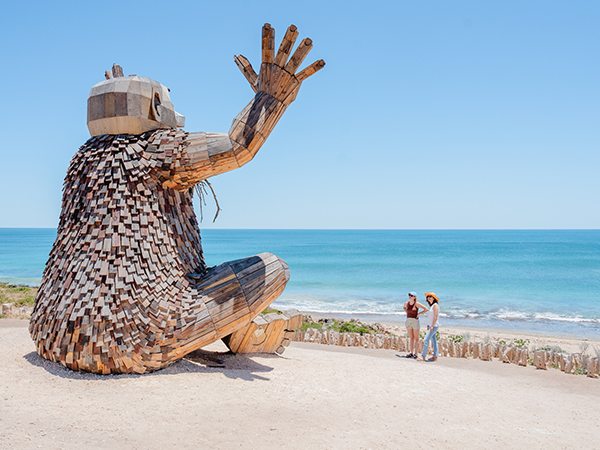
    Follow the 30-kilometre coastal trail and you’ll come face to face with one of Thomas Dambo’s headline-making ‘Giants of Mandurah sculptures, Santi Ikto, along the way. There are five sculptures around Mandurah in total, hidden among gum-filled reserves or sitting sentry over the water.

    Head to the Mandurah Visitor Centre to pick up a map to pinpoint their exact location and download the traveller’s companion to learn more about the sights along the way. Or join a three-hour e-bike tour from The Bike Kiosk and you’ll stop by two of the giants – Santi Ikto and Yaburgurt Winjan Cirkelstone – as you sightsee central Mandurah.

     The towering Santi Ikto, one of Thomas Dambo’s iconic Giants of Mandurah.
    Meet Santi Ikto, one of the legendary Giants of Mandurah.

    Where to eat in Mandurah

    Mandurah’s culinary scene reflects its laid-back lifestyle, with large, honest meals and locally brewed beer. After visiting Lake Clifton’s 2000-year-old thrombolites, head to the peppermint and gum-shaded beer garden at Thorny Devil Brewery. Tuck into a platter of house-smoked meats and an ale pulled fresh from the tanks. Closer to town and right on the waterfront is Boundary Island Brewery; here, woodfired pizza, pub-style seafood dishes and easy-drinking brews are centre stage.

    On a Murray River Lunch Cruise, the focus is as much on the environment around you as the food you’re filling up on. Help yourself to the colourful salads and freshly cooked meats on the buffet as you meander up the winding, jarrah tree-lined waterway, stopping at the heritage Cooper’s Mill for a quick walking tour along the way.

    Keep your eyes trained on the Creery Wetlands as you pass – you’ll spot much of the region’s migratory birdlife, and, as always, might see the playful bottlenose dolphins in the inlet.

    The most memorable meals aren’t necessarily always the fanciest, and lunch aboard a self-skippered Mandurah BBQ Boat is a testament to that. All food and beverage prep is left up to you as you cruise through the canals, sausages and steaks sizzling away on the central hot plate.

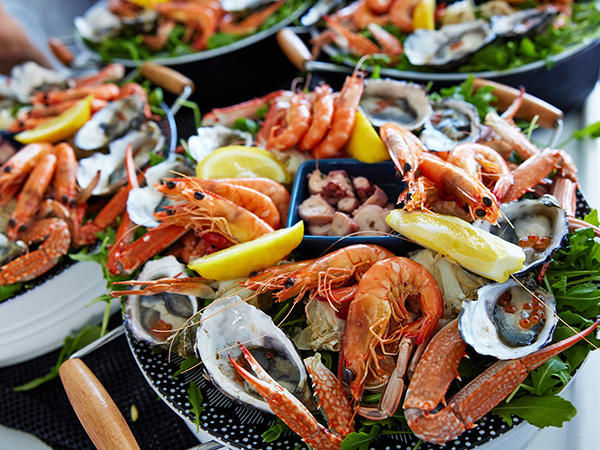
    If seafood is more your kind of fare, board the Wild Seafood Experience, where dolphin cruise meets long table lunch. Eight courses of crab, crayfish and scallops await.

    A table filled with plates of crab, crayfish, and scallops.
    Dine on the water with eight courses of ocean-fresh fare.

    Where to stay in Mandurah

    With so many waterways comes abundant waterside stays. Like the self-contained Seashells Mandurah on the shores of Comet Bay. The calm, oceanic outlook from the one-, two- and three-bedroom apartments and villas is as close to Maldivian as Mandurah gets. Families especially enjoy the property, bouncing between the protected cove and the beachfront pool for endless hours of fun.

    Seashells Mandurah; on the shores of Comet Bay.
    Stay right by the sea.

    The Sebel Mandurah, just a hop, skip and jump from the Mandurah Ocean Marina, has a different outlook entirely, overlooking the estuary and lively foreshore on the other side. It’s also within walking distance of the Mandurah Performing Arts Centre, cinema and a swathe of waterfront bars and eateries.

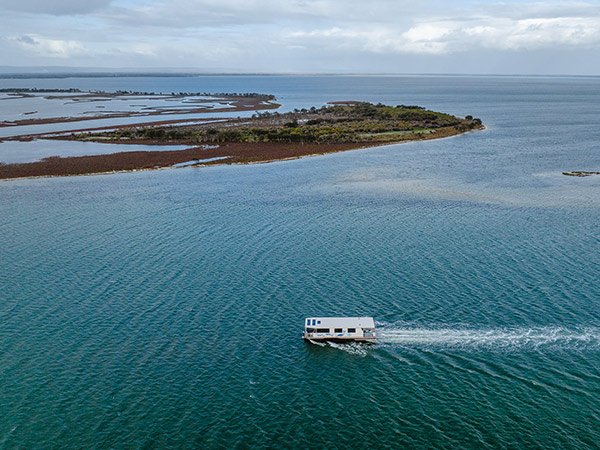
    But you can’t get any closer to the water than on a vessel from Mandurah Houseboats. You don’t need a skipper’s ticket to hire one, nor do you need comprehensive boating experience; just a full driver’s license and your undivided attention during the pre-departure tuition will do. Then you’re free to take to the estuaries and tributaries for a few nights of peaceful rest, surrounded by the very element that makes Mandurah so special.

    A houseboat cruising in Mandurah along the river
    Captain a houseboat to explore Mandurah at your own pace.

    Plan your next WA getaway in Mandurah.

    Can You Say These Tongue-Twister Australian Place Names? - Australian Traveller