7 of Australia’s quirkiest towns

hero media
From underground houses to UFO hotspots, here are Australia’s quirkiest towns.

1. Coober Pedy, SA

Laying its claim to being the Opal Capital of the World, the Hollywood of the Outback and a place of extreme temperatures, the reason for which most of its locals live underground, the tiny outback town of Coober Pedy is indeed one of the country’s most unusual places.


The reason behind the town’s moniker – an Aboriginal term for ‘white man in a hole’ – the famous Coober Pedy dugouts were introduced by opal mining pioneers in the early 20th century to escape the heat. More than half of the town’s homes are found underground, as well as the four-star Desert Cave Hotel, a campsite and a Siberian Orthodox church.


With the majority of the world’s opals found in Coober Pedy’s 70 opal fields, visitors can try their hand at ‘noodling’ – digging for opal by hand – or tour a working mine. The town is also home to a desert golf course that is open at night, one of the country’s last surviving drive-in movie theatres, and has been the setting for many a movie including Mad Max Beyond the Thunderdome and Priscilla Queen of the Desert.

Coober Pedy is indeed one of the country’s most unusual places

2. Nimbin, NSW

This sleepy village 70 kilometres west of Byron Bay is infamous for its, er, liberal lifestyle. The psychedelic town was thrown into the spotlight when it hosted the 1973 Aquarius Festival, Australia’s version of Woodstock, and it hasn’t shaken this carefree, counter-culture, peace-loving guise ever since.


A wander down the main street is like stepping into an alternate universe. You’ll find myriad wellbeing services from yoga and acupuncture to shamans and psychics; a thriving arts and culture scene of art galleries, street art and buskers; a host of organic/vegan/vegetarian/sustainable food options; and some businesses that specialise in… let’s just say alternative medicinal products.

3. Wycliffe Well, NT

Who knew a remote town located 380 kilometres north of Alice Springs was considered the UFO Capital of Australia? After reading about sightings during World War 2, one man by the name of Lew Farkas purchased the local roadhouse and, after dropping a cool $4 million, created a gimmicky tourist attraction complete with kitsch UFO murals, spaceships, plastic green aliens and even (a now defunct) toy train.


There is a journal on display where visitors have recorded sightings such as colourful lights that move and change shape, descend behind trees and quickly disappear; even some of which have followed cars.


Sceptics put it all down to aircraft and weather phenomena (or a few too many schooners at the pub), while believers think it’s Wycliffe Well’s geographical location and intense energy that draws these unique visitors in. Others think there’s a link to the nearby US military intelligence base Pine Gap. Whatever the reason, there have been no abductions… as yet.

Have you considered the UFO capital of Australia?

Need tips, more detail or itinerary ideas tailored to you? Ask AT.

AI Prompt

4. Grindelwald, Tas

The locals in this Swiss-style settlement, 15 minutes north of Launceston, do not speak any Swiss-German nor do they have any Swiss heritage. In fact, this unique little town has no ties to Switzerland at all. The man who built it in 1989 simply did so for his wife who enjoyed a recent holiday to the scenic European country so much she wanted to relocate there. Next best thing? Build her a mini Switzerland closer to home… naturally.


The town possesses Swiss chalets and wooden farmhouses, and is surrounded by a lake and the rolling green hillsides of the Tamar Valley. There’s also the Tamar Valley Resort for those who want to stay in this little slice of Switzerland a little longer.

5. Birdsville, Queensland

Located more than 1500 kilometres west of Brisbane, the tiny town of Birdsville (Population: 115) bursts at the seams with visitors twice a year during two of the country’s most iconic events: The Birdsville Races and The Big Red Bash. Dubbed as the Melbourne Cup of the outback, the Birdsville Races is the second race meet of the Simpson Desert Racing Carnival, while the Big Red Bash is one of the world’s most remote music festivals.


While these extraordinary events have put Birdsville on the map, the red, dusty township has been a welcome respite for intrepid outback travellers for decades, many of whom stop in at the charming 1884-built Birdsville Hotel for an ice-cold beer and some pub grub. The pub’s sandstone walls are graced with memorabilia including the hats of locals, cloth insignia, stickers, road signs and flags. Visitors can also try a camel pie at the bakery and tackle the 40-metre Big Red Dune in the Simpson Desert while passing through.

A birds eye view of the Big Red Bash Festival, Birdsville

6. Hahndorf, SA

Tucked in the Adelaide Hills, just a 30-minute drive from the city, Hahndorf is Australia’s oldest surviving German settlement. Its German history dates back to 1838, when 187 German Lutheran immigrants arrived after escaping persecution by the King of Prussia. Many of the 19th-century German farmhouses and timber frame buildings they constructed still stand today.


The charming European-style village boasts a number of specialty shops, including a leathersmith, knife shop, confectionary, cheese cellar, butcher, baker, and candlestick maker (for real). There are also many eateries where you can sample traditional German fare, including the German Arms Hotel: order a stein of German beer to enjoy with a schnitzel or trio of German wursts.

Hahndorf is Australia’s oldest surviving German settlement

Weekly travel news, experiences
insider tips, offers, and more.

7. Nain, WA

Located in Western Australia, 516 kilometres north of Perth, relatively unknown Nain is not actually an Australian town – it’s the capital of the Principality of Hutt River, Australia’s only Independent Sovereign State.


In 1970, the 7500-hectare wheat farm was seceded from Australia after its owner, the late Leonard George Casley (AKA His Royal Highness Prince Leonard the First), had disputes with the then state government over wheat quotas.


The Principality of Hutt River has its own currency, postage stamps and national anthem, and was – until January 2020 – open to tourists who would come to visit the museum, see the ‘royal art collection’, have their passport stamped, and to meet members of the royal family. The current monarch and son of Leonard, Prince Graeme Casley, made the decision to temporarily close its borders for financial reasons. Watch this space.

Want to see more stories from Australian Traveller in your Google search results?

  1. Click here to set Australian Traveller as a preferred source.
  2. Tick the box next to "Australian Traveller". That's it.
Megan Arkinstall
Megan Arkinstall is a freelance travel writer who you’ll often find at the beach, bushwalking or boating with her young family. She loves reliving travel memories through writing, whether that be sipping limoncello in a sun-drenched courtyard of Monterosso or swimming with green turtles in the aquamarine waters of Tropical North Queensland.
View profile and articles
hero media

Why the Central Coast is a foodie mecca

    Elise Cullen Elise Cullen
    Underpinned by grassroots hospitality and award-winning organic produce, the Central Coast’s gastronomy scene is thriving, with the region quickly becoming one of the best destinations in NSW for epicures.

    Revered for its rugged natural splendour and laid-back seaside charm, NSW’s Central Coast has soared in popularity in recent years, becoming a top choice for an affordable slice of weekend escapism for Sydneysiders. Just a short 45-minute drive north of Sydney, it’s the kind of place that, no matter how many times you visit, leaves you with the sense that there’s always more to uncover. But while the ocean pools, bushwalks and beaches have (rightly) taken the spotlight, it’s the Central Coast food offerings which have been quietly simmering in the background.

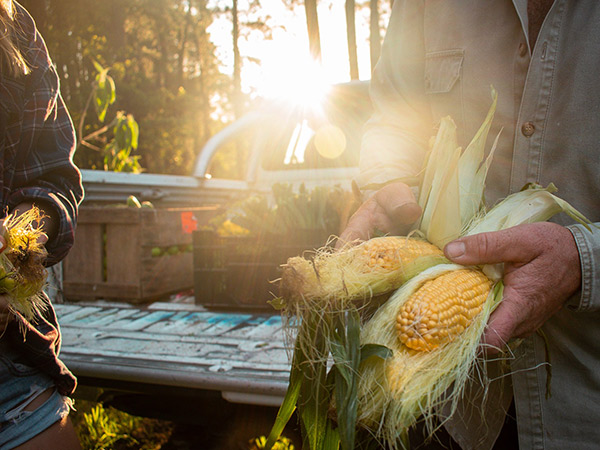
    From fresh-as-it-gets seafood and juicy organic citrus you can pluck yourself, through to regenerative farming and reputable farm-to-fork dining, this coastal gem has become an idyllic foodie mecca. Here are some of the best ways to immerse yourself in grassroots hospitality and gastronomic glory on the NSW Central Coast.

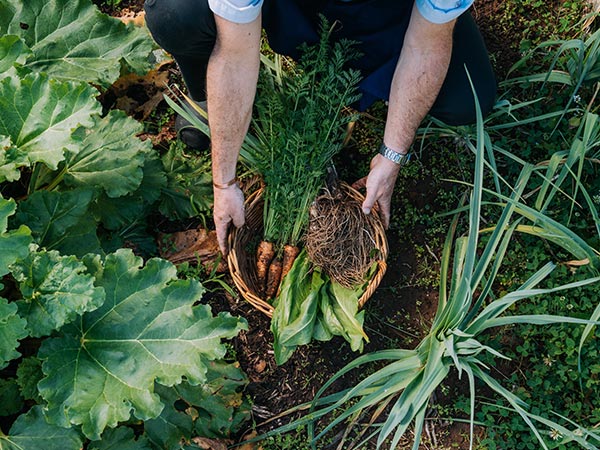
    vegetables in a basket at Bells Garden at Bells At Killcare
    From picking your own, to farm-to-table, discover the best Central Coast food experiences. (Image: Remy Brand)

    Central Coast oyster experiences

    From humble grub to opulent delicacy, oysters have ascended into a league of their own. Epicureans are fascinated by them – willing to pay upwards of $35 per dozen (double at some of Sydney’s reputable fine dining restaurants) – and ‘shuck bars’ seem to be popping up at every milestone celebration.

    But it’s rare to find places that really draw back the curtain on how they’re farmed and why everyone is mad for these molluscs. The Central Coast, however, is home to several of these venues. With its pristine waters, mild climate and nutrient-rich estuaries, it’s the perfect breeding ground for oysters.

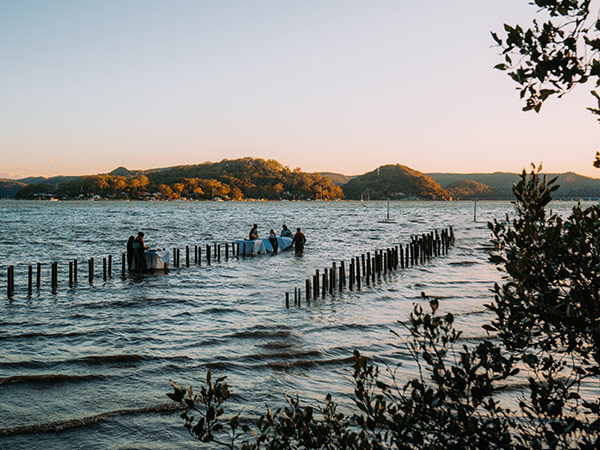
    Learn about oyster farming and, importantly, how to shuck them at Sydney Oyster Farm Tours. Nestled on the Hawkesbury River at Mooney Mooney, Sheridan Beaumont and her team offer a hands-on foodie experience where you can feast on dozens of oysters (white tablecloth and all) while wading through the calm waters. You can even bring your own bottle of bubbles to wash them down.

    guests in the water for an experience at Sydney Oyster Farm - Central Coast food
    Learn tricks of the trade at Sydney Oyster Farm Tours. (Image: Remy Brand)

    Elevate your oyster knowledge even further by heading north over the Hawkesbury River Bridge to the Hawkesbury River Oyster Shed. Tour their scenic oyster leases and saltwater paddocks by boat to uncover the distinct characteristics of the Sydney rock oyster and creamy Pacific oyster. They’ve also partnered with Broken Bay Pearl Farm to offer a one-of-a-kind oyster and pearl farming guided tour, showcasing the Central Coast’s very own pearl oyster, the Broken Bay ‘Akoya’. But if you’re simply in the mood to devour a dozen delectable oysters while soaking in the tranquil river views, pull up a chair at the shed. It’s friendly in every sense of the word: pets, families and BYO welcome.

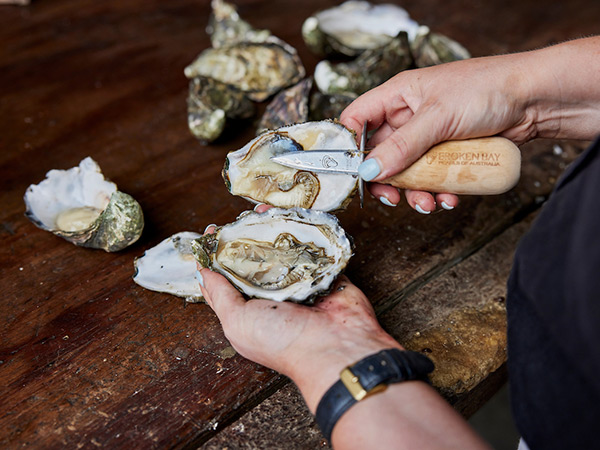
    shucking oysters at Broken Bay Pearl Farm
    Taste freshly shucked oysters at Broken Bay Pearl Farm. (Image: James Horan)

    Central Coast farms to pick your own fruit

    While the Central Coast is known for its breathtaking 40 beaches and 80-kilometre coastline, its lush hinterland is equally impressive – abundant with orchards and agriculturally rich farmland. And when it comes to the simple joy of picking your own fruit, the Central Coast is a ripe playground.

    Family-owned Meliora Farm at Peats Ridge is an orchard that blends conventional, biodynamic and organic philosophies. Third-generation farmer Tim Kemp and his wife Elise are dedicated to honouring the family legacy by growing a rich variety of oranges, lemons, limes, mandarins and avocados. In late May, roam the sustainable and nutrient-dense property during ‘Pick Your Own’ weekends.

    Eastcoast Beverages is another bountiful citrus orchard boasting over 60 hectares of fruit. From June you can learn about the cultivation of high-quality ingredients – like lemons, limes, grapefruit and oranges – by touring both the farm and factory before setting out and picking your own straight from the source. You can also sample an array of citrus-inspired sweet and savoury treats at their on-site cafe, Bambino’s.

    If it’s just juicy oranges you’re after, Cedar Farm in Dooralong is a must-visit. Located about 30 minutes north of Peats Ridge, it features 15 flourishing orchards and over 3000 orange trees – with take-home bags during the season (from July) at low prices. Not bad for a fruity weekend haul.

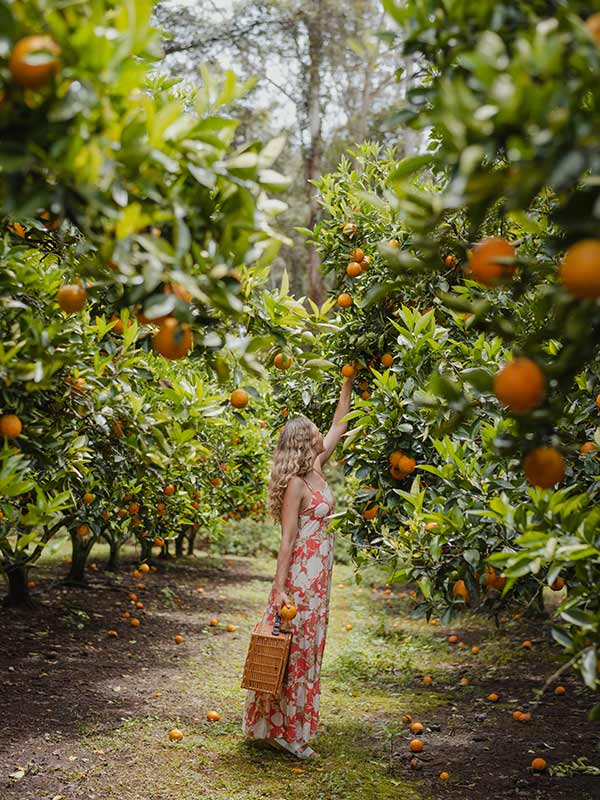
    woman picking oranges at Oranges at Dooralong
    Pick your own citrus fruits on the Central Coast. (Image: James Vodicka)

    Organic dining

    What makes the Central Coast hinterland so special is the unwavering respect the communities have for their cherished backyard. Locally owned and operated farms are all striving for more sustainable practices and methods to both enhance biodiversity and reduce environmental impact, each with a heartwarming food philosophy.

    The Food Farm in Wyong Creek believes good food is worth both the work and the wait. Devoted to regenerative farming, first-generation ‘farmily’ Tim Eyes and Hannah Greenshields are recognised for their grass-fed, grass-finished beef and pasture-raised, gold medal-winning chickens. With an open gate policy, The Food Farm encourages visitors to swing by and try some of their slow-grown produce at their small ‘honesty’ farm shop. With no staff, you can pick up a few quality cuts of meat and pasteurised eggs, leaving the owing amount in cash or via eftpos.

    Keeping the spirit of generational organic farming alive is Fanelli Organics. Nestled in the Central Coast’s scenic and sleepy Mangrove Mountain, founders Eden and Louise Fanelli own over 45 hectares of plentiful farmland and orchards that produce a huge range of organic fruit and vegetables, like purple Dutch carrots, blood oranges, broccoli and Tuscan kale. A true home-grown operation, Fanelli Organics shares its fresh produce with local restaurants and community markets, including the beloved markets at Like Minds Cafe at Avoca Beach every Wednesday afternoon.

    farmers holding fresh produce picked at Fanelli Organics
    See where your food comes from at Fanelli Organics.

    Paddock-to-plate dining

    High-quality ingredients go hand in hand with premium dining, and the Central Coast is home to several paddock-to-plate restaurants that showcase its diverse and rich agriculture. Paired with warm, grassroots hospitality, there are culinary triumphs, new menus and revered chefs constantly popping up, putting the local dining scene firmly on the map.

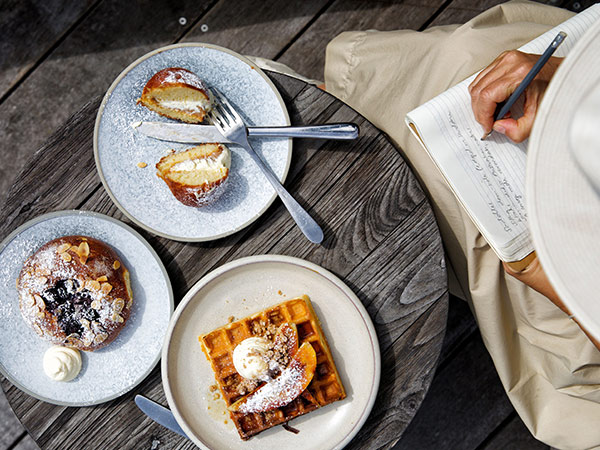
    Award-winning Mount White restaurant Saddles is a quintessential Australian dining destination, dedicated to country-style cooking and seasonal produce. Nestled in thick bushland with wraparound verandahs, floral gardens and an idyllic dam, the gourmet homestead and bakehouse is unlike any restaurant on the Central Coast. Here, head chef Reece Collins and his team serve up an impressive breakfast and lunch menu that oozes rustic charm. Pull up a comfy armchair on the expansive deck, listen to birdsong, and tuck into flavoursome dishes like the farmhouse Benedict with honey-cured ham, lemon myrtle hollandaise and Warrigal gremolata, or the hearty beef brisket pie with confit garlic potato purée and rainbow chard.

    woman writing in notebook next to a table of food at Saddles, Central Coast food
    Taste country-style cooking at Saddles. (Image: Destination NSW)

    Delivering a slice of sophistication and luxury to the shores and bushland of Bouddi Peninsula is Bells at Killcare. One of the few boutique resorts on the Central Coast, it’s known for its premium service and five-star suites, as well as its bountiful kitchen gardens that boast an orchard, olive trees, avocado trees, free-range hens and a honey bee hive.

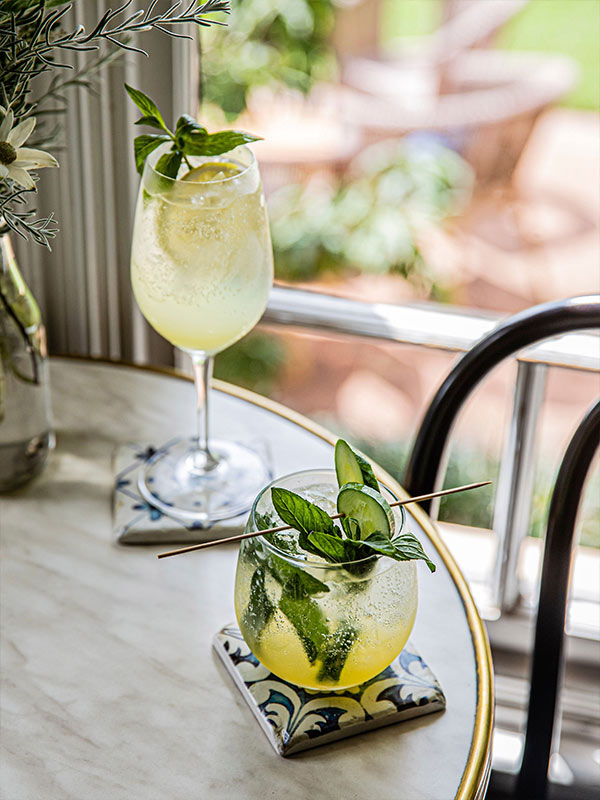
    Cameron Cansdell has returned to Bells at Killcare as head chef, bringing his expertise to the casual yet refined menus that feature a raw bar with Oscietra caviar, freshly shucked Sydney rock oysters and Moreton Bay bugs, all served alongside optional matched wines. Sample some of Australia’s best regional wines and standout dishes, like roasted Wollemi duck with grilled leeks, rocket, grilled grapes and 10-year-aged balsamic, or the shareworthy salt-crusted snapper with herb salad and salsa, before roaming the picturesque gardens, wine in hand.

    cocktail at Bells At Killcare
    Sample incredible wine, cocktails and dishes at Bells At Killcare. (Image: Nikki To)

    Plan your next visit to the delicious Central Coast.

    7 Of Australia's Quirkiest Towns