7 landscapes Australians saved for their grandkids

hero media

Pat yourselves on the back, Australia – your children will thank you. Congratulations, you have saved some of the most stunning landscapes in this wide, brown land for the following generations.

Even in the midst of the all-powerful resources boom, sometimes communities put their collective feet down, taking on governments and industry to defend and conserve these stunning areas. Of course, there are still many battles being fought and to be fought. But in the meantime, here are seven triumphs – landscapes of great environmental, cultural and sentimental significance (and, of course, commercial value) that your grandkids and their grandkids can will be able to experience and enjoy. 

1. Koongarra, NT

Kakadu National Park’s boundaries were declared in 1979, but an area near the famous Nourlangie Rock (famous for indigenous rock art) was excluded from the park because of a large uranium deposit there. For years Jeffrey Lee, the senior Djok traditional owner of Koongarra, was courted by mining companies to use the land but he insisted it be incorporated into Kakadu. Finally, in 2013, the Kakadu Project Area Act was repealed and this extraordinary part of the region was included in the National Park and World Heritage Area.

2. Franklin River, Tasmania

Probably Australian environmentalists’ most famous battle and one that was ultimately successful. In 1982-83, 1272 people were arrested at Warner’s Landing, 6km from the junction of the Franklin and Gordon, during protests against the Tasmanian government’s plan to dam the Gordon. These concerted protests (during a federal election campaign) meant the river was saved in 1983 after actions by the Hawke Government and a High Court decision.

3. Arkaroola, SA

This wilderness reserve in northern Flinders Ranges, about 600km north of Adelaide, was described by Dick Smith as one of Australia’s finest arid landscapes. Sir Douglas Mawson also often brought his Adelaide University students here on field trips. Until 2011 the area was under threat from uranium mining, but after a community campaign in July of that year, the government announced that mining would be banned in Arkaroola, aiming eventually for a World Heritage listing.

Need tips, more detail or itinerary ideas tailored to you? Ask AT.

AI Prompt

4. Hattah Lakes, Victoria

Hattah Lakes wetlands, part of the Murray-Darling river system, did not experience a proper flood between 1996 to 2010. Too much water, mostly for irrigation, was being taken out of the wetlands (one of Australia’s most significant) for the natural floods, which are vital for the area’s birds and animals, to occur. Recently an environmental works program is bringing Hattah’s river redgums and animals back to life in this stunning series of freshwater lakes.

5. Mary River, Queensland

The Queensland government wanted to flood the Mary River Valley at Traveston Crossing, near Gympie, to shore up Brisbane’s water supply. The plan threatened the habitat of Australian lungfish, Mary River cod and Mary River turtle, and would have flooded large tracts of farming land. After a community campaign, then Federal Environment Minister Peter Garrett invoked Commonwealth environmental powers to stop the project.

6. James Price Point, WA

A plan to build a gas processing plant at James Price Point, 50km from Broome on the Kimberley’s coastline, faced opposition from environmentalists, who said the plan posed risks to whales, dugongs, bilbies and dinosaur footprints in the area. There was also a strong opposition from the land’s traditional Goolarabooloo owner Richard Hunter. But in mid 2013, after protracted court action, the gas project was shelved, the companies opting to obtain the gas from a floating platform out at sea instead.

7. Mt Everard, Harts Range and Fishers Ridge, NT

Some of Australia’s most arid landscapes, Mt Everard and Harts Range (near Alice Springs) and Fishers Ridge (NT, near Katherine) had been shortlisted as possible radioactive waste dump sites. But all three sites, of great environmental and cultural significance, have since been removed from consideration after various community campaigns.

Thanks to the Australian Conservation Foundation for use of information and resources.

Want to see more stories from Australian Traveller in your Google search results?

  1. Click here to set Australian Traveller as a preferred source.
  2. Tick the box next to "Australian Traveller". That's it.
hero media

Your Mandurah guide: art, dining & dolphins await in WA’s coastal gem

    Monique Ceccato Monique Ceccato
    Discover the perfect road trip stopover between Perth and wine country.

    Western Australia punches above its weight when it comes to coastal hot spots, but no other town or city has seen a tourism boom quite like Mandurah. Named Australia’s Top Tourism Town in 2023, it’s the relaxed, beachside break you’ve been searching for. And it’s perfectly placed, sitting between Margaret River and Perth, as it’s just a 55-minute drive from Perth’s CBD. Which is why we’ve put together your ultimate Mandurah guide.

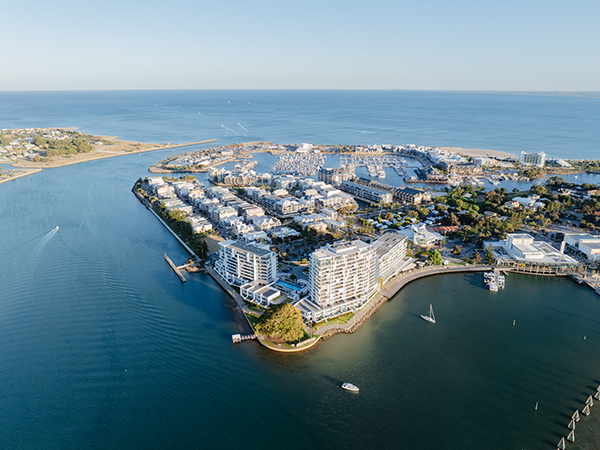
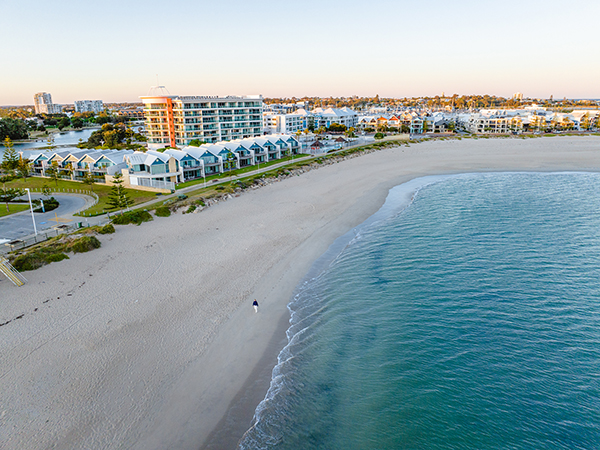
    Aerial view of Mandurah.
    Plan your perfect coastal escape to Australia’s Top Tourism Town of 2023.

    The best things to do in Mandurah

    Wetlands and rivers, ocean and inlet; Mandurah’s laid-back lifestyle centres around the aquatic. Its waterways cover twice the ground of Sydney Harbour – measuring some 134 square kilometres in total – and form a unique environment for oceanic and estuarine flora and fauna to thrive.

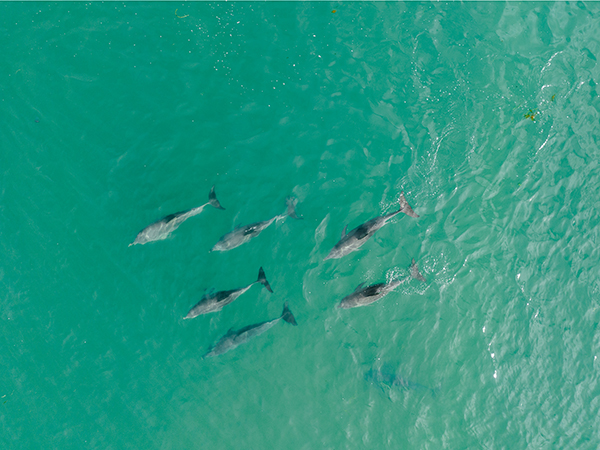
    In the city’s estuary lives perhaps the region’s most famed inhabitants – a resident pod of 100 bottlenose dolphins – and the inlet’s silty bottom is home to the prized blue manna crab. Spot the former breaching and playing on an hour-long dolphin cruise through the channels, or try your hand at catching the latter by wading through the estuary’s shallows with a scoop net in hand.

    While swimming at the circular Kwillena Gabi Pool, chance encounters with the local wildlife aren’t uncommon. The sheltered estuarine pool takes its name from the traditional custodians of the land, the Bindjareb people, and directly translates to ‘dolphin waters’. Jutting out of the eastern foreshore, it’s enclosed by a ring of net-free floating pontoons, which allow the dolphins to swim freely through the attraction.

    If that’s a little too close for comfort, book a kayak tour with Down Under Discoveries. The dolphins have been known to cruise beside the paddle-powered crafts, which are a fun, family-friendly way to explore the city’s inner waterways.

    Dolphins swimming in Mandurah.
    Watch dolphins glide by as you explore Mandurah.

    You don’t have to be on the water to appreciate the coastal city’s aquatic beauty, with 600 kilometres of cycleways and scenic walking trails traversing Mandurah’s estuary, inlet and coast.

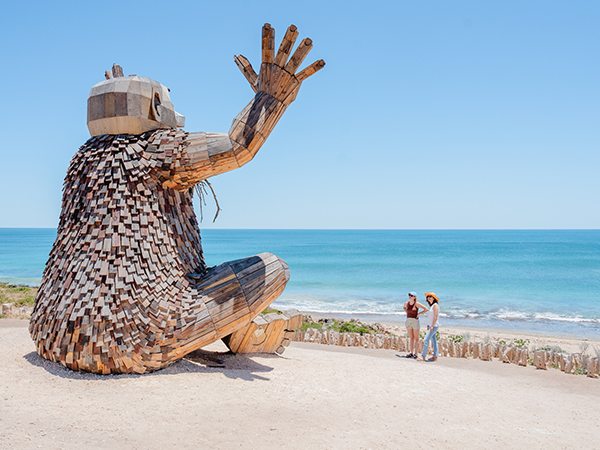
    Follow the 30-kilometre coastal trail and you’ll come face to face with one of Thomas Dambo’s headline-making ‘Giants of Mandurah sculptures, Santi Ikto, along the way. There are five sculptures around Mandurah in total, hidden among gum-filled reserves or sitting sentry over the water.

    Head to the Mandurah Visitor Centre to pick up a map to pinpoint their exact location and download the traveller’s companion to learn more about the sights along the way. Or join a three-hour e-bike tour from The Bike Kiosk and you’ll stop by two of the giants – Santi Ikto and Yaburgurt Winjan Cirkelstone – as you sightsee central Mandurah.

     The towering Santi Ikto, one of Thomas Dambo’s iconic Giants of Mandurah.
    Meet Santi Ikto, one of the legendary Giants of Mandurah.

    Where to eat in Mandurah

    Mandurah’s culinary scene reflects its laid-back lifestyle, with large, honest meals and locally brewed beer. After visiting Lake Clifton’s 2000-year-old thrombolites, head to the peppermint and gum-shaded beer garden at Thorny Devil Brewery. Tuck into a platter of house-smoked meats and an ale pulled fresh from the tanks. Closer to town and right on the waterfront is Boundary Island Brewery; here, woodfired pizza, pub-style seafood dishes and easy-drinking brews are centre stage.

    On a Murray River Lunch Cruise, the focus is as much on the environment around you as the food you’re filling up on. Help yourself to the colourful salads and freshly cooked meats on the buffet as you meander up the winding, jarrah tree-lined waterway, stopping at the heritage Cooper’s Mill for a quick walking tour along the way.

    Keep your eyes trained on the Creery Wetlands as you pass – you’ll spot much of the region’s migratory birdlife, and, as always, might see the playful bottlenose dolphins in the inlet.

    The most memorable meals aren’t necessarily always the fanciest, and lunch aboard a self-skippered Mandurah BBQ Boat is a testament to that. All food and beverage prep is left up to you as you cruise through the canals, sausages and steaks sizzling away on the central hot plate.

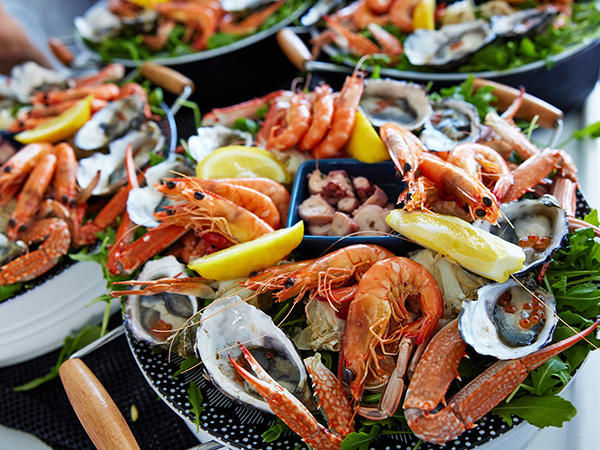
    If seafood is more your kind of fare, board the Wild Seafood Experience, where dolphin cruise meets long table lunch. Eight courses of crab, crayfish and scallops await.

    A table filled with plates of crab, crayfish, and scallops.
    Dine on the water with eight courses of ocean-fresh fare.

    Where to stay in Mandurah

    With so many waterways comes abundant waterside stays. Like the self-contained Seashells Mandurah on the shores of Comet Bay. The calm, oceanic outlook from the one-, two- and three-bedroom apartments and villas is as close to Maldivian as Mandurah gets. Families especially enjoy the property, bouncing between the protected cove and the beachfront pool for endless hours of fun.

    Seashells Mandurah; on the shores of Comet Bay.
    Stay right by the sea.

    The Sebel Mandurah, just a hop, skip and jump from the Mandurah Ocean Marina, has a different outlook entirely, overlooking the estuary and lively foreshore on the other side. It’s also within walking distance of the Mandurah Performing Arts Centre, cinema and a swathe of waterfront bars and eateries.

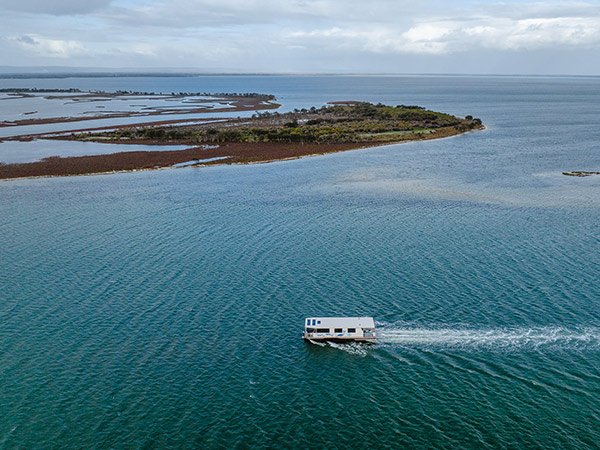
    But you can’t get any closer to the water than on a vessel from Mandurah Houseboats. You don’t need a skipper’s ticket to hire one, nor do you need comprehensive boating experience; just a full driver’s license and your undivided attention during the pre-departure tuition will do. Then you’re free to take to the estuaries and tributaries for a few nights of peaceful rest, surrounded by the very element that makes Mandurah so special.

    A houseboat cruising in Mandurah along the river
    Captain a houseboat to explore Mandurah at your own pace.

    Plan your next WA getaway in Mandurah.

    7 landscapes Australians saved for their grandkids - Australian Traveller