10 ways to explore Australia on foot

hero media
From coastal walks and nature hikes to tree climbs and cave explorations, we went high and low to see where your two feet can take you (oh, and we borrowed some hooves, too).

1. Walk ancient clifftops just 45 minutes from the city

Where: Royal National Park, NSW

It’s hard to imagine city life and all its stressors are just 45 minutes north when you’re standing atop the white cliffs of new south wales’ Royal National Park.


There are incredible Easter eggs along the coast track way to find, such as the Figure Eight Pools (great for photos, not so great for swimming due to dangerous freak waves), Little Marley Beach and Wattamolla’s lagoon and beach.

2. Try bush food in the City

Where: Royal Botanic Garden, Sydney, NSW ROYAL BOTANIC GARDEN

Try black apples straight from the tree and wash your hands with foaming wattle leaves on an Aboriginal Heritage Tour of Sydney’s Royal Botanic Garden.
Education co-ordinator for aboriginal programs, Jody Orcher, has made sure the tours are in-depth and honour indigenous heritage.

3. Visit an octopus’s garden beneath the sea

Where: Green Island, Great Barrier Reef, QLD

We felt we had to include this activity this year, because it is such a memorable adventure for the whole family.


With no diving experience required, you can actually walk on the sea floor, foot-to-sand and face-to-face with sea life off Green Island.


An underwater helmet is all that keeps you from planting a kiss on passing fish.


Seawalker Green Island is the ultimate underwater experience.

4. Four ways to get high and go low: see the country from the trees and from the caves

Where: Valley of the Giants Tree Top Walk, Walpole Wilderness, WA

Explore towering red tingle trees from 40 metres above ground.


Adrenaline upgrade: drive two-and-a-half-hours to Pemberton and scramble your way 61 metres up the pegs of the Gloucester Tree, or the 51-metre Diamond Tree, or complete the Valley of the Giants Tree Top Walk for a heart-pounding view.

Where: Tahune Airwalk, Huon Valley, Tasmania

At the highest point on this walk you’ll be suspended 50 metres above the Huon River.


Adrenaline upgrade: If that’s not enough to raise your heart-rate, take the Tahune Airwalk hang-glider across the rushing river.

Where: Mole Creek Caves, Mayberry, Tasmania

Tasmania has some of the deepest caves in Australia, so if you enjoy a sojourn in the underworld, Tassie is a good bet.


Marvel at crystals, reflective pools and glow worms.


Adrenaline upgrade: Kubla Khan is one of the more spectacular caves at Mole Creek, but you’ll need a permit; only 72 people are granted access each year.

Where: Tunnel Creek National Park, WA

One-time hideout for indigenous legend Jandamarra, who was eventually killed here in 1897 after a siege, Tunnel Creek is part of the ancient Devonian Reef.


The walk is 750 metres of pitch-black excitement, and you have a good chance of meeting a freshwater croc.


Adrenaline upgrade: A croc encounter is enough adrenaline, we feel.

Need tips, more detail or itinerary ideas tailored to you? Ask AT.

AI Prompt

5. Because sometimes four feet are better than two…

Where: Bogong Horseback Adventures, High Country, Victoria

Take a load off and swing into the saddle for these trails with a difference:


Lovely horses, incredible scenery and restorative mountain air, we loved this Bogong trail ride when we experienced it last year, and still think it’s one of the best in the country.


Take a five-day ride to really feel like a pioneer, or if you’re still getting familiar with our equine friends, you can enjoy a day tour – our favourite is the half-day with a long table lunch.

Where: The Flinders Ranges, South Australia

And if horses are just a bit tame for you, why not clamber onto a humped and hairy hoofed steed instead?


Camels played a huge part in opening up the country, and the Beltana Station Camel Experience in the Flinders Ranges is a wonderful way to explore the unforgettable terrain.


Or take a photography-themed trek with Camel Trek Australia.

6. Follow an ancient song line in the Northern Territory

Where: Nitmiluk National Park, NT

Walk 62 kilometres over six days following the ancient Jawoyn song line through Nitmiluk National Park.


The wild, uncurbed beauty of the Jatbula Trail will stay with you for the remainder of your days.


Swim in crystal pools, fall asleep to the sound of teeming birdlife and have an all-round life-altering experience.


You can trek guided or unguided.

7. Connect with the custodians of the land…

Where: Narlijia Cultural Tours, Broome, WA

Born and bred in Broome, with the blood of both the Yawuru people of the west Kimberley and the town’s historic pearlers running through his veins, Bart Pigram is uniquely qualified to lead tours of the area.


Taking keen visitors and locals alike on a walkabout through the town or the mangroves, a tour with Bart is to immerse yourself in one of the country’s most fascinating multicultural and indigenous histories.


What does it mean to be a Yawuru man today?


For me, it has to be the acceptance of responsibility as an indigenous man.


It’s definitely a challenge to balance our cultural responsibilities with the demands of mainstream employment and community commitments.


We have responsibilities to care for the land, our people and our culture and language, which can be done while educating and sharing with curious visitors and open-minded locals.


It’s our responsibility to initiate and make this cultural exchange accessible.


How does your Mangrove Tour tell the story of Broome?


The Mangrove Tour is presented in Roebuck Bay and along the foreshore of Broome’s first boat passage cut through the mangroves by the early settlers.


Here, I can weave in the pearling history as this was also the highway for hundreds of pearling vessels either unloading pearl shell at Streeter’s Jetty or beached at lay-up time.


The older stories that fit this location are the Bugarrigarra Ngan-ga, or what’s generally called Dreamtime stories, that I have had the privilege of learning from the older people of our community.


What’s one fact about broome we wouldn’t know?


There are probably a few, but I have found several references to what is likely the first waterhole that was used by Broome’s first settlers, and was called Jirrgin-ngan by the Djugun/Yawuru people.


Now built over, it was on the corner of Napier and Dampier Terraces, near Roebuck Bay Hotel, and was a vital part of Broome’s history.


It’s a shame that it’s not commonly known.


You can walk in the footsteps of the first settlers, as well as explore the rich heritage of the aboriginal people, visit Narlijia Cultural Tours Broome for more.

Weekly travel news, experiences
insider tips, offers, and more.

8. Understand what it feels like to stand on the edge of the world

Where: Three Capes Track, Tasmania

Wild, remote and raw, Tasmania’s Three Capes Track walk opened last year and has since become one of the must-do hiking experiences in the country.


Taking in Port Arthur, Cape Hauy and Cape Pillar over four days, it’s you, a pack, and a lot of time to be alone with your own thoughts.

9. The city can still surprise you

Where: Melbourne, Victoria

Walk to Art is a walking tour with a difference.


Experienced visual arts professional Bernadette Alibrando will walk you through Melbourne, visiting local artists, designers, milliners and textile artists on the way, while experiencing and learning about the city’s diverse architecture.

10. From the most easterly point in the country

Where: Cape Byron Walking Track, Byron Bay, NSW

Be it sunset, sunrise or moonrise, the Cape Byron Lighthouse walk is a truly spectacular way to stretch your legs.


Don’t bail out once you get to the lighthouse; the pay-off comes when you keep walking to the most easterly point in the country.

Want to see more stories from Australian Traveller in your Google search results?

  1. Click here to set Australian Traveller as a preferred source.
  2. Tick the box next to "Australian Traveller". That's it.
Lara Picone
Working for many of Australia’s top publications, Lara Picone has had the distinct pleasure of writing, editing and curating content about the finer things in life for more than 15 years. Graduating from Macquarie University with a Bachelor of Arts in Communication, her editorial foundation began at Qantas: The Australian Way magazine, before moving on to learn the fast-paced ropes of a weekly magazine at Sunday Magazine and picking up the art of brand curation at donna hay magazine. Pivoting a near-problematic travel lust into a career move by combining it with storytelling and a curious appetite, her next role was as Deputy Editor of SBS Feast magazine and later Online Editor of SBS Food online. She then stepped into her dream job as Editor of Australian Traveller before becoming Online Editor for both International Traveller and Australian Traveller. Now as a freelancer, Lara always has her passport at-the-ready to take flight on assignment for the Australian Traveller team, as well as for publications such as Qantas Magazine, Escape and The Weekend Australian. As ever, her appetite is the first thing she packs.
View profile and articles
hero media

Why the Central Coast is a foodie mecca

    Elise Cullen Elise Cullen
    Underpinned by grassroots hospitality and award-winning organic produce, the Central Coast’s gastronomy scene is thriving, with the region quickly becoming one of the best destinations in NSW for epicures.

    Revered for its rugged natural splendour and laid-back seaside charm, NSW’s Central Coast has soared in popularity in recent years, becoming a top choice for an affordable slice of weekend escapism for Sydneysiders. Just a short 45-minute drive north of Sydney, it’s the kind of place that, no matter how many times you visit, leaves you with the sense that there’s always more to uncover. But while the ocean pools, bushwalks and beaches have (rightly) taken the spotlight, it’s the Central Coast food offerings which have been quietly simmering in the background.

    From fresh-as-it-gets seafood and juicy organic citrus you can pluck yourself, through to regenerative farming and reputable farm-to-fork dining, this coastal gem has become an idyllic foodie mecca. Here are some of the best ways to immerse yourself in grassroots hospitality and gastronomic glory on the NSW Central Coast.

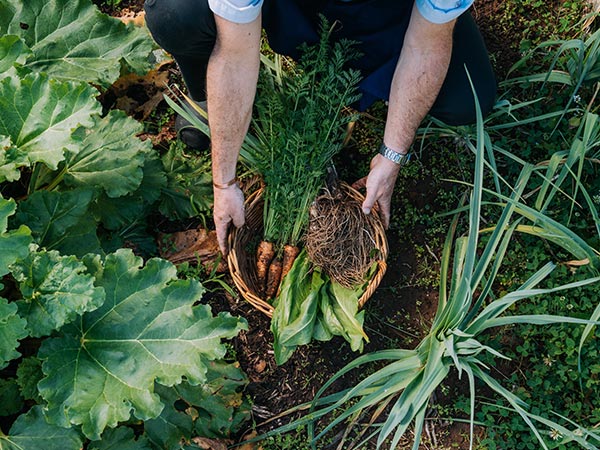
    vegetables in a basket at Bells Garden at Bells At Killcare
    From picking your own, to farm-to-table, discover the best Central Coast food experiences. (Image: Remy Brand)

    Central Coast oyster experiences

    From humble grub to opulent delicacy, oysters have ascended into a league of their own. Epicureans are fascinated by them – willing to pay upwards of $35 per dozen (double at some of Sydney’s reputable fine dining restaurants) – and ‘shuck bars’ seem to be popping up at every milestone celebration.

    But it’s rare to find places that really draw back the curtain on how they’re farmed and why everyone is mad for these molluscs. The Central Coast, however, is home to several of these venues. With its pristine waters, mild climate and nutrient-rich estuaries, it’s the perfect breeding ground for oysters.

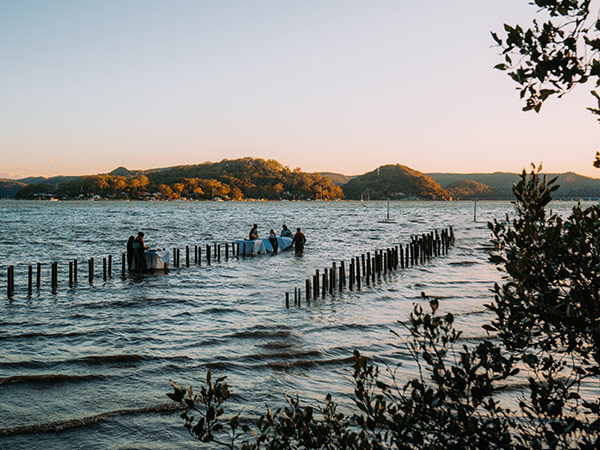
    Learn about oyster farming and, importantly, how to shuck them at Sydney Oyster Farm Tours. Nestled on the Hawkesbury River at Mooney Mooney, Sheridan Beaumont and her team offer a hands-on foodie experience where you can feast on dozens of oysters (white tablecloth and all) while wading through the calm waters. You can even bring your own bottle of bubbles to wash them down.

    guests in the water for an experience at Sydney Oyster Farm - Central Coast food
    Learn tricks of the trade at Sydney Oyster Farm Tours. (Image: Remy Brand)

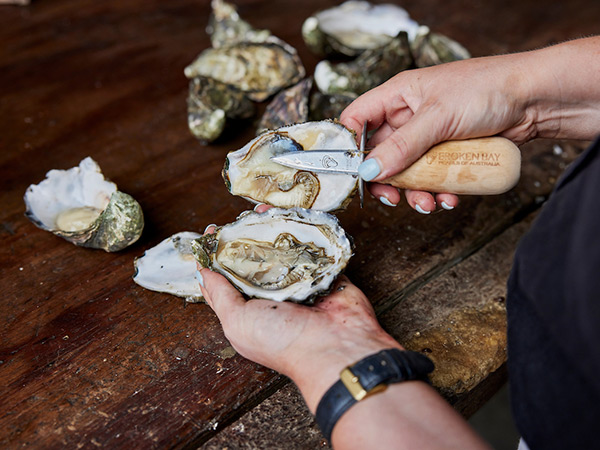
    Elevate your oyster knowledge even further by heading north over the Hawkesbury River Bridge to the Hawkesbury River Oyster Shed. Tour their scenic oyster leases and saltwater paddocks by boat to uncover the distinct characteristics of the Sydney rock oyster and creamy Pacific oyster. They’ve also partnered with Broken Bay Pearl Farm to offer a one-of-a-kind oyster and pearl farming guided tour, showcasing the Central Coast’s very own pearl oyster, the Broken Bay ‘Akoya’. But if you’re simply in the mood to devour a dozen delectable oysters while soaking in the tranquil river views, pull up a chair at the shed. It’s friendly in every sense of the word: pets, families and BYO welcome.

    shucking oysters at Broken Bay Pearl Farm
    Taste freshly shucked oysters at Broken Bay Pearl Farm. (Image: James Horan)

    Central Coast farms to pick your own fruit

    While the Central Coast is known for its breathtaking 40 beaches and 80-kilometre coastline, its lush hinterland is equally impressive – abundant with orchards and agriculturally rich farmland. And when it comes to the simple joy of picking your own fruit, the Central Coast is a ripe playground.

    Family-owned Meliora Farm at Peats Ridge is an orchard that blends conventional, biodynamic and organic philosophies. Third-generation farmer Tim Kemp and his wife Elise are dedicated to honouring the family legacy by growing a rich variety of oranges, lemons, limes, mandarins and avocados. In late May, roam the sustainable and nutrient-dense property during ‘Pick Your Own’ weekends.

    Eastcoast Beverages is another bountiful citrus orchard boasting over 60 hectares of fruit. From June you can learn about the cultivation of high-quality ingredients – like lemons, limes, grapefruit and oranges – by touring both the farm and factory before setting out and picking your own straight from the source. You can also sample an array of citrus-inspired sweet and savoury treats at their on-site cafe, Bambino’s.

    If it’s just juicy oranges you’re after, Cedar Farm in Dooralong is a must-visit. Located about 30 minutes north of Peats Ridge, it features 15 flourishing orchards and over 3000 orange trees – with take-home bags during the season (from July) at low prices. Not bad for a fruity weekend haul.

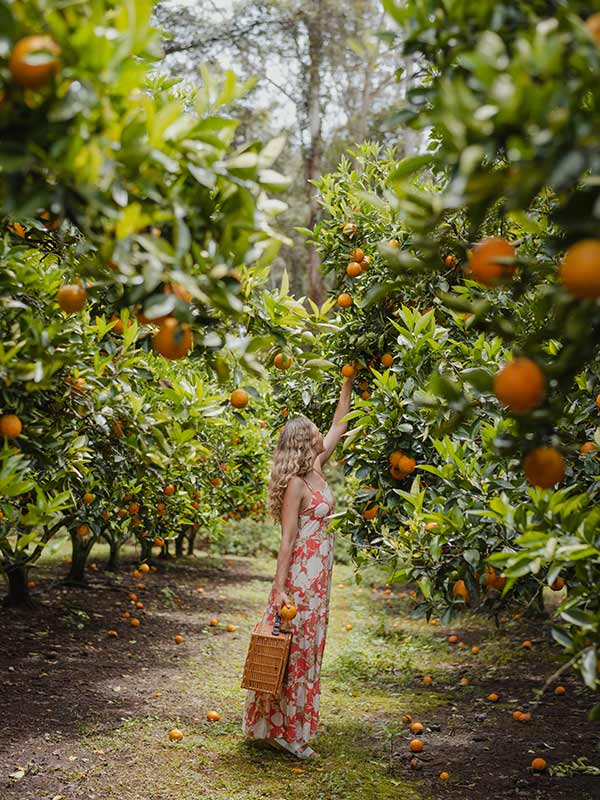
    woman picking oranges at Oranges at Dooralong
    Pick your own citrus fruits on the Central Coast. (Image: James Vodicka)

    Organic dining

    What makes the Central Coast hinterland so special is the unwavering respect the communities have for their cherished backyard. Locally owned and operated farms are all striving for more sustainable practices and methods to both enhance biodiversity and reduce environmental impact, each with a heartwarming food philosophy.

    The Food Farm in Wyong Creek believes good food is worth both the work and the wait. Devoted to regenerative farming, first-generation ‘farmily’ Tim Eyes and Hannah Greenshields are recognised for their grass-fed, grass-finished beef and pasture-raised, gold medal-winning chickens. With an open gate policy, The Food Farm encourages visitors to swing by and try some of their slow-grown produce at their small ‘honesty’ farm shop. With no staff, you can pick up a few quality cuts of meat and pasteurised eggs, leaving the owing amount in cash or via eftpos.

    Keeping the spirit of generational organic farming alive is Fanelli Organics. Nestled in the Central Coast’s scenic and sleepy Mangrove Mountain, founders Eden and Louise Fanelli own over 45 hectares of plentiful farmland and orchards that produce a huge range of organic fruit and vegetables, like purple Dutch carrots, blood oranges, broccoli and Tuscan kale. A true home-grown operation, Fanelli Organics shares its fresh produce with local restaurants and community markets, including the beloved markets at Like Minds Cafe at Avoca Beach every Wednesday afternoon.

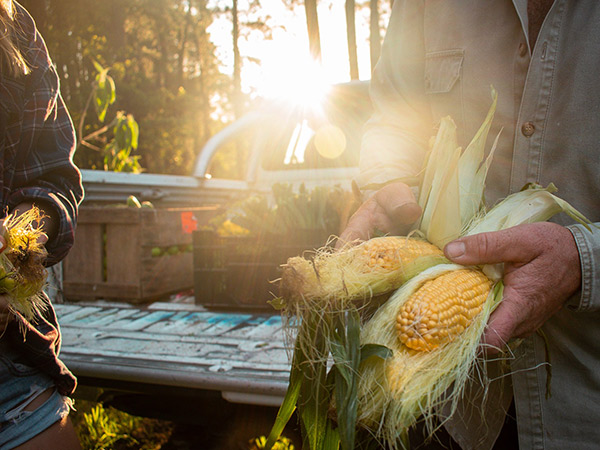
    farmers holding fresh produce picked at Fanelli Organics
    See where your food comes from at Fanelli Organics.

    Paddock-to-plate dining

    High-quality ingredients go hand in hand with premium dining, and the Central Coast is home to several paddock-to-plate restaurants that showcase its diverse and rich agriculture. Paired with warm, grassroots hospitality, there are culinary triumphs, new menus and revered chefs constantly popping up, putting the local dining scene firmly on the map.

    Award-winning Mount White restaurant Saddles is a quintessential Australian dining destination, dedicated to country-style cooking and seasonal produce. Nestled in thick bushland with wraparound verandahs, floral gardens and an idyllic dam, the gourmet homestead and bakehouse is unlike any restaurant on the Central Coast. Here, head chef Reece Collins and his team serve up an impressive breakfast and lunch menu that oozes rustic charm. Pull up a comfy armchair on the expansive deck, listen to birdsong, and tuck into flavoursome dishes like the farmhouse Benedict with honey-cured ham, lemon myrtle hollandaise and Warrigal gremolata, or the hearty beef brisket pie with confit garlic potato purée and rainbow chard.

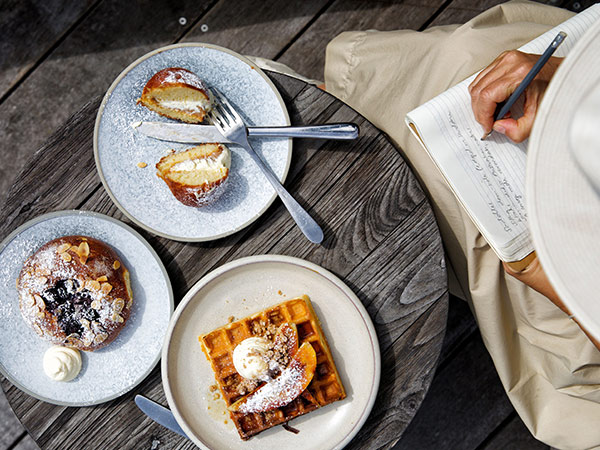
    woman writing in notebook next to a table of food at Saddles, Central Coast food
    Taste country-style cooking at Saddles. (Image: Destination NSW)

    Delivering a slice of sophistication and luxury to the shores and bushland of Bouddi Peninsula is Bells at Killcare. One of the few boutique resorts on the Central Coast, it’s known for its premium service and five-star suites, as well as its bountiful kitchen gardens that boast an orchard, olive trees, avocado trees, free-range hens and a honey bee hive.

    Cameron Cansdell has returned to Bells at Killcare as head chef, bringing his expertise to the casual yet refined menus that feature a raw bar with Oscietra caviar, freshly shucked Sydney rock oysters and Moreton Bay bugs, all served alongside optional matched wines. Sample some of Australia’s best regional wines and standout dishes, like roasted Wollemi duck with grilled leeks, rocket, grilled grapes and 10-year-aged balsamic, or the shareworthy salt-crusted snapper with herb salad and salsa, before roaming the picturesque gardens, wine in hand.

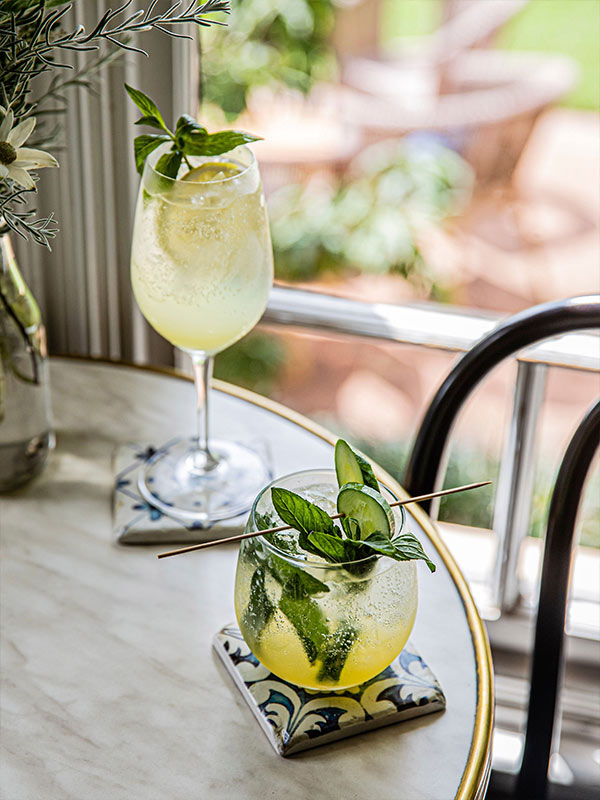
    cocktail at Bells At Killcare
    Sample incredible wine, cocktails and dishes at Bells At Killcare. (Image: Nikki To)

    Plan your next visit to the delicious Central Coast.