Luxury lodge experiences are often associated with loved-up couples and joint spa treatments, but in the case of Jamala Wildlife Lodge, located at the edge of Canberra, adjacent to the National Zoo & Aquarium, fine dining and five-star appointments come with some seriously family-friendly inclusions. The rooms here – spread across Jungle Bungalows, Giraffe Treehouses and the central uShaka Lodge – allow privileged access to the inhabitants of the zoo, from tigers to giraffes to monkeys; in my case its Malayan sun bears.
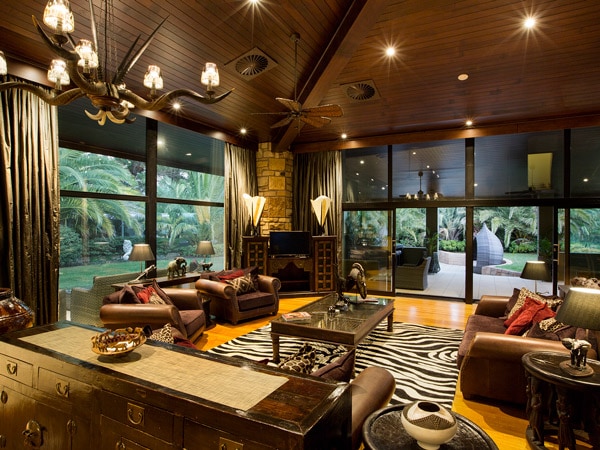
Arriving into the room, which is decorated in safari chic, with lots of dark wood and animal prints, my daughter makes a beeline for the picture window, where one of our furry neighbours for the night sits working its way into a coconut by way of some seriously long claws; our night is spent listening to a symphony of animal calls. In the morning, a pre-breakfast tour takes us through the zoo, with keepers detailing the valuable work done here undertaking breeding programs to bolster numbers of critically endangered species. As a mum, I will take my child making eye contact with wild animals and learning about conservation over a foot massage any day. – Leigh-Ann Pow
It is a sad fact that the practicalities expected of the serviced apartment sector often trump a focus on luxury and design, but the newly launched A by Adina brand is changing all that. Its sculptural, design-driven Canberra property, located at Constitution Place, ticks the boxes on both style and substance. The one- and two-bedroom apartments come with all the practical elements, from kitchenettes to washer/dryers, but the streamlined design, muted tones and attention to detail are decidedly luxe in their execution. Two gyms and a team of Personal Curators further ensure service(d) with style.
Inside the design-driven A by Adina Canberra. (Image: Rohan Thomson)
Need tips, more detail or itinerary ideas tailored to you? Ask AT.
Little. Small. Compact. Tiny. Wee. Minute. Small-scale. Whichever way you spin it, the Little National Hotel is as it says on the tin: little. The rooms may be small, but they are perfectly coiffed. And it’s perhaps because of those compact proportions that you tend to narrow your focus to every nanoscopic, well-thought-out detail.
The rooms at the Little National Hotel may be small, but they are perfectly coiffed.
The rooms are based on a 17 to 18 square metre floor plan and according to Patrick Lonergan, director of hotels, Doma Group, the Little National brand is about affordable luxury, “taking all the touch points we considered important and presenting it in a small package".
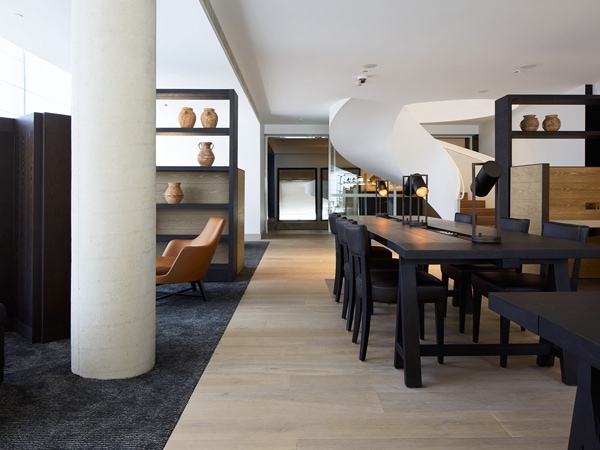
The Little National Hotel also gives guests access to a beautiful library and cosy lounge area. (Image: Romello Pereira)
The idea behind the Little National is it provides guests with the most important aspects of a hotel stay. “We’re in the business of selling sleeps. That means a great mattress, great shower and technology supported by a beautiful library and cosy lounge area in a prime location near to some of the city’s best bars and restaurants." Political junkies will love the fact the Little National in Canberra is located across the road from the National Press Club and a short stagger from Parliament House. – Carla Grossetti
From thundering waterfalls to ancient Indigenous art, Kimberley’s raw beauty will take your breath away.
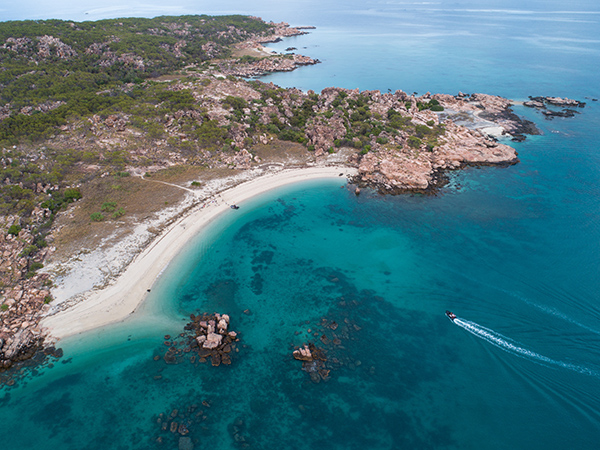
Wild, pristine, and shaped by nature, the Kimberley Coast is one of Australia’s most spectacular landscapes. A remote and rugged frontier that remains a bucket list destination for many travellers. Its most breathtaking attractions – including Montgomery Reef, King George Falls and Horizontal Falls – are accessible only by sea or air, making a guided expedition cruise aboard Silversea’s luxury expedition ship, Silver Cloud, the ideal way to explore it.
From its intricate intertidal zones to ancient rock art, extreme tides and rare wildlife found nowhere else in Australia – or the world – this journey offers an unparalleled exploration of one of Earth’s last true wildernesses.
Why Silversea?
Silversea offers a 10-day expedition departing Broome, or an extended 16-day expedition voyage from Indonesia, including landings on the hidden gems of Palopo Sulawesi and Komodo. Accompanied by expert guides and specialists in marine biology, history and geology, guests gain a deeper understanding of the Kimberley’s dramatic landscapes, rich cultural heritage and extraordinary biodiversity.
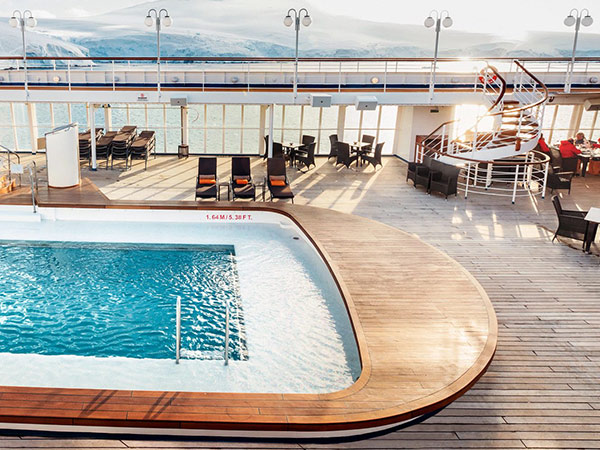
Silversea offers one of the experiential travel industry’s leading crew-to-guest ratios. Along with all-suite accommodation (80 per cent with private verandah), 24-hour butler service, a swimming pool and four dining options. Silver Cloud also has an experienced crew of multilingual expedition guides and specialists in marine biology, history and geology to enhance your Kimberley Experience.
Take a dip in the pool deck.
1. Koolama Bay
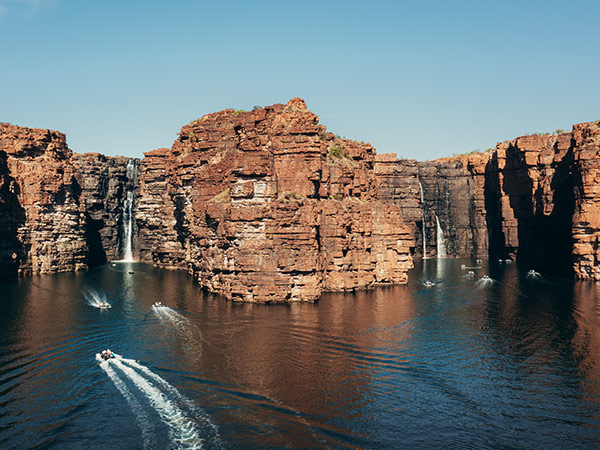
Before visitors see King George Falls, they hear them – a growing rumble in the distance, steady and foreboding as the Zodiac glides through the gorge, the sound echoing off sheer rock formations. At 80 meters tall, the twin cascades carve through the red cliffs, churning the waters below in a spectacular finale – but Koolama Bay holds secrets beyond its striking scenery.
Named after a ship that beached here following an aerial attack by Japanese bombers in World War II, the bay may seem desolate, yet it teems with life. With Silversea’s expert guides on their 10-day Kimberley itinerary, guests gain a sharper eye for its hidden wonders – rock wallabies darting across the cliffs, crocodiles lurking among dense green mangroves, and high above, the silhouette of a bird of prey circling the sky.
Take a shore excursion to see King George Falls.
2. Freshwater Cove / Wijingarra Butt Butt
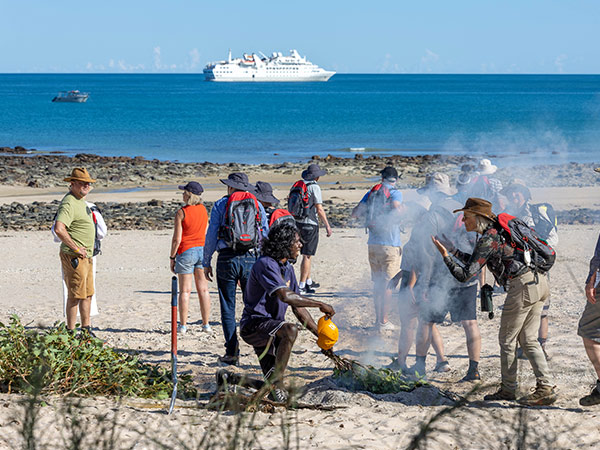
Connect with Country on a wet landing at Freshwater Cove, also known as Wijingarra Butt Butt. Considered one of the most special experiences on both the 16-day and 10-day Kimberley cruises, Silversea guests are welcomed by the traditional Indigenous custodians of the land, painted with traditional ochre, and invited to take part in a smoking ceremony.
Located on the mainland near Montgomery Reef, Wijingarra Butt Butt holds deep cultural significance to the local Indigenous community. Here, rock formations along the shore represent spiritual ancestors, and guests are guided to a nearby rock overhang filled with ancient art, where traditional owners share the stories and meaning behind these sacred paintings.
Take part in a smoking ceremony. (Image: Tim Faircloth)
3. Vansittart Bay (Jar Island)
Modern history, ancient culture and mystery converge in Vansittart Bay, which is also known as Jar Island. Here, the first thing to catch the eye is the dented, silver fuselage of a World War II-era C-53 plane – a striking relic of the past. Yet, the true cultural treasures lie just a short hike away where two distinct styles of Indigenous rock art – Gwion Gwion and Wandjina – can be found.
The Wandjina figures, deeply connected to Indigenous traditions, stand in stark contrast to the enigmatic Gwion Gwion (Bradshaw) paintings, which date back more than 12,000 years. Significantly different in form and style, the two different styles create a striking juxtaposition, offering a rare glimpse into the region’s rich and complex past.
Explore ancient Gwion Gwion rock art at Vansittart Bay. (Image: Janelle Lugge)
4. Horizontal Falls
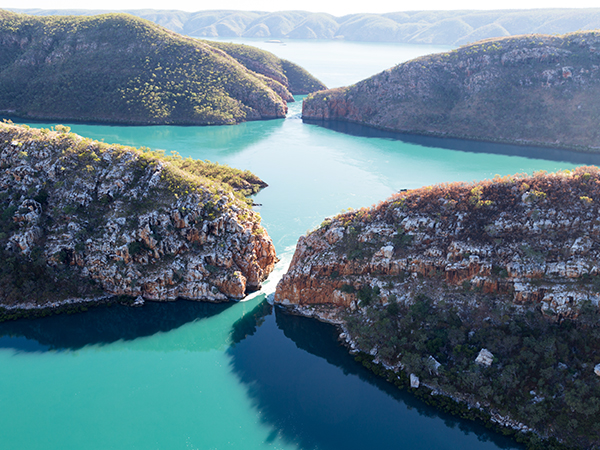
Part illusion, part natural phenomenon, the Kimberley’s much-lauded Horizontal Falls aren’t a waterfall, but a tidal and geographic spectacle that visitors have to see to comprehend. Known as Garaanngaddim, the phenomenon occurs when seawater rushes through two narrow gaps- one just twenty metres wide, and the other seven metres in width, between the escarpments of Talbot Bay.
With each tidal shift,the force of the water creates whirlpools, furious currents and the illusion of a horizontal cascade as thousands of gallons of water are pushed and pulled in through the gap every six hours with relentless movement, making this one of the Kimberley’s most mesmerising natural wonders.
Watch whirlpools and furious currents collide. (Image: Janelle Lugge)
5. Montgomery Reef
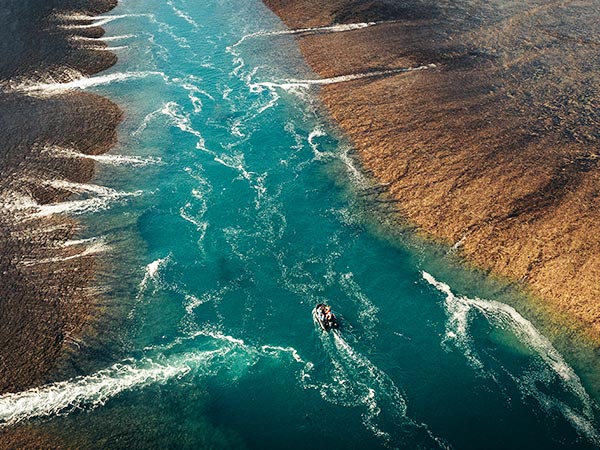
As the tide turns in Montgomery Reef, magic happens. With the Kimberley’s legendary tides varying up to ten metres, at low tide the submerged reef almost appears to rise from the depths: exposing up to four metres of the sandstone reef.
The impact is otherworldly: as the water drains, waterfalls cascade on either side of the channel,turtles left exposed scramble and dive, and fish leap in search of sanctuary in shallow pools. Meanwhile, the dinner bell rings for the migratory seabirds dugongs, reef sharks and dolphins that scavenge and feast in the area.
Using zodiacs, guests cruise through one of the world’s most significant inshore reef systems navigated by experienced guides, exploring the most intricate and fascinating parts of a 300-square-kilometre-wide biodiversity hotspot.
Witness seabirds, dolphins and reef sharks on the hunt.
6. Mitchell Falls by Helicopter
Experiencing the Kimberley by sea allows you to feel the power of the tides, but travelling by helicopter reveals the sandstone tapestry of the Kimberley, a landscape geologists believe is over 1.8 billion years old.
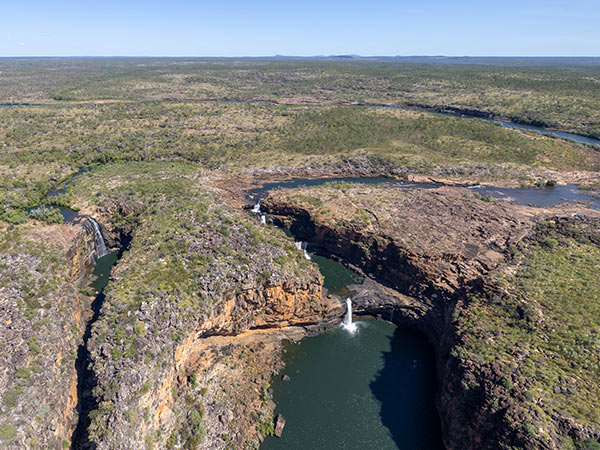
One of Silversea’s most popular optional excursions, guests who opt to fly into the interior from the onboard helipad soar up above the rust-coloured landscape of the Mitchell plateau, taking in one of Australia’s most scenic waterfalls: Mitchell Falls, a series of four emerald-coloured pools gently cascades into each other, before plunging down to the river below.
Seeing the landscape from above reveals a landscape weaved and shaped by the power of the freshwater wet season, juxtaposed to the constant lapping of the relentless and powerful tide on the coast.
See emerald pools cascade into the river below. (Image: Tim Faircloth)
7. Indigenous Art Caves, Wandjina Art
The Kimberley Region of Western Australia is home to some of the most striking and significant
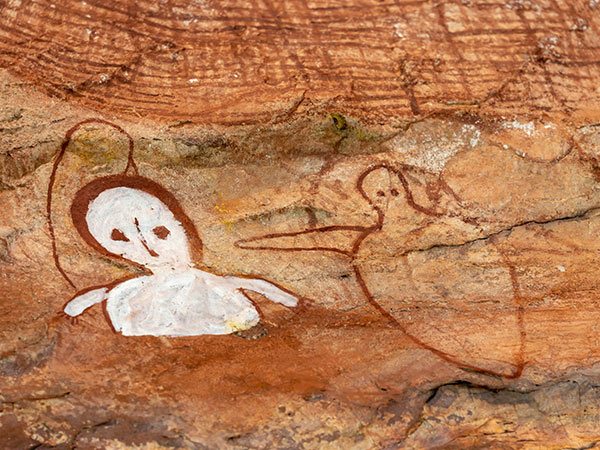
Indigenous rock art in Australia. Dotted throughout the landscape are caves, cliffs and rock overhangs depicting the striking, ethereal image of Wandjina, the rainmaker spirit and creation being central to many of the Dreamtime stories in this region.
Some of the paintings are regularly repainted by traditional custodians, while others are believed to be over 4,000 years old. Each artwork serves as both a cultural record and a living connection to the past, offering a rare opportunity to engage with the enduring traditions of the Kimberley’s Indigenous communities.
Walk among cultural records preserved in stone. (Image: Tim Faircloth)